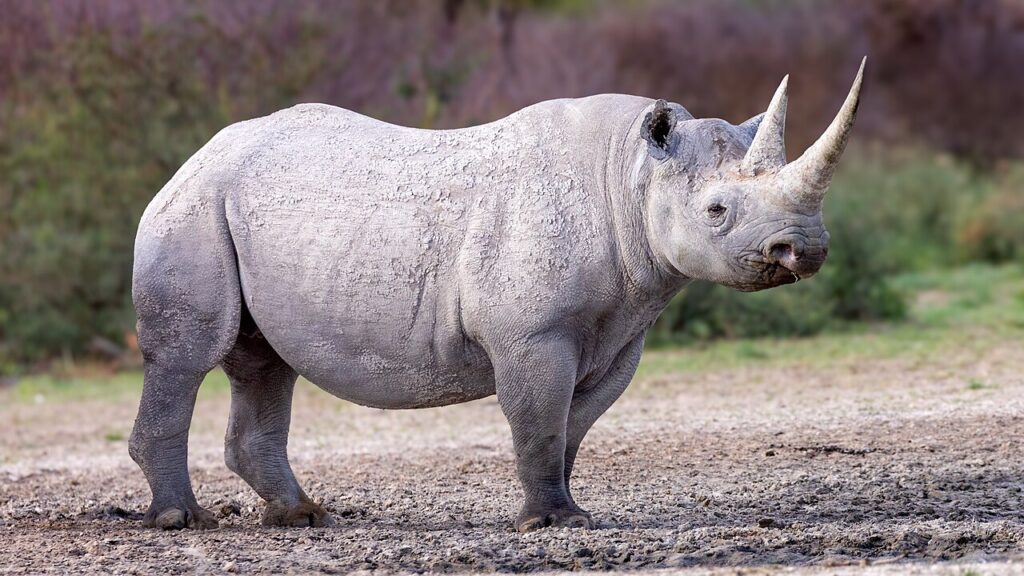
Africa has two rhino species. The white rhino is the larger, a grazer with a wide, square mouth, and it lives in open grassland. The black rhino is smaller, with a hooked lip for browsing, and it prefers thick bush. After decades of poaching for their horns, just under 24,000 rhinos remain in Africa, about three-quarters of them white rhinos. See our white rhinoceros and black rhinoceros profiles.
The best places to see rhinos
Hluhluwe-iMfolozi Park, South Africa
The park that saved the white rhino from extinction is still one of the best places to see both species. See our Hluhluwe-iMfolozi guide.
Kruger National Park and Greater Kruger, South Africa
Kruger once held the world’s largest rhino population. Poaching has reduced it sharply, but white rhinos are still seen, particularly in the south. See our Kruger guide.
Etosha National Park, Namibia
Black rhinos come to drink at Etosha’s floodlit waterholes at night, especially at Okaukuejo. It is one of the best places anywhere to watch black rhinos. See our Etosha guide.
Damaraland, Namibia
Track free-roaming desert-adapted black rhinos on foot with specialist guides. See our Damaraland guide.
Ol Pejeta and Lewa, Kenya
Ol Pejeta is the largest black rhino sanctuary in East Africa and home to the last two northern white rhinos. Lewa is another stronghold. See our Laikipia guide.
Lake Nakuru and Nairobi National Park, Kenya
Two fenced sanctuaries where both black and white rhinos are regularly seen. See our Lake Nakuru and Nairobi National Park guides.
Ngorongoro Crater, Tanzania
A small population of black rhinos lives on the crater floor. See our Ngorongoro guide.
Akagera, Rwanda, and Ziwa, Uganda
Akagera has both species after reintroductions. At Uganda’s Ziwa Rhino Sanctuary you can track white rhinos on foot. See our Akagera guide.
Other places
Madikwe and Pilanesberg (South Africa), Matobo (Zimbabwe), Majete and Liwonde (Malawi) and the Okavango Delta (Botswana, after reintroductions) all hold rhinos.
Rhino conservation
- Poaching peaked in the 2010s, driven by demand for horn in parts of Asia. Rangers, dehorning, tracking dogs and community programmes have all helped.
- In 2023, the non-profit African Parks took over the world’s largest captive rhino breeding operation, about 2,000 southern white rhinos, with the aim of rewilding them to protected areas across Africa over ten years.
- Your visit supports anti-poaching work through park fees and lodge levies.
Responsible rhino viewing
- Never post geotagged photos or share rhino locations online.
- Keep a respectful distance and stay quiet; black rhinos in particular can charge.
- Choose reserves and lodges that invest in rhino protection.
Frequently asked questions
What is the difference between black and white rhinos? White rhinos are larger grazers with square lips; black rhinos are smaller browsers with pointed, hooked lips. Both are grey.
Where can I see black rhinos? Etosha, Damaraland, Ol Pejeta, Lewa, Lake Nakuru, Ngorongoro and Hluhluwe-iMfolozi are among the best places.
How many rhinos are left in Africa? Just under 24,000, according to recent estimates by the IUCN’s African Rhino Specialist Group.
Can you walk with rhinos? Yes, at places such as Ziwa (Uganda), Matobo (Zimbabwe), Damaraland (Namibia) and some South African reserves, always with trained rangers.
Related guides
- Where to see the Big Five
- Etosha National Park guide
- Hluhluwe-iMfolozi and iSimangaliso
- Animal profiles: White rhinoceros, Black rhinoceros, Greater one-horned rhinoceros
Cover photo: AfricanConservation, CC BY-SA 4.0, via Wikimedia Commons