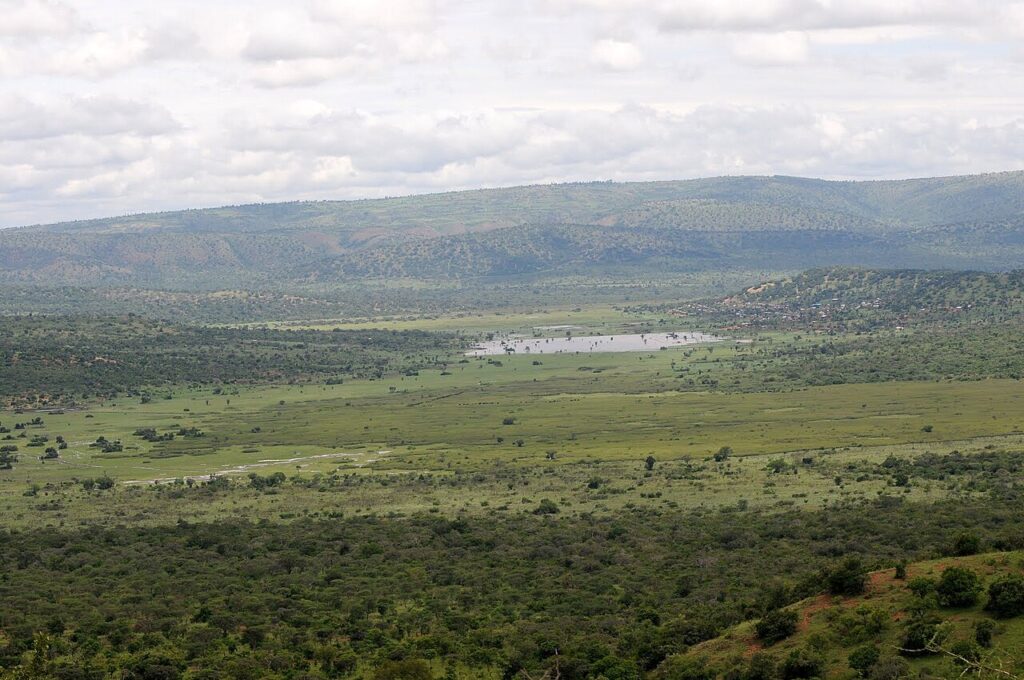
Akagera National Park, on Rwanda’s border with Tanzania, is one of Africa’s great conservation comebacks. After the 1994 genocide, returning refugees settled much of the land, lions were poisoned and rhinos poached, and the park lost more than half its area. Since 2010 it has been managed by the non-profit African Parks with the Rwanda Development Board. Lions were brought back in 2015, black rhinos in 2017 and white rhinos in 2021, and Akagera is now a Big Five park that earns much of its own running costs from tourism.
At a glance
| Best time | June to September and December to February |
| Getting there | About 2.5 hours by road from Kigali |
| Time needed | 1 to 2 nights |
| Big draws | Big Five, Lake Ihema boat trip, conservation story |
| Good for | Adding a savanna safari to a Rwanda gorilla trip |
Wildlife
- Big Five: lions, leopards, elephants, buffalo and both black and white rhinos. The 30 white rhinos moved from South Africa in 2021 were one of the largest single rhino translocations ever.
- Grazers: giraffes, zebras, topi, impala, eland, roan antelope and Defassa waterbuck.
- Lakes and swamps: hippos and crocodiles, and the sitatunga antelope in papyrus.
- Birds: around 500 species, including the rare shoebill (occasionally seen), papyrus gonolek and fish eagles.
Things to do
- Game drives on the northern plains, the best area for lions, rhinos and big herds.
- Boat trip on Lake Ihema: close views of hippos, crocodiles and waterbirds.
- Night drives: look for leopards, genets, bushbabies and hyenas.
- Behind-the-scenes tour of park management and conservation work.
- Walk the line: a guided walk along the park fence with rangers.
- Community experiences in the villages around the park.
When to go
- June to September and December to February: dry seasons; animals are easier to find.
- March to May and October to November: rains; green landscapes and good birding, with some tracks muddy.
Getting there
Akagera is about 110 km east of Kigali, a drive of about two and a half hours. You can self-drive (a 4×4 is recommended) or join a guided safari. The park combines easily with Volcanoes National Park (4 to 5 hours away) and Nyungwe.
Where to stay
Options range from campsites and a lakeside hotel in the south to luxury tented camps in the north, including a camp on Lake Rwanyakazinga. Staying in the north puts you closer to the best game viewing.
Costs
Park entry fees are charged per person per day, with extra fees for boat trips, night drives and vehicles. Check the current rates on the park’s website.
Frequently asked questions
Is Akagera worth visiting after gorilla trekking? Yes. It adds a classic savanna safari with the Big Five to a Rwanda trip, and your visit supports a remarkable conservation success.
Can I self-drive in Akagera? Yes. Self-drive is allowed; a 4×4 is best, and you can hire a freelance guide at the gate.
How many days do I need? One night is enough for a taste; two nights allow a boat trip, night drive and the northern plains.
Can I see rhinos in Akagera? Yes, both black and white rhinos, though black rhinos are shy and less often seen.
Related guides
- Volcanoes National Park, Rwanda
- Nyungwe Forest National Park
- Best places to see rhinos in Africa
- Animal profiles: White rhinoceros, Lion, Giraffe
Cover photo: Louis Dewame, CC BY 3.0, via Wikimedia Commons