Life on Earth is not spread evenly. Tropical forests hold more species than the rest of the land combined, a few mountain ranges and islands hold animals found nowhere else, and the oceans hold the largest animals that have ever lived. This guide takes you continent by continent through the world’s wildlife: where animals live, why they live there, how to see them, and what is happening to them.
Choose a continent on the map to open its full guide.
Wildlife of the World
Seven continents, each with its own animals found nowhere else. Pick a continent on the map to meet its most important species, then open its chapter to explore further.
The seven continents at a glance
| Continent | Defining habitats | Signature animals | Full guide |
|---|---|---|---|
| Africa | Savanna, rainforest, desert, Rift Valley lakes, Madagascar | Elephant, lion, giraffe, gorilla, lemurs | Wildlife of Africa |
| Asia | Himalaya, monsoon forest, rainforest, steppe, taiga, coral reefs | Tiger, snow leopard, giant panda, orangutans, rhinos | Wildlife of Asia |
| Europe | Temperate and boreal forest, mountains, Mediterranean, wetlands | Brown bear, wolf, bison, lynx, white stork | Wildlife of Europe |
| North America | Tundra, boreal forest, prairie, deserts, Central American rainforest | Bison, grizzly and polar bears, wolf, bald eagle, monarch butterfly | Wildlife of North America |
| South America | Amazon, Pantanal, Andes, Patagonia, Galápagos | Jaguar, giant otter, sloths, macaws, condor | Wildlife of South America |
| Australia and Oceania | Outback, eucalyptus forest, rainforest, Great Barrier Reef, New Zealand | Kangaroo, koala, platypus, kiwi, birds-of-paradise | Wildlife of Australia and Oceania |
| Antarctica | Ice sheet, sea ice, Southern Ocean | Penguins, seals, whales, krill | Wildlife of Antarctica |
Why wildlife differs between continents
Continents are not the only way scientists divide the living world. Biogeographers, starting with Alfred Russel Wallace in 1876, group the planet into biogeographic realms: large regions whose animals share a common evolutionary history. The eight realms commonly used today are:
| Realm | Covers | Characteristic animals |
|---|---|---|
| Nearctic | Most of North America | Pronghorn, bison, beavers, prairie dogs |
| Neotropical | South and Central America, the Caribbean | Sloths, anteaters, New World monkeys, hummingbirds, toucans |
| Palearctic | Europe, North Africa, northern and central Asia | Deer, wild sheep and goats, brown bears, many songbirds |
| Afrotropical | Sub-Saharan Africa and Madagascar | Giraffes, hippos, most antelopes, lemurs, turacos |
| Indomalayan | South and Southeast Asia | Tigers, orangutans, gibbons, hornbills, tree shrews |
| Australasian | Australia, New Guinea, New Zealand and nearby islands | Marsupials, monotremes, birds-of-paradise, cockatoos |
| Oceanian | Pacific islands | Island birds, lizards, land snails |
| Antarctic | Antarctica and the Southern Ocean islands | Penguins, seals, albatrosses |
The boundaries between realms often follow deep water or high mountains that animals could not cross. The most famous is the Wallace Line in Indonesia, which separates Asian animals from Australian ones across a narrow strait.
Records of the animal world
| Record | Animal | Where it lives |
|---|---|---|
| Largest animal ever | Blue whale, up to about 30 m | All oceans |
| Largest land animal | African savanna elephant, up to about 6 tonnes or more | Africa |
| Tallest animal | Giraffe, up to about 5.5 m | Africa |
| Fastest land animal | Cheetah, about 100–110 km/h in short bursts | Africa, with a tiny population in Iran |
| Fastest animal in a dive | Peregrine falcon, over 300 km/h | Every continent except Antarctica |
| Longest migration | Arctic tern, tens of thousands of km each year | Arctic to Antarctic |
| Largest reptile | Saltwater crocodile | Southeast Asia to northern Australia |
| Largest lizard | Komodo dragon | Indonesia |
| Largest bird | Common ostrich | Africa |
| Largest cat | Tiger | Asia |
| Largest rodent | Capybara | South America |
The great migrations
Some of the most extraordinary wildlife events on Earth involve animals moving in huge numbers between seasonal feeding and breeding grounds:
- Wildebeest and zebra circling the Serengeti and Maasai Mara (Africa).
- Caribou crossing the Arctic tundra of Alaska and Canada (North America).
- Grey whales travelling between the Arctic and Mexico’s lagoons (North America).
- Monarch butterflies flying to the mountains of central Mexico (North America).
- Bar-headed geese crossing the Himalaya and Amur falcons crossing the Arabian Sea (Asia).
- Straw-coloured fruit bats gathering in Zambia’s Kasanka National Park (Africa).
- Red crabs marching to the sea on Christmas Island (Australia’s Indian Ocean territory).
- Humpback whales migrating between polar feeding grounds and tropical calving waters (every ocean).
The state of the world’s wildlife
Wildlife populations are under pressure everywhere. WWF’s Living Planet Report 2024 found that monitored populations of vertebrates have declined by an average of 73 percent since 1970, with the steepest falls in Latin America and the Caribbean and in freshwater habitats. More than 46,000 species assessed on the IUCN Red List are threatened with extinction.
The main drivers are the same on every continent:
- Habitat loss and degradation, mainly from agriculture.
- Overexploitation, through hunting, fishing and wildlife trade.
- Climate change.
- Invasive species.
- Pollution and disease.
There is also real hope. Protected areas, community conservation, reintroductions and species recovery programmes have brought back mountain gorillas, tigers in India and Nepal, humpback whales, the Iberian lynx, the European bison, bald eagles and many more. Under the Kunming-Montreal Global Biodiversity Framework agreed in 2022, countries committed to protect 30 percent of land and sea by 2030.
How to use Wild Chapter
- Travellers: each continent guide lists the top parks and the best months to visit, and our Safari & Travel guides cover planning, costs and packing.
- Students: our Ecology course explains the science behind these patterns with animated lessons.
- Researchers: every continent guide ends with key research stations and data sources, and our animal profiles summarise status, biology and distribution.
Animal profiles
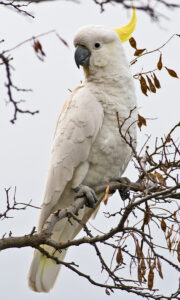 Sulphur-crested CockatooCacatua galeritaLC
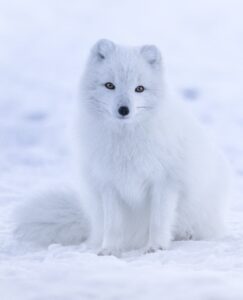 Arctic FoxVulpes lagopusLC
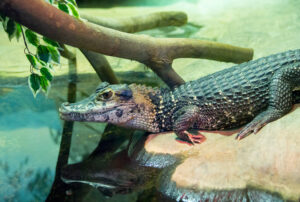 Black CaimanMelanosuchus niger
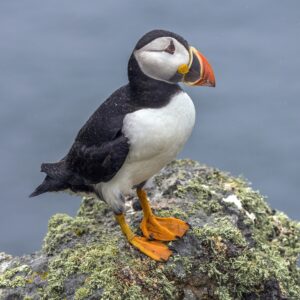 Atlantic PuffinFratercula arcticaVU
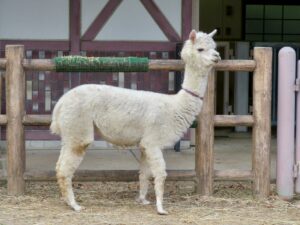 AlpacaVicugna pacos
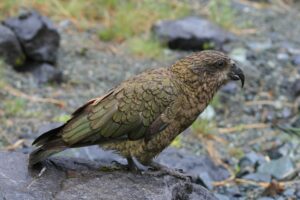 KeaNestor notabilisEN
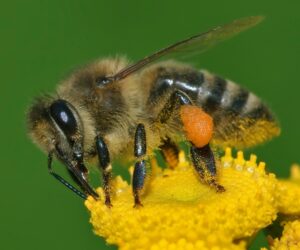 Honey BeeApis melliferaDD
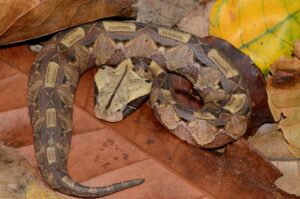 Gaboon ViperBitis gabonica
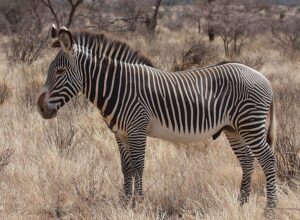 Grevy’s ZebraEquus grevyiEN
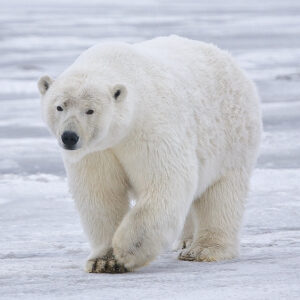 Polar BearUrsus maritimusVU
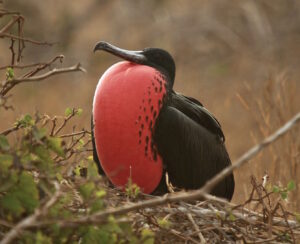 Magnificent FrigatebirdFregata magnificensLC
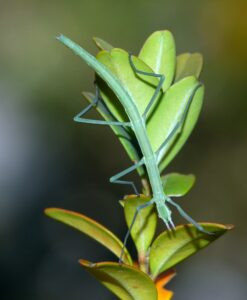 Stick InsectOrder Phasmatodea