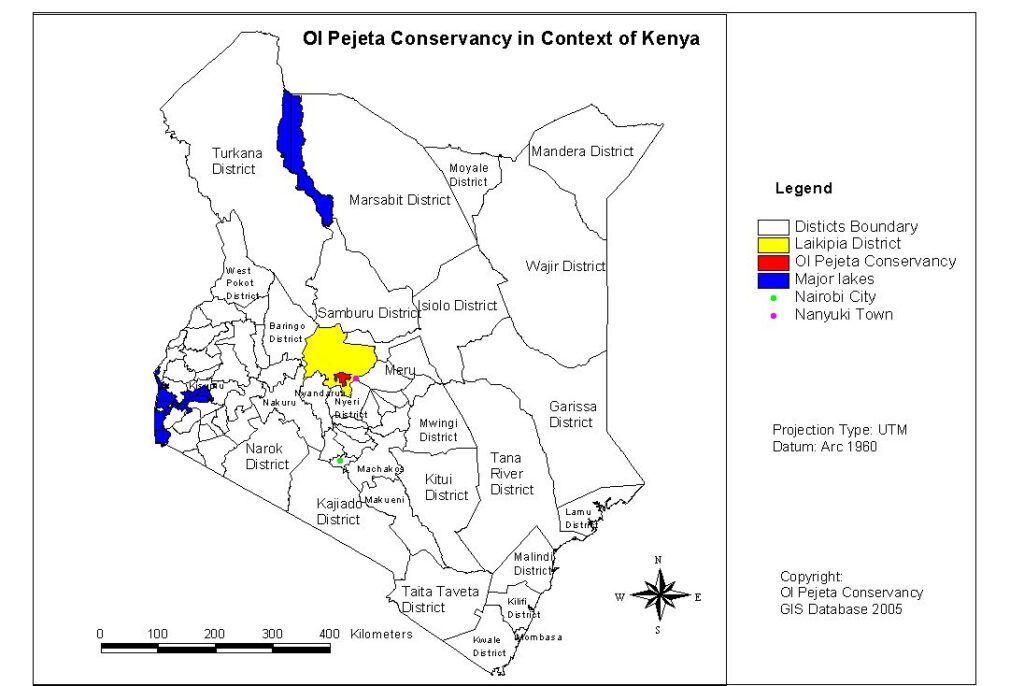
The Laikipia Plateau, north-west of Mount Kenya, has more wildlife than any region of Kenya outside the Maasai Mara, yet almost none of it is in national parks. Instead, a mosaic of private ranches and community conservancies protects rhinos, wild dogs, elephants and Grevy’s zebras. Because these are private lands, you can do things parks do not allow: walk, ride horses and camels, and go on night drives.
Ol Pejeta Conservancy, near the town of Nanyuki, is the best known.
At a glance
| Best time | Year-round; driest from June to October and January to February |
| Getting there | About 3 to 4 hours by road from Nairobi, or a 45-minute flight to Nanyuki |
| Time needed | 2 to 4 nights |
| Big draws | Black and white rhinos, the last northern white rhinos, wild dogs, walking safaris |
| Good for | Families, active travellers, rhino lovers |
Ol Pejeta Conservancy
Ol Pejeta covers about 360 km² and is the largest black rhino sanctuary in East Africa.
- Black rhinos: more than 150 live here, and sightings are regular. See our black rhinoceros profile.
- Northern white rhinos: Najin and Fatu, the last two northern white rhinos in the world, both female, live under 24-hour guard. Scientists are trying to save the subspecies with IVF using southern white rhino surrogates. Visits to their enclosure can be booked.
- Sweetwaters Chimpanzee Sanctuary: the only place in Kenya to see chimpanzees, rescued from the illegal pet and bushmeat trade in other countries. Chimpanzees are not native to Kenya.
- Other wildlife: lions, leopards, cheetahs, elephants, buffalo, Grevy’s zebras, Jackson’s hartebeest and reticulated giraffes. Night drives can reveal aardvarks, porcupines and striped hyenas.
Lewa, Borana and beyond
- Lewa Wildlife Conservancy (part of a UNESCO World Heritage Site with Mount Kenya) is another rhino stronghold, famous for Grevy’s zebras. Lewa and neighbouring Borana have removed the fence between them to create one large rhino area.
- Northern Laikipia conservancies such as Loisaba, Segera, Ol Jogi and Sosian are known for wild dogs, elephants and walking, horse and camel safaris.
- Community conservancies such as Il Ngwesi, run by Maasai communities, offer cultural experiences and eco-lodges.
When to go
Laikipia has good game viewing all year because of its permanent rivers and managed water.
- June to October and January to February: dry, with easy game viewing.
- April to May and November: rains; beautiful green landscapes, fewer visitors and lower prices.
- The plateau lies at about 1,700 to 2,000 m, so nights can be cold.
Getting there
Nanyuki is about 200 km north of Nairobi on a good road, a drive of three to four hours. Scheduled flights land at Nanyuki and at airstrips on many conservancies. Laikipia combines well with Samburu (about two hours north) and the Maasai Mara (by air).
Where to stay
Ol Pejeta has tented camps, lodges, self-catering cottages and campsites for every budget, which makes it one of Kenya’s most accessible reserves. Northern Laikipia’s lodges are mostly small, exclusive and all-inclusive.
Tips
- Book a night drive: many nocturnal animals are easier to see here than anywhere else in Kenya.
- Try a walking or horseback safari for a different perspective.
- Families find Ol Pejeta easy: short transfers, a wide choice of accommodation and hands-on conservation experiences.
- Cross the equator in Nanyuki if you want the classic photo.
Frequently asked questions
Can you see the last northern white rhinos? Yes, Najin and Fatu can be visited at Ol Pejeta with a booked guided visit. Fees support their protection and the research to save the subspecies.
Is Ol Pejeta worth visiting? Yes, particularly for rhinos, a wide choice of accommodation and activities such as night drives. It is easy to reach from Nairobi.
Where can I see wild dogs in Kenya? Laikipia is Kenya’s best area for wild dogs, especially the northern conservancies. Sightings are never guaranteed.
How is Laikipia different from national parks? Its conservancies are private or community-owned, so they can allow walking, horse riding and night drives, and they limit visitor numbers.
Related guides
- Samburu National Reserve and the Special Five
- Best places to see rhinos in Africa
- Where to see African wild dogs
- Animal profiles: Black rhinoceros, White rhinoceros, Chimpanzee
Cover photo: mark nash, CC BY-SA 4.0, via Wikimedia Commons