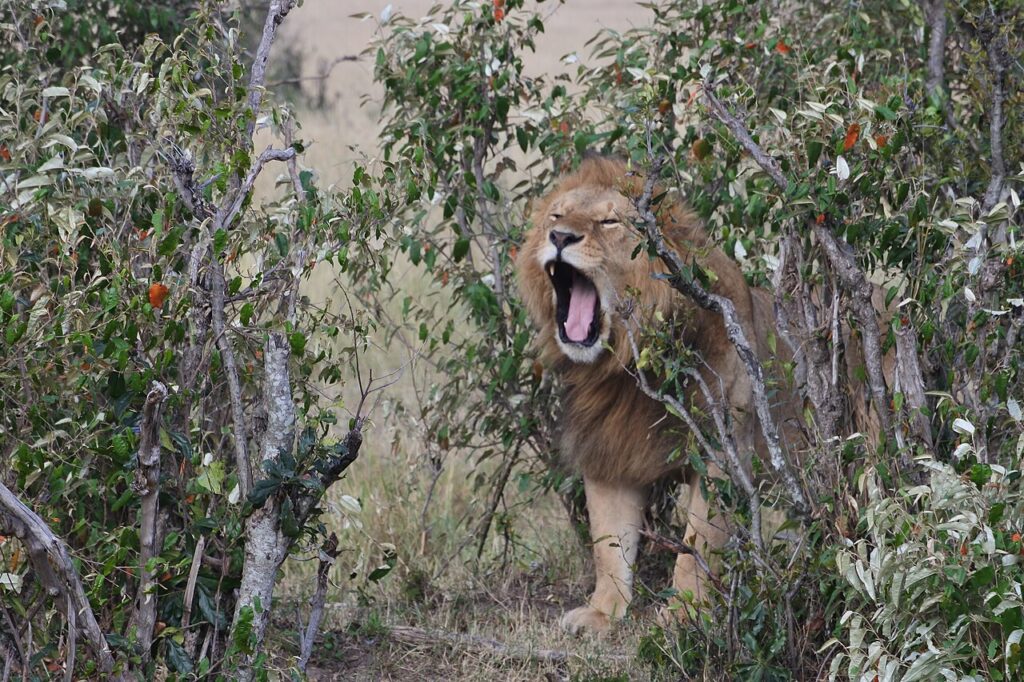
Nairobi National Park is the only national park in the world that sits within a capital city. Just 7 km from the city centre, its 117 km² of grassland, acacia bush and riverine forest hold lions, black rhinos, giraffes, buffalo and hundreds of bird species, with Nairobi’s skyscrapers rising behind them. It is the perfect first taste of an African safari, and an easy half-day on a layover.
At a glance
| Best time | Year-round; driest from June to October and January to February |
| Getting there | 20 to 40 minutes from central Nairobi, depending on traffic |
| Time needed | Half a day to a full day |
| Big draws | Black rhinos, lions, the city-skyline backdrop, the elephant orphanage |
| Good for | Layovers, the first or last day of a safari, families |
Wildlife highlights
- Black rhinos: the park is one of Kenya’s most important rhino sanctuaries and a source of rhinos moved to other reserves. See our black rhinoceros profile.
- Lions: several prides live in the park, and cheetahs and leopards are also present.
- Grazers: Maasai giraffes, buffalo, zebras, wildebeest, eland, hartebeest, impala and Grant’s gazelles. There are no elephants living in the park.
- Hippos and crocodiles at the hippo pools on the Mbagathi River, where there is a short nature trail.
- Birds: more than 400 species, including ostriches, secretary birds, crowned cranes and many migrants between October and April.
Things to do
- Game drive: a morning drive gives the best chance of lions and rhinos.
- Ivory Burning Site: the spot where Kenya burned 105 tonnes of ivory in 2016 as a statement against the ivory trade.
- Sheldrick Wildlife Trust elephant nursery: at the edge of the park, orphaned baby elephants are fed and bathed during a public visiting hour each morning. Book in advance.
- Giraffe Centre: a short drive away, this centre breeds endangered Rothschild’s giraffes and runs conservation education.
- Nairobi Safari Walk and animal orphanage near the main gate, run by Kenya Wildlife Service.
When to go
The park can be visited all year. In the dry seasons animals gather near permanent water, and in the rains the grass grows tall and some tracks become muddy. Early morning is best for predators and for avoiding traffic.
Getting there
The main gate on Langata Road is about 7 km from the city centre. Drive yourself, hire a driver-guide, or book a half-day tour; many operators pick up from hotels and even from the airport for layover safaris. The park is also close to Wilson Airport, where flights to the Maasai Mara and other parks depart.
Layover safari tips
- Allow at least six hours between flights, including time for immigration and traffic.
- Book a private tour with airport pick-up to save time.
- Combine a morning game drive with the elephant nursery visiting hour if timings allow.
Costs
Kenya Wildlife Service charges a daily conservation fee (Kenya revised its park fees in 2025). Vehicle fees and guide costs are extra. Check the current KWS rates before visiting.
Conservation note
The park is fenced on three sides but open to the south, where animals migrate to and from the Kitengela plains. Growing settlements, roads and a railway line built across the park have squeezed this corridor, and its future depends on keeping space for wildlife.
Frequently asked questions
Is Nairobi National Park worth visiting? Yes. It offers good sightings of rhinos, lions and giraffes within minutes of the city, and the skyline backdrop is unique.
Can you see the Big Five in Nairobi National Park? You can see lions, rhinos, buffalo and, occasionally, leopards. There are no resident elephants, so you cannot see all five.
How long do you need in Nairobi National Park? A half-day game drive of four to five hours is enough to see the main species. A full day lets you explore the quieter southern plains.
Can I visit on a layover? Yes, with enough time between flights. Book a tour with airport pick-up and allow for traffic.
Related guides
- Lake Nakuru and the Rift Valley lakes
- Maasai Mara safari guide
- Best places to see rhinos in Africa
- Animal profiles: Black rhinoceros, Lion, Giraffe
Cover photo: flightlog, CC BY 2.0, via Wikimedia Commons