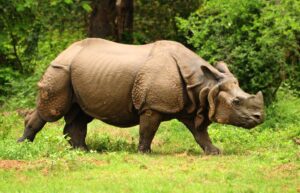
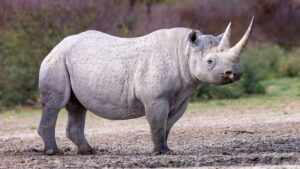
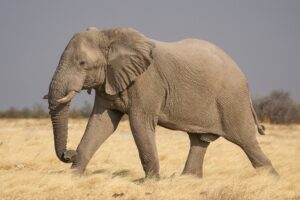
The white rhino has two subspecies. The southern white rhino is the most numerous of all rhinos, while the northern white rhino is functionally extinct. Both have been devastated by poaching for their horns, which are sold illegally in parts of Asia.
Interesting facts
- The white rhino is the largest rhino and one of the largest land mammals.
- ‘White’ probably does not refer to colour; one theory links it to the Afrikaans word ‘wyd’, meaning wide, describing its mouth.
- Rhino horn is made of keratin, the same material as human fingernails.
- White rhinos use communal dung heaps, called middens, to communicate.
- Only two northern white rhinos survive, both female, in Kenya’s Ol Pejeta Conservancy.
- Scientists are attempting to save the northern white rhino using IVF and surrogate southern white rhinos.
Behaviour
White rhinos are more social than other rhinos, and females and young often form small groups. Adult males hold territories and mark them with dung and urine sprays.
Breeding and young
A single calf is born after about 16 months. Calves walk ahead of their mothers, unlike black rhino calves, which follow behind.
Threats and conservation
Poaching for horn is the main threat and has increased sharply since about 2008. Dehorning, armed patrols and translocation are among the tools used to protect them.
Where to see it
- Hluhluwe-iMfolozi Park, South Africa
- Kruger National Park, South Africa
- Lake Nakuru and Ol Pejeta, Kenya
- Matobo National Park, Zimbabwe
Status source: IUCN Red List. Profile last reviewed September 2026.
Where to see the white rhinoceros
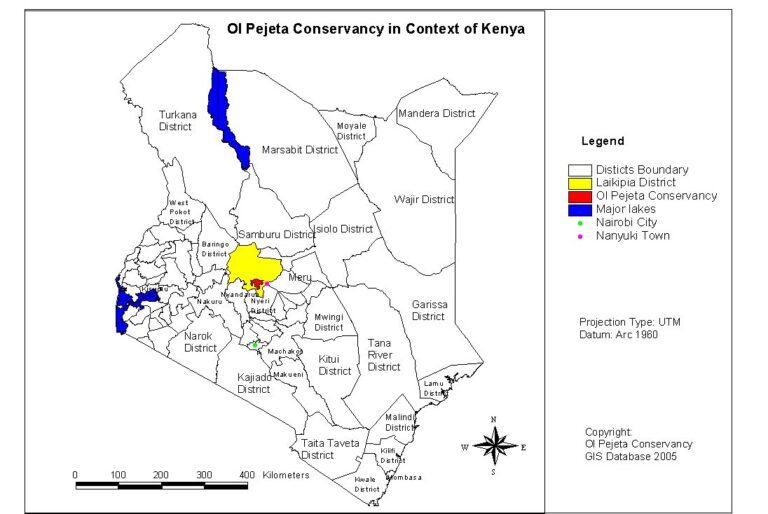 Laikipia and Ol Pejeta: Rhinos, Wild Dogs and Walking SafarisKenya's Laikipia Plateau is a patchwork of private and community conservancies with rhinos, wild dogs, night drives and…
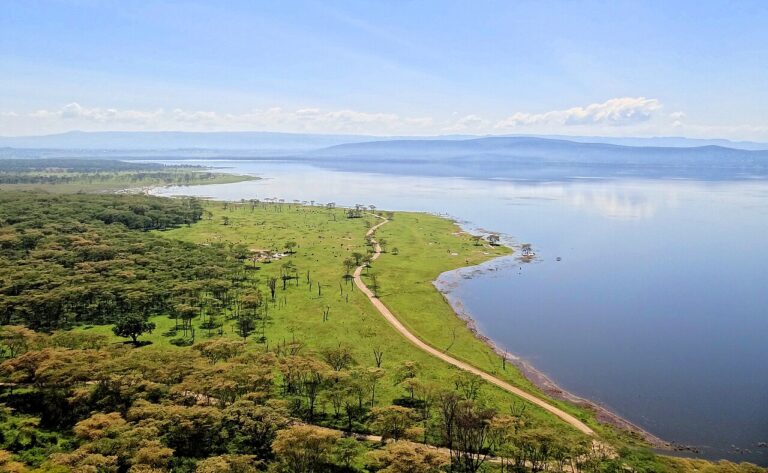 Lake Nakuru and the Rift Valley Lakes: Flamingos and RhinosKenya's Rift Valley lakes offer rhinos, flamingos, hippos and some of Africa's best birding within a few hours…
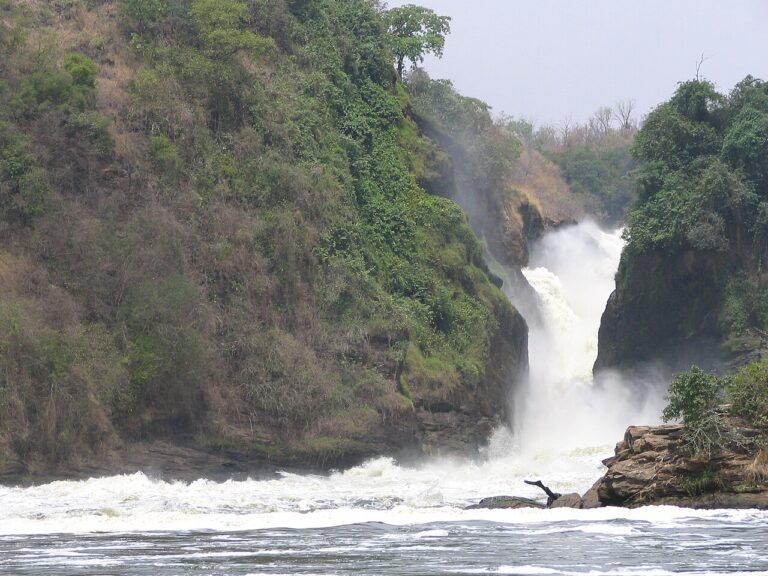 Murchison Falls National Park GuideUganda's largest national park is where the Nile explodes through a narrow gorge. Boat trips, shoebills, giraffes and…