When Europeans first sent a platypus skin back to Britain in 1799, some scientists thought it was a hoax: a duck’s bill sewn onto a mammal. The story sums up the wildlife of Australia and Oceania. After Australia separated from Antarctica and drifted north tens of millions of years ago, its animals evolved in isolation. The result is a continent dominated by marsupials and home to two of the only five surviving egg-laying mammals, and a region that includes New Guinea’s birds-of-paradise, New Zealand’s flightless birds and the greatest coral reef system on Earth.
It is also a region with a hard recent history. Australia has lost more mammal species to extinction since European colonisation than any other country, mainly to introduced cats and foxes, and New Zealand’s birds evolved without land mammals and suffered heavily when rats, stoats and people arrived.
Australia and Oceania at a glance
| Area | About 8.5 million km² (Oceania); Australia alone is about 7.7 million km² |
| Countries | 14, including Australia, Papua New Guinea, New Zealand, Fiji and the Pacific island nations |
| Major biomes | Deserts and arid grasslands, tropical savanna, tropical rainforest, eucalyptus woodland, temperate rainforest, alpine, coral reefs, kelp forests |
| Biodiversity hotspots | Southwest Australia, Forests of East Australia, New Caledonia, New Zealand, East Melanesian Islands, Polynesia-Micronesia |
| Signature animals | Red kangaroo, koala, platypus, echidna, wombat, Tasmanian devil, emu, cassowary, kookaburra, kiwi, kākāpō, birds-of-paradise, saltwater crocodile |
| Endemism in Australia | About 87 percent of mammals, 93 percent of reptiles and 94 percent of frogs are found nowhere else |
Habitats and the wildlife they support
The outback: deserts and arid grasslands
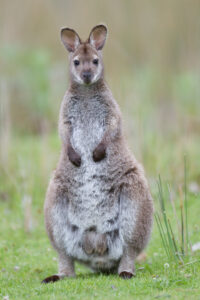
About 70 percent of Australia is arid or semi-arid. Red kangaroos, the largest marsupials, can travel long distances to find fresh grass after rain. Dingoes, emus, bilbies, thorny devils (lizards that drink by channelling water along grooves in their skin to their mouths) and perenties, Australia’s largest lizards, are all desert specialists. Many animals time their breeding to unpredictable rains rather than to seasons.
Eucalyptus woodlands and forests
Eucalypts dominate much of eastern and southern Australia. Koalas feed almost entirely on eucalyptus leaves, which are toxic and low in nutrients, so they sleep up to 20 hours a day. These forests are also home to eastern grey kangaroos, wallabies, common wombats, sugar gliders, possums, kookaburras, cockatoos, lyrebirds (champion mimics that can copy chainsaws and camera shutters) and echidnas.
Tropical rainforests
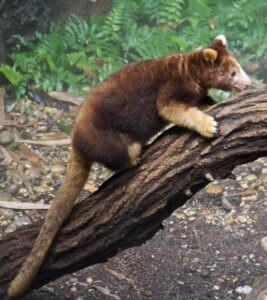
The Wet Tropics of Queensland, including the Daintree, are among the oldest continuously surviving rainforests on Earth. They hold the southern cassowary, a large flightless bird that spreads the seeds of more than 200 plant species, as well as tree kangaroos, musky rat-kangaroos (the most primitive living kangaroo), Ulysses butterflies and many species found nowhere else.
New Guinea, the second-largest island in the world, holds the largest remaining tropical rainforest in the Australasian region. It is the kingdom of the birds-of-paradise, around 45 species famous for extravagant plumes and elaborate courtship displays, and of tree kangaroos, cuscuses, long-beaked echidnas and the Victoria crowned pigeon.
Tropical savanna and wetlands of the north
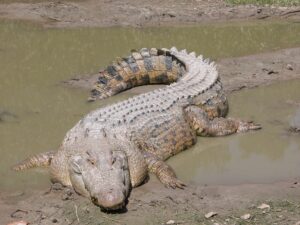
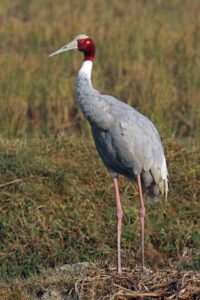
Northern Australia’s savannas and floodplains, protected in parks such as Kakadu, flood in the wet season (about November to April). Saltwater crocodiles, the largest living reptiles, patrol rivers and estuaries. The wetlands support huge flocks of magpie geese, brolgas, jabirus (black-necked storks) and whistling ducks. Frill-necked lizards and agile wallabies are common.
Tasmania
The island state of Tasmania is a refuge for species that have disappeared from the mainland. It is the only wild home of the Tasmanian devil, the largest surviving marsupial carnivore, and holds the eastern quoll, Tasmanian pademelon and Bennett’s wallaby. It was also the last stronghold of the thylacine (Tasmanian tiger), whose last known individual died in a Hobart zoo in 1936.
New Zealand
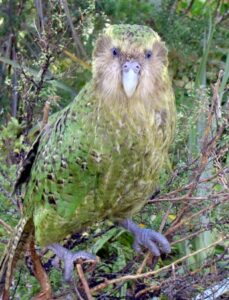
New Zealand separated from the rest of the ancient supercontinent Gondwana around 80 million years ago. Apart from bats and marine mammals it had no native land mammals, so birds took their place. The result includes five species of kiwi, the flightless nocturnal kākāpō (the world’s heaviest parrot), the alpine kea (a highly intelligent parrot), the takahē (rediscovered in 1948 after being thought extinct) and, until human hunters arrived, the giant moa and Haast’s eagle. The tuatara, the only surviving member of a reptile order that flourished alongside the dinosaurs, lives on predator-free islands.
Coral reefs, oceans and islands
The Great Barrier Reef stretches about 2,300 km along Queensland’s coast and is made up of around 3,000 individual reefs. It is the largest structure built by living organisms and home to about 1,500 fish species, six of the world’s seven sea turtle species, dugongs, sharks and rays. Ningaloo Reef in Western Australia is one of the best places on Earth to swim with whale sharks and humpback whales. Southern waters hold leafy and weedy seadragons, Australian sea lions, little penguins and southern right whales. The islands of the Pacific hold many endemic birds, lizards and snails, and the sub-Antarctic islands to the south hold vast seabird and penguin colonies.
Iconic mammals
| Animal | Scientific name | IUCN status | Where to see it |
|---|---|---|---|
| Red kangaroo | Osphranter rufus | Least Concern | Sturt National Park, Flinders Ranges, outback New South Wales |
| Koala | Phascolarctos cinereus | Vulnerable (Endangered in Queensland, New South Wales and the ACT under Australian law) | Kangaroo Island, Great Otway National Park, Magnetic Island |
| Platypus | Ornithorhynchus anatinus | Near Threatened | Eungella National Park, Tasmania’s rivers |
| Short-beaked echidna | Tachyglossus aculeatus | Least Concern | Widespread; Kangaroo Island, Tasmania |
| Tasmanian devil | Sarcophilus harrisii | Endangered | Tasmania (Cradle Mountain, Maria Island) |
| Common wombat | Vombatus ursinus | Least Concern | Wilsons Promontory, Maria Island, Cradle Mountain |
| Quokka | Setonix brachyurus | Vulnerable | Rottnest Island (Western Australia) |
| Dugong | Dugong dugon | Vulnerable | Shark Bay, Moreton Bay, Great Barrier Reef |
The platypus and echidnas are monotremes, mammals that lay eggs. The platypus hunts underwater with its eyes, ears and nostrils closed, finding prey through electroreceptors in its bill. Males have venomous spurs on their hind legs.
Tasmanian devils have been devastated by devil facial tumour disease, a rare contagious cancer passed between animals through bites, first seen in 1996. Populations fell by up to 80 percent or more in many areas. Disease-free insurance populations have been established, including on Maria Island.
Among marsupials, the numbat (a termite-eating specialist), bilby and northern hairy-nosed wombat (Critically Endangered, with a few hundred left) are conservation priorities. The dingo, which arrived in Australia with people several thousand years ago, is now Australia’s largest land predator.
Birds
- Emu, the second-largest bird in the world, which can run at about 50 km/h.
- Southern cassowary, listed as Least Concern globally but Endangered in Australia; one of the most dangerous birds when threatened.
- Laughing kookaburra, the giant kingfisher whose call is the classic sound of the Australian bush.
- Superb lyrebird, the world’s greatest vocal mimic.
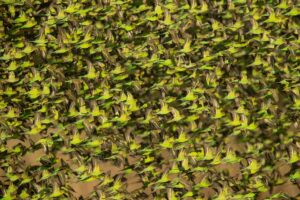
- Cockatoos, rosellas, lorikeets and budgerigars. Australia is sometimes called the land of parrots.
- Bowerbirds, whose males build and decorate elaborate structures to attract females.
- Birds-of-paradise in New Guinea and northeastern Australia.
- Kiwi, kākāpō, kea, takahē and yellow-eyed penguins in New Zealand. The kākāpō, down to 51 birds in 1995, now numbers around 250 thanks to an intensive recovery programme.
- Short-tailed shearwaters (muttonbirds), which migrate in their millions between Tasmania and the North Pacific.
Reptiles and amphibians
- Saltwater crocodile, the largest living reptile; big males can exceed 6 m.
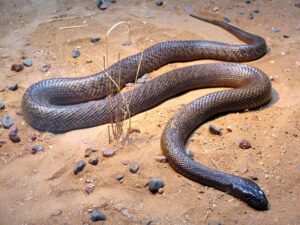
- Inland taipan, which has the most toxic venom of any land snake, although it is shy and rarely encountered.
- Thorny devil, frill-necked lizard, shingleback and goannas.
- Tuatara in New Zealand, a “living fossil” reptile.
- Frogs, including the gastric-brooding frogs (now extinct), which raised young in their stomachs, and the colourful corroboree frogs, Critically Endangered by chytrid fungus.
- Cane toads, introduced in 1935 to control beetles, which have spread across northern Australia and poison native predators that eat them.
Marine life
- Great Barrier Reef corals, turtles, reef sharks, manta rays and giant clams.
- Whale sharks at Ningaloo Reef from about March to July.
- Humpback whales migrating along the east and west coasts from about June to November, a population that has recovered strongly since whaling ended.
- Dugongs in Shark Bay, which has one of the largest dugong populations in the world.
- Leafy seadragons along South Australia’s coast.
- Box jellyfish in tropical waters from about October to May.
Great wildlife spectacles and when to see them
| Event | Where | When |
|---|---|---|
| Whale sharks | Ningaloo Reef, Western Australia | March to July |
| Humpback whale migration | Hervey Bay (Queensland), east and west coasts | July to October |
| Christmas Island red crab migration (tens of millions of crabs) | Christmas Island (Australian territory) | October to December, with the first wet-season rains |
| Coral spawning | Great Barrier Reef | A few nights after the full moon in October to December |
| Little penguin parade | Phillip Island, Victoria | Year-round, every evening at dusk |
| Turtle nesting and hatching | Mon Repos, Queensland | November to March |
| Sperm whales | Kaikōura, New Zealand | Year-round |
| Birds-of-paradise displays | Papua New Guinea highlands | Year-round, best dry season (May to October) |
Top wildlife destinations
| Destination | Country | Best for | Best time |
|---|---|---|---|
| Kangaroo Island | Australia | Kangaroos, koalas, sea lions, echidnas | September to May |
| Great Barrier Reef (Cairns, Port Douglas, Lady Elliot Island) | Australia | Reef life, turtles, manta rays | June to October |
| Daintree Rainforest | Australia | Cassowaries, tree kangaroos, crocodiles | May to October |
| Kakadu National Park | Australia | Crocodiles, wetland birds, rock art | May to October |
| Ningaloo Reef and Exmouth | Australia | Whale sharks, humpbacks, manta rays | March to October |
| Tasmania (Cradle Mountain, Maria Island) | Australia | Devils, wombats, platypuses, quolls | October to April |
| Rottnest Island | Australia | Quokkas | Year-round |
| Phillip Island | Australia | Little penguins, fur seals, koalas | Year-round |
| Kaikōura | New Zealand | Sperm whales, dusky dolphins, albatrosses | Year-round |
| Otago Peninsula | New Zealand | Royal albatrosses, yellow-eyed penguins | November to March |
| Stewart Island (Ulva Island) | New Zealand | Wild kiwi, forest birds | Year-round |
| Tari and Kumul Lodge | Papua New Guinea | Birds-of-paradise | May to October |
Conservation: threats and successes
The main threats
- Introduced predators. Feral cats and red foxes kill billions of native animals each year and are the main cause of Australia’s mammal extinctions. In New Zealand, rats, stoats and possums prey on native birds.
- Habitat clearing for agriculture and development.
- Bushfires. The 2019–20 Black Summer fires burned more than 24 million hectares and killed or displaced an estimated 3 billion animals.
- Coral bleaching. Marine heatwaves caused mass bleaching on the Great Barrier Reef in 2016, 2017, 2020, 2022 and 2024.
- Disease, including devil facial tumour disease and the chytrid fungus that has driven frog extinctions.
- Invasive species such as cane toads, rabbits, feral pigs, camels and weeds.
Successes worth knowing
- Predator-free fenced sanctuaries and islands have rescued species such as bilbies, numbats and bettongs.
- New Zealand’s Predator Free 2050 goal aims to eradicate rats, stoats and possums from the whole country.
- Kākāpō numbers have risen from 51 in 1995 to around 250.
- Humpback whales off eastern Australia have recovered from a few hundred after whaling to tens of thousands.
- Tasmanian devil insurance populations have been established, and a small population was returned to mainland Australia in a fenced sanctuary in 2020.
For researchers
- Australian Institute of Marine Science (AIMS), which runs long-term monitoring of the Great Barrier Reef.
- CSIRO, Australia’s national science agency.
- Lizard Island and Heron Island research stations on the Great Barrier Reef.
- Department of Conservation (Te Papa Atawhai) in New Zealand.
- Data sources: Atlas of Living Australia, Threatened Species Index, IUCN Red List, GBIF and eBird.
Test yourself
How well do you know the wildlife of Australia and Oceania? Take the quick quiz.
Frequently asked questions
What animals are only found in Australia? Kangaroos (and most wallabies), koalas, wombats, Tasmanian devils, platypuses, emus, kookaburras, lyrebirds, quokkas, numbats and many more; about 87 percent of Australia’s mammals are endemic.
Where is the best place to see kangaroos and koalas together? Kangaroo Island in South Australia and the Great Otway National Park in Victoria.
Is the Great Barrier Reef dying? It has suffered repeated mass bleaching events since 2016, and scientists regard climate change as its biggest threat. Parts of the reef have shown recovery between events, and it is still well worth visiting.
Where can I see a platypus in the wild? Eungella National Park in Queensland and rivers in Tasmania, at dawn and dusk.
Does New Zealand have native mammals? Only bats and marine mammals such as seals, dolphins and whales. All other land mammals were introduced by people.
Explore more
- Animal profiles: Red Kangaroo, Koala, Platypus, Tasmanian Devil, Saltwater Crocodile
- Learn: Island biogeography, Conservation biology