Asia is the largest continent and the most varied. It stretches from the Arctic tundra of Siberia to the equatorial rainforests of Borneo, and from the Dead Sea, the lowest point on land, to the summit of Everest, the highest. In between are the Himalaya, the steppes of Mongolia, the deserts of Arabia and Central Asia, the monsoon forests of India, the flooded plains of the Mekong, and the world’s richest coral reefs.
That range of habitats supports some of the most loved and most threatened animals on the planet: the tiger, snow leopard, giant panda, Asian elephant, three species of orangutan, the greater one-horned rhinoceros and the Komodo dragon. Asia is also home to more than half of the world’s people, so the story of its wildlife is a story of coexistence under pressure.
Asia at a glance
| Area | About 44.6 million km², the largest continent |
| Countries | About 48 |
| Major biomes | Tundra, boreal forest (taiga), temperate forest, steppe, deserts, high mountains, tropical monsoon and rain forests, mangroves, coral reefs |
| Biodiversity hotspots | Including the Himalaya, Indo-Burma, Western Ghats and Sri Lanka, Sundaland, Wallacea, the Philippines, the Mountains of Southwest China and Japan |
| Signature animals | Tiger, snow leopard, giant panda, Asian elephant, orangutans, greater one-horned rhino, red panda, Komodo dragon, king cobra |
| Key wildlife regions | Indian subcontinent, Himalaya, Borneo and Sumatra, southwest China, Siberia and the Russian Far East |
Habitats and the wildlife they support
The Himalaya and high mountains
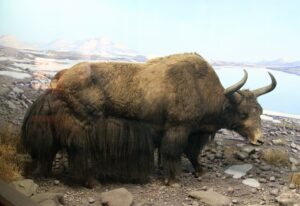
The Himalaya, Karakoram and the Tibetan Plateau form the highest landscape on Earth. Alpine meadows and rocky slopes above the tree line are the realm of the snow leopard, which hunts blue sheep (bharal), Himalayan tahr and Siberian ibex. The Tibetan antelope (chiru), wild yak and kiang (Tibetan wild ass) graze the cold high plateau. Lower down, temperate forests of oak, rhododendron and fir hold red pandas, Himalayan black bears, musk deer and brilliantly coloured pheasants such as the Himalayan monal, Nepal’s national bird.
Tropical monsoon forests and grasslands of South Asia
India, Nepal, Bhutan, Bangladesh and Sri Lanka hold the world’s largest tiger population and an extraordinary mix of animals in dry deciduous forests, sal forests, riverine grasslands and wetlands. The tall grasslands of the Terai and the Brahmaputra floodplain, protected in parks such as Chitwan and Kaziranga, are the stronghold of the greater one-horned rhinoceros, alongside Asian elephants, tigers, swamp deer (barasingha), wild water buffalo and the Critically Endangered Bengal florican. Dry forests in central India, such as Kanha, Bandhavgarh, Tadoba and Ranthambore, are the best places in the world to see wild tigers.
Tropical rainforests of Southeast Asia
The rainforests of Borneo, Sumatra, the Malay Peninsula and mainland Southeast Asia are among the oldest and most species-rich on Earth. They shelter the orangutans, the only great apes outside Africa, along with gibbons, proboscis monkeys, sun bears, clouded leopards, Malayan tapirs, Sumatran rhinos and Asian elephants. Hornbills fly over the canopy, and giant flowers such as Rafflesia bloom on the forest floor.
These forests are also some of the most rapidly cleared, mainly for oil palm, pulp plantations, logging and mining.
Wallacea and the Wallace Line
In the 1850s the naturalist Alfred Russel Wallace noticed a sharp change in wildlife between Bali and Lombok, and between Borneo and Sulawesi, even though the islands are close together. West of this line the animals are Asian: tigers, rhinos, monkeys, woodpeckers. East of it they become increasingly Australian: marsupials such as cuscuses, and cockatoos and honeyeaters. The islands in between, known as Wallacea, have evolved unique species such as the anoa, babirusa, maleo and the Sulawesi crested black macaque. The Komodo dragon, the world’s largest lizard, lives only on Komodo, Rinca, Flores and a few nearby islands.
Temperate forests and the mountains of China
The bamboo forests of Sichuan, Shaanxi and Gansu are the only home of the giant panda. The same mountains hold golden snub-nosed monkeys, takin, red pandas, golden pheasants and the Chinese giant salamander, the largest amphibian in the world. In the Russian Far East and northeast China, mixed forests shelter the Amur tiger and the Amur leopard, one of the rarest big cats.
Steppes and deserts
The grasslands of Mongolia and Kazakhstan once held some of the largest herds of hoofed mammals outside Africa. The saiga antelope, with its strange bulbous nose, crashed by over 95 percent in the 1990s from poaching, then lost more than 200,000 animals to a bacterial disease in 2015. It has since rebounded strongly in Kazakhstan, one of the fastest recoveries of any large mammal. Przewalski’s horse, the last truly wild horse, was extinct in the wild by the late 1960s and has been reintroduced to Mongolia and China. In the Gobi, wild Bactrian camels and Gobi bears survive in tiny numbers. The Arabian oryx of the Arabian Peninsula was hunted to extinction in the wild in 1972 and reintroduced from captive herds from 1982 onwards.
Taiga and tundra
Siberia’s boreal forest is the largest forest in the world. It is home to brown bears, wolves, Eurasian lynx, wolverines, sables, moose and reindeer, and to huge numbers of breeding birds in summer. Lake Baikal, the oldest and deepest lake on Earth, holds the Baikal seal, the only seal that lives exclusively in fresh water.
Rivers, wetlands, mangroves and seas
The Sundarbans on the Bay of Bengal, shared by India and Bangladesh, is the world’s largest mangrove forest and the only mangrove habitat with tigers. Asia’s great rivers, including the Ganges, Brahmaputra, Mekong and Yangtze, hold river dolphins, gharials, giant softshell turtles and giant fish such as the Mekong giant catfish. The Coral Triangle, which includes Indonesia, the Philippines and Malaysia, holds about three-quarters of the world’s coral species and more reef fish species than anywhere else.
Iconic mammals
| Animal | Scientific name | IUCN status | Best places to see |
|---|---|---|---|
| Tiger | Panthera tigris | Endangered | Ranthambore, Bandhavgarh, Tadoba, Kanha (India); Chitwan and Bardiya (Nepal) |
| Snow leopard | Panthera uncia | Vulnerable | Hemis National Park (Ladakh), Spiti Valley (India), Mongolia’s Altai |
| Giant panda | Ailuropoda melanoleuca | Vulnerable | Wild: Foping and Wolong reserves; Chengdu breeding centre |
| Asian elephant | Elephas maximus | Endangered | Minneriya and Kaudulla (Sri Lanka), Jim Corbett, Kaziranga, Periyar |
| Bornean, Sumatran and Tapanuli orangutans | Pongo pygmaeus, P. abelii, P. tapanuliensis | Critically Endangered | Tanjung Puting, Danum Valley, Kinabatangan, Gunung Leuser |
| Greater one-horned rhinoceros | Rhinoceros unicornis | Vulnerable | Kaziranga (India), Chitwan (Nepal) |
| Red panda | Ailurus fulgens | Endangered | Singalila (India), eastern Nepal, Bhutan |
| Proboscis monkey | Nasalis larvatus | Endangered | Kinabatangan River, Bako National Park (Borneo) |
Tigers are the largest cats in the world. There were perhaps 100,000 wild tigers at the start of the twentieth century; by 2010 the estimate had fallen to about 3,200. The 2010 “TX2” commitment by the 13 tiger-range countries aimed to double wild tigers by 2022. Numbers have since risen, and a 2023 global estimate put the wild population at about 5,500. India holds roughly three-quarters of the world’s wild tigers (a 2022 estimate of about 3,680), and Nepal nearly tripled its population from 121 in 2009 to 355 in 2022.
The snow leopard is so elusive that it is called the “grey ghost”. Around 4,000 to 6,500 are thought to survive across 12 countries. It cannot roar, and its long, thick tail works as a counterbalance on steep slopes and as a blanket in the cold.
The giant panda was downlisted from Endangered to Vulnerable in 2016 after decades of habitat protection. China’s fourth national panda survey counted 1,864 wild pandas. Pandas spend up to 14 hours a day eating bamboo, which provides little energy, so they move slowly and rest often.
Asian elephants are smaller than African elephants, with smaller ears and a twin-domed head, and usually only some males have tusks. Fewer than 50,000 remain in the wild, and human–elephant conflict is one of the biggest conservation problems in India and Sri Lanka.
All three orangutan species are Critically Endangered. The Tapanuli orangutan, described as a new species in 2017, numbers fewer than 800 animals in a single forest block in northern Sumatra, making it the rarest great ape.
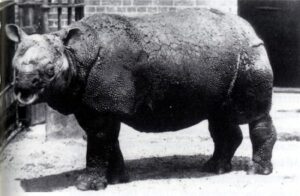
The greater one-horned rhinoceros is a conservation success. From fewer than 200 in the early twentieth century, numbers have risen to over 4,000 today, with about two-thirds in Kaziranga National Park. Asia’s two other rhinos are in a far worse state: the Javan rhino survives only in Ujung Kulon National Park in Java (fewer than 80 animals, and possibly far fewer after poaching cases uncovered in 2024), and the Sumatran rhino may number fewer than 50.
Other notable mammals include the clouded leopard, dhole (Asian wild dog), sloth bear, Indian gaur (the largest wild cattle), blackbuck, Asiatic lion (surviving only in Gir National Park, Gujarat), gibbons, slow lorises, tarsiers, binturong and the saola, a forest bovid discovered in Vietnam and Laos only in 1992 and almost never seen alive.
Birds
Asia’s birdlife is as diverse as its landscapes. Highlights include:
- Himalayan monal, satyr tragopan and other pheasants of the Himalayan forests.
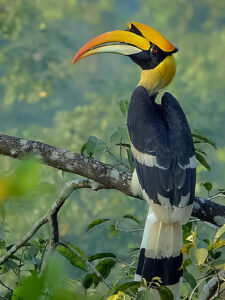
- Great hornbill, rhinoceros hornbill and the Critically Endangered helmeted hornbill, hunted for its solid casque.
- Philippine eagle, Critically Endangered, one of the largest and most powerful eagles in the world, with only a few hundred pairs remaining.
- Siberian crane and spoon-billed sandpiper, both Critically Endangered migrants.
- Sarus crane, the world’s tallest flying bird, in the wetlands of India and Nepal.
- Indian peafowl, red junglefowl (the wild ancestor of the domestic chicken) and hundreds of species of babblers, laughingthrushes and bulbuls.
Asia sits on three major migration routes: the Central Asian Flyway, the East Asian–Australasian Flyway and the West Asia–East Africa Flyway. Each autumn, Amur falcons gather in their hundreds of thousands in Nagaland, India, before crossing the Arabian Sea to Africa, and bar-headed geese fly over the Himalaya.
Reptiles and amphibians
- Komodo dragon (Varanus komodoensis), Endangered. The largest living lizard, up to about 3 m long.
- King cobra (Ophiophagus hannah), Vulnerable. The world’s longest venomous snake, which mainly eats other snakes.
- Reticulated python, the longest snake in the world, occasionally exceeding 7 m.
- Gharial (Gavialis gangeticus), Critically Endangered. A fish-eating crocodilian with a long, thin snout, surviving mainly in the Chambal River (India) and the Narayani and Rapti rivers (Nepal).
- Saltwater crocodile, which ranges from India to northern Australia.
- Indian star tortoise, Burmese star tortoise and many freshwater turtles heavily hit by the pet and food trade.
- Chinese giant salamander, Critically Endangered, which can reach nearly 2 m.
Marine and freshwater life
- Coral Triangle reefs with manta rays, turtles and thousands of fish species; Raja Ampat and Komodo are world-class dive sites.
- Whale sharks in the Philippines (Donsol) and the Maldives.
- Dugongs in seagrass beds from the Red Sea to the Philippines.
- Ganges river dolphin, Irrawaddy dolphin and the finless porpoise; the Yangtze’s baiji was declared probably extinct in 2006.
- Baikal seal, the world’s only exclusively freshwater seal.
Great wildlife spectacles and when to see them
| Event | Where | When |
|---|---|---|
| Tiger season | Central Indian reserves; Chitwan and Bardiya (Nepal) | March to June (hot, dry, tigers visit water) |
| Amur falcon roost | Doyang, Wokha district, Nagaland (India) | October to November |
| Wintering waterbirds | Keoladeo (Bharatpur), India; Koshi Tappu, Nepal | November to February |
| Demoiselle crane gathering | Khichan, Rajasthan (India) | September to March |
| Elephant “gathering” | Minneriya and Kaudulla, Sri Lanka | July to October |
| Orangutan fruiting season | Borneo and Sumatra | Varies; often wettest months |
| Synchronous fireflies | Kuala Selangor (Malaysia) and parts of Thailand | Year-round, strongest in wet season |
| Snow leopard season | Hemis and Spiti, India | January to March |
Top wildlife destinations
| Park or reserve | Country | Best for | Best time |
|---|---|---|---|
| Ranthambore National Park | India | Tigers among fort ruins | October to June |
| Bandhavgarh and Kanha | India | High tiger density, sal forests | October to June |
| Tadoba-Andhari Tiger Reserve | India | Tigers, sloth bears, dholes | October to June |
| Kaziranga National Park | India | One-horned rhinos, elephants, wild buffalo | November to April |
| Chitwan National Park | Nepal | Rhinos, tigers, gharials, birds | October to March |
| Bardiya National Park | Nepal | Tigers, quieter wilderness | October to May |
| Hemis National Park | India (Ladakh) | Snow leopards | January to March |
| Yala National Park | Sri Lanka | Leopards, elephants, sloth bears | February to July |
| Danum Valley and Kinabatangan | Malaysia (Sabah, Borneo) | Orangutans, proboscis monkeys, hornbills | March to October |
| Tanjung Puting National Park | Indonesia (Kalimantan) | Orangutans by river boat | May to September |
| Komodo National Park | Indonesia | Komodo dragons, diving | April to December |
| Wolong and Foping | China | Wild and semi-wild giant pandas | Spring and autumn |
For planning advice, see our Best places to see tigers in India and Chitwan National Park safari guide.
Conservation: threats and successes
The main threats
- Deforestation for oil palm, pulp, rubber and agriculture, especially in Borneo and Sumatra.
- Wildlife trade. Demand for traditional medicine, luxury food and exotic pets drives trafficking of pangolins, tiger parts, bear bile, turtles and songbirds.
- Infrastructure. Roads, railways, dams and mines fragment habitats; hydropower on the Mekong threatens fisheries and river wildlife.
- Human–wildlife conflict, particularly with elephants, tigers and leopards in densely populated landscapes.
- Climate change, which is shrinking mountain habitats such as those of the snow leopard and threatening low-lying mangroves and coral reefs.
Successes worth knowing
- Tigers in India and Nepal have increased strongly since 2010, thanks to protected areas, anti-poaching work and relocation of villages with consent and compensation.
- Greater one-horned rhinos have recovered from fewer than 200 to over 4,000.
- Giant pandas were downlisted to Vulnerable in 2016 after decades of reserve creation.
- Saiga antelope numbers in Kazakhstan have recovered to well over a million animals.
- Przewalski’s horse and the Arabian oryx were brought back from extinction in the wild through captive breeding and reintroduction.
For researchers
- Wildlife Institute of India (Dehradun), which leads India’s national tiger estimation.
- Bombay Natural History Society, one of Asia’s oldest conservation research bodies.
- National Trust for Nature Conservation (Nepal), which runs research in Chitwan and the Annapurna Conservation Area.
- Danum Valley Field Centre (Sabah, Malaysia), a centre for rainforest research.
- Snow Leopard Trust and the Global Tiger Forum for species-level data.
- Global resources: IUCN Red List, GBIF, eBird, Movebank and Global Forest Watch for deforestation data.
Test yourself
How well do you know the wildlife of Asia? Take the quick quiz.
Frequently asked questions
Where is the best place to see a wild tiger? Central Indian reserves such as Bandhavgarh, Tadoba, Kanha and Ranthambore offer the highest chances, especially from March to May. Chitwan and Bardiya in Nepal are good alternatives.
How many tigers are left in the wild? About 5,500 according to a 2023 global estimate, with roughly three-quarters in India.
Which Asian animals are Critically Endangered? Examples include all three orangutans, the Sumatran and Javan rhinos, the Amur leopard, the saola, the gharial, the Philippine eagle, the helmeted hornbill and the spoon-billed sandpiper.
Where can I see orangutans in the wild? Tanjung Puting (Indonesian Borneo), Danum Valley and the Kinabatangan River (Malaysian Borneo) and Gunung Leuser National Park (Sumatra).
What is the Wallace Line? A biogeographical boundary between Asia’s and Australia’s faunas, running between Bali and Lombok and between Borneo and Sulawesi.
Explore more
- Animal profiles: Tiger, Snow Leopard, Giant Panda, Orangutan, Komodo Dragon
- Travel: Best places to see tigers in India, Chitwan National Park safari guide
- On this site: Wild cats of Nepal, Venomous snakes of Nepal, King cobra