North America runs from the Arctic Ocean to the Isthmus of Panama, and its wildlife covers everything in between: polar bears on the sea ice of Hudson Bay, caribou herds on the tundra, grizzlies fishing for salmon in Alaska, bison on the Great Plains, alligators in the Everglades, and jaguars, tapirs and quetzals in the rainforests of Central America. It is also the continent that invented the national park; Yellowstone, created in 1872, was the first in the world.
North America’s conservation history includes some of the worst losses of the modern era, such as the extinction of the passenger pigeon, once probably the most numerous bird on Earth, and some of the most celebrated recoveries, including the bald eagle, American alligator, grey wolf and humpback whale.
North America at a glance
| Area | About 24.7 million km², including Central America and the Caribbean |
| Countries | 23 |
| Major biomes | Arctic tundra, boreal forest, temperate rainforest and deciduous forest, prairie, deserts, subtropical wetlands, tropical rainforest, coral reefs |
| Biodiversity hotspots | California Floristic Province, Madrean Pine-Oak Woodlands, Mesoamerica, Caribbean Islands, North American Coastal Plain |
| Signature animals | American bison, grizzly and polar bears, grey wolf, moose, caribou, bald eagle, monarch butterfly, American alligator, jaguar |
| First national park | Yellowstone, 1872 |
Habitats and the wildlife they support
Arctic tundra and sea ice
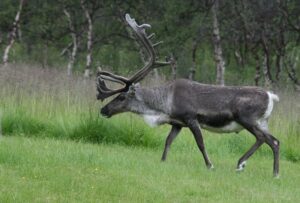
Northern Alaska, Arctic Canada and Greenland hold treeless tundra and frozen seas. Polar bears hunt seals on the sea ice. Caribou migrate in vast herds; the Porcupine caribou herd travels between Alaska and Canada’s Yukon on one of the longest land migrations on Earth. Muskoxen, Arctic foxes, Arctic wolves and snowy owls live here year-round, while millions of shorebirds and geese arrive to breed in the short summer. The seas hold belugas, narwhals, bowhead whales and walruses.
Boreal forest
A belt of spruce, fir, pine and birch forest runs across Canada and Alaska. It is home to moose, black bears, wolves, Canada lynx, wolverines, beavers and billions of breeding songbirds, which is why the boreal forest is sometimes called North America’s bird nursery. The ten-year cycle of snowshoe hares and the lynx that hunt them is one of the best-known predator–prey cycles in ecology.
Temperate rainforest and coastal mountains
The Pacific coast from Alaska to northern California holds some of the largest temperate rainforests on Earth, including the Great Bear Rainforest of British Columbia. Here grizzly bears and black bears gather at rivers to catch spawning salmon, whose bodies fertilise the forest. The rare white-coated spirit bear (Kermode bear), a black bear with a recessive gene, lives only on this coast. The Rocky Mountains hold mountain goats, bighorn sheep, elk (wapiti), cougars and grizzly bears.
Eastern deciduous forests
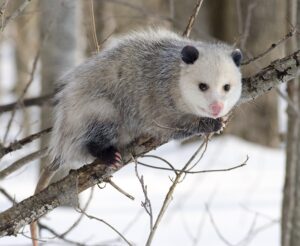
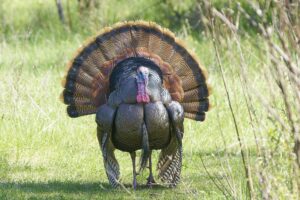
Forests of oak, maple, hickory and beech once covered the eastern United States. They support white-tailed deer, black bears, wild turkeys, raccoons, opossums (the only marsupial north of Mexico) and an extraordinary diversity of salamanders, especially in the Appalachian Mountains, the world’s salamander capital.
The Great Plains and prairies
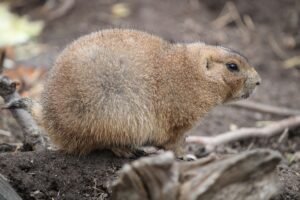
Before the nineteenth century, the Great Plains held between 30 and 60 million American bison, alongside pronghorn, elk, grey wolves, prairie dogs and grizzly bears. By 1889 fewer than 1,000 bison were left. Today about 30,000 live in conservation herds, with hundreds of thousands more raised commercially. Pronghorn, the fastest land mammal in the Americas, can run at about 90 km/h. Black-tailed prairie dogs dig huge “towns” that shelter burrowing owls, rattlesnakes and the endangered black-footed ferret, which was thought extinct until a small population was found in Wyoming in 1981.
Deserts
The Sonoran, Chihuahuan, Mojave and Great Basin deserts are home to Gila monsters (one of the few venomous lizards), roadrunners, desert tortoises, kangaroo rats (which may never need to drink), javelinas, coyotes, bobcats and the giant saguaro cactus, whose flowers feed nectar bats on migration.
Subtropical wetlands and the Caribbean
The Everglades of Florida is a slow-moving “river of grass” where American alligators and American crocodiles live side by side, the only place on Earth where both occur together. It also supports West Indian manatees, the endangered Florida panther (a population of cougar), roseate spoonbills and wood storks. Caribbean islands have many endemic species, including iguanas, hutias, solenodons (venomous mammals found only in Cuba and Hispaniola) and colourful todies and parrots.
Central American rainforests and cloud forests
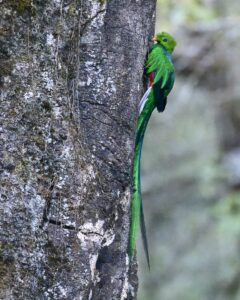
From southern Mexico to Panama, tropical forests hold jaguars, Baird’s tapirs, howler and spider monkeys, sloths, ocelots, harpy eagles, scarlet macaws, toucans, resplendent quetzals and a spectacular diversity of frogs, including glass frogs and red-eyed tree frogs. Costa Rica, about 0.03 percent of the world’s land surface, holds roughly 5 percent of its known species.
Coasts and oceans
The Mesoamerican Barrier Reef, running along Mexico, Belize, Guatemala and Honduras, is the second-largest barrier reef in the world. The Pacific coast has grey whales, humpback whales, blue whales, orcas and sea otters, and the Gulf of California, which Jacques Cousteau called “the world’s aquarium”, holds whale sharks, manta rays and sea lions. Sadly it is also the only home of the vaquita, the world’s smallest and rarest porpoise, now reduced to perhaps ten animals by bycatch in illegal gillnets.
Iconic mammals
| Animal | Scientific name | IUCN status | Where to see it |
|---|---|---|---|
| American bison | Bison bison | Near Threatened | Yellowstone, Custer State Park, Wood Buffalo (Canada) |
| Grizzly (brown) bear | Ursus arctos | Least Concern | Katmai and Lake Clark (Alaska), Yellowstone, Great Bear Rainforest |
| Polar bear | Ursus maritimus | Vulnerable | Churchill (Manitoba), Kaktovik (Alaska) |
| Grey wolf | Canis lupus | Least Concern | Yellowstone’s Lamar Valley, Denali, Algonquin |
| Moose | Alces alces | Least Concern | Denali, Grand Teton, Algonquin, Maine |
| Caribou | Rangifer tarandus | Vulnerable | Denali, Arctic National Wildlife Refuge |
| Jaguar | Panthera onca | Near Threatened | Cockscomb Basin (Belize), Calakmul (Mexico) |
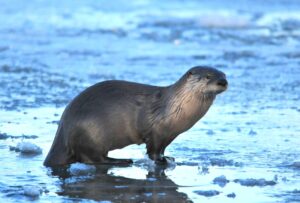
| Sea otter | Enhydra lutris | Endangered | Monterey Bay (California), Kachemak Bay (Alaska) |
The grey wolf was eliminated from Yellowstone by the 1920s. Its reintroduction in 1995 and 1996, when 31 wolves from Canada were released (another 10 followed in 1997), became one of the most studied experiments in ecology. Wolves reduced and moved elk herds, which researchers link to changes in riverside vegetation, beavers and scavengers, although the full extent of this “trophic cascade” is still debated.
Polar bears depend on sea ice to hunt seals. There are about 26,000 worldwide, and they are the clearest symbol of the effects of climate change in the Arctic. Churchill, on Hudson Bay, is known as the polar bear capital of the world because bears gather there in October and November waiting for the bay to freeze.
The sea otter has the densest fur of any animal, up to about a million hairs per square inch. It was hunted almost to extinction for that fur, and its recovery has shown how a single predator can protect whole kelp forests by eating sea urchins.
Birds
- Bald eagle, the national bird of the United States. DDT poisoning reduced it to about 417 nesting pairs in the lower 48 states by 1963. After DDT was banned in 1972 it recovered to more than 70,000 pairs.
- California condor, Critically Endangered, the largest land bird in North America. By 1987 the last 27 condors were taken into captivity; there are now more than 500, over half flying free in California, Arizona, Utah and Baja California.
- Whooping crane, Endangered. It fell to about 15 birds in 1941 and now numbers around 800.
- Resplendent quetzal, the sacred bird of the Maya and Guatemala’s national bird.
- Sandhill cranes. Several hundred thousand gather on the Platte River in Nebraska each March.
- Hummingbirds. The ruby-throated hummingbird crosses the Gulf of Mexico nonstop on migration, and the rufous hummingbird travels from Mexico to Alaska.
- Wood warblers, snow geese, Atlantic puffins, roseate spoonbills, great horned owls and snowy owls.
North America has lost an estimated 3 billion breeding birds since 1970, about a quarter of its bird population, mainly common species in grasslands and forests.
Reptiles and amphibians
- American alligator, once endangered and now numbering millions after protection; removed from the endangered list in 1987.
- American crocodile, which lives in southern Florida, the Caribbean and Central America.
- Gila monster and the Mexican beaded lizard, venomous lizards of the southwest.
- Rattlesnakes, with more species in Mexico and the southwestern US than anywhere else.
- Sea turtles. Kemp’s ridley, the most endangered sea turtle, nests mainly at Rancho Nuevo in Mexico; olive ridleys come ashore in mass “arribadas” at Ostional in Costa Rica.
- Salamanders, including the hellbender and the axolotl, now Critically Endangered in its only home, the canals of Xochimilco in Mexico City.
Marine and freshwater life
- Grey whales migrate about 16,000 to 20,000 km each year between Arctic feeding grounds and Baja California’s lagoons, one of the longest migrations of any mammal.
- Humpback whales feed in Alaska and calve in Hawaii and Mexico; orcas live in the Salish Sea and around Vancouver Island.
- Pacific salmon runs feed bears, eagles and forests from California to Alaska.
- Whale sharks gather off Isla Holbox and Isla Mujeres, Mexico, from June to September.
- Manatees shelter in Florida’s warm springs, such as Crystal River, in winter.
Insects
The monarch butterfly performs the longest insect migration in North America. Eastern monarchs fly 4,000 km or more from Canada and the United States to overwinter in a few fir forests in the mountains of central Mexico, where millions cluster on trees from November to March. No single butterfly makes the round trip; it takes several generations. The synchronous fireflies of the Great Smoky Mountains flash in unison for about two weeks each year, usually in late May or June.
Great wildlife spectacles and when to see them
| Event | Where | When |
|---|---|---|
| Polar bears waiting for sea ice | Churchill, Manitoba | October to November |
| Beluga whales in the Churchill River | Churchill, Manitoba | July to August |
| Brown bears fishing for salmon | Brooks Falls, Katmai (Alaska) | July and September |
| Grey whale calving lagoons | San Ignacio and Magdalena Bay, Baja California | January to March |
| Monarch butterfly overwintering | Monarch Butterfly Biosphere Reserve, Michoacán (Mexico) | November to March |
| Sandhill crane migration | Platte River, Nebraska | March |
| Elk rut | Yellowstone, Rocky Mountain National Park | September to October |
| Synchronous fireflies | Great Smoky Mountains (Tennessee) | Late May to June |
| Whale shark season | Holbox and Isla Mujeres, Mexico | June to September |
| Olive ridley arribadas | Ostional, Costa Rica | Year-round, peaking July to December |
Top wildlife destinations
| Park or region | Country | Best for | Best time |
|---|---|---|---|
| Yellowstone National Park | United States | Wolves, bison, grizzlies, elk | Year-round; winter for wolves |
| Denali National Park | United States (Alaska) | Grizzlies, moose, caribou, Dall sheep | June to August |
| Katmai National Park | United States (Alaska) | Brown bears at Brooks Falls | July and September |
| Churchill | Canada | Polar bears, belugas | Oct–Nov (bears), Jul–Aug (belugas) |
| Great Bear Rainforest | Canada | Grizzlies, spirit bears, humpbacks | May to October |
| Banff and Jasper | Canada | Elk, bighorn sheep, bears | May to October |
| Everglades National Park | United States | Alligators, manatees, wading birds | December to April |
| Grand Teton National Park | United States | Moose, pronghorn, bears | May to October |
| Baja California | Mexico | Grey whales, whale sharks, sea lions | January to April |
| Corcovado and Tortuguero | Costa Rica | Tapirs, monkeys, sea turtles, macaws | December to April (turtles Jul–Oct) |
| Monteverde | Costa Rica | Quetzals, cloud forest | Year-round |
| Cockscomb Basin Wildlife Sanctuary | Belize | Jaguar reserve, rainforest birds | February to May |
Conservation: threats and successes
The main threats
- Habitat loss from agriculture, urban sprawl and energy development, especially in grasslands, which are among the most endangered ecosystems on the continent.
- Climate change, shrinking sea ice, warming rivers for salmon and pushing mountain species uphill.
- Invasive species, such as Burmese pythons in the Everglades and chytrid fungus in amphibians.
- Wildlife disease, including white-nose syndrome, which has killed millions of North American bats.
- Bycatch, which has driven the vaquita to the brink.
- Pesticides, including neonicotinoids, linked to declines in insects and birds.
Successes worth knowing
- The US Endangered Species Act (1973) is credited with preventing the extinction of more than 99 percent of listed species.
- Bald eagles, peregrine falcons, American alligators and humpback whales have all recovered after protection.
- The grey wolf returned to Yellowstone and has naturally recolonised parts of the western United States.
- California condors, down to 27 birds, now fly free again in several states.
- Bison herds are being restored on tribal lands and reserves, including by the InterTribal Buffalo Council.
For researchers
- Smithsonian Tropical Research Institute (Panama) and La Selva Biological Station (Costa Rica), major centres for tropical ecology.
- Yellowstone Wolf Project, running since 1995.
- Cornell Lab of Ornithology, which runs eBird and the Macaulay Library.
- US Geological Survey and US Fish and Wildlife Service species data.
- Global resources: IUCN Red List, GBIF, iNaturalist and Movebank.
Test yourself
How well do you know the wildlife of North America? Take the quick quiz.
Frequently asked questions
Where is the best place to see wildlife in North America? Yellowstone is often called the Serengeti of North America for its wolves, bison, bears and elk. Alaska (Denali and Katmai), Churchill and Costa Rica are also outstanding.
Where can I see polar bears? Churchill in Manitoba, Canada, in October and November is the most reliable and accessible place.
When can I see bears catching salmon? At Brooks Falls in Katmai National Park, Alaska, in July and again in September.
How many bison are left? About 30,000 in conservation herds and several hundred thousand in commercial herds, compared with tens of millions before the nineteenth century.
What is the most endangered animal in North America? The vaquita porpoise of Mexico’s Gulf of California, with only around ten left, is the most endangered marine mammal in the world.
Explore more
- Animal profiles: American Bison, Polar Bear, Grey Wolf, Bald Eagle, Monarch Butterfly
- Learn: Food webs and trophic cascades, Predator–prey cycles