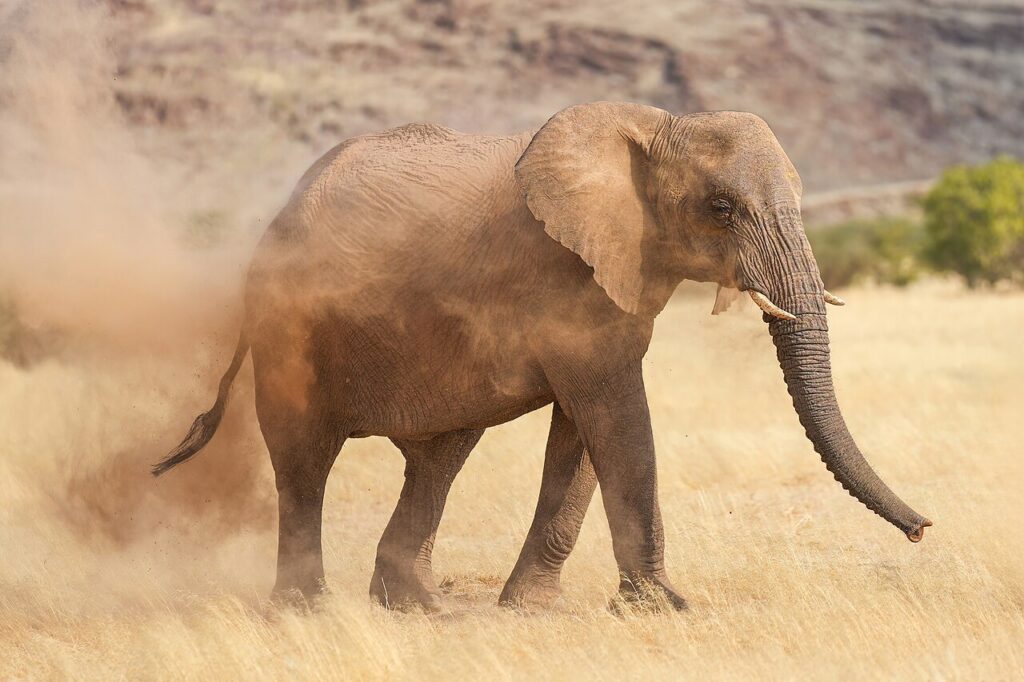
Damaraland and the wider Kunene region of north-west Namibia are some of the driest places where large mammals live. Elephants walk dozens of kilometres between waterholes along dry riverbeds, and black rhinos browse on toxic euphorbia plants among red rocks and table mountains. Remarkably, most of this wildlife lives outside national parks, on communal land where local people have chosen to protect it.
At a glance
| Best time | May to October (dry season) |
| Getting there | About 5 to 6 hours by road from Windhoek, or fly to lodge airstrips |
| Time needed | 2 to 4 nights |
| Big draws | Desert elephants, black rhino tracking on foot, landscapes, rock art |
| Good for | Namibia self-drive trips, adventurous travellers |
Desert-adapted elephants
- These are African savanna elephants, not a separate species, but they have adapted to the desert: they travel long distances, can go several days without drinking and dig for water in dry riverbeds.
- They move along the ephemeral rivers such as the Huab, Ugab, Aba-Huab and Hoanib, where trees and underground water sustain them.
- Only a few hundred live in the region, and human–elephant conflict over water and crops is a real challenge for local farmers. See our African elephant profile.
Black rhinos
- North-west Namibia holds the largest population of free-roaming black rhinos living outside formal protected areas in the world.
- Save the Rhino Trust, founded in 1982, works with community rhino rangers to monitor every animal.
- Rhino tracking on foot: several lodges, working with trackers and conservancies, take small groups to find rhinos on foot, often after hours of searching by vehicle. It is one of Africa’s great wildlife experiences. See our black rhinoceros profile.
Community conservancies
Since 1996, Namibian law has allowed rural communities to form conservancies and earn income from wildlife through tourism and other uses. Dozens now exist, and wildlife numbers in the north-west recovered strongly after the poaching of the 1980s. Several lodges are joint ventures with conservancies such as Torra and ≠Khoadi-//Hôas, and staying there directly supports this model.
Other things to do
- Twyfelfontein: a UNESCO World Heritage Site with thousands of rock engravings made by hunter-gatherers.
- Brandberg: Namibia’s highest mountain and the famous “White Lady” rock painting.
- Spitzkoppe: dramatic granite peaks with rock art and camping.
- The Hoanib and skeleton Coast: remote river valleys with elephants, giraffes and brown hyenas, reached on fly-in trips.
When to go
- May to October: dry season; elephants stay near the rivers and waterholes, and temperatures are pleasant (cold at night).
- November to April: hot, with occasional storms. Rivers may flood briefly after rain.
Responsible viewing
- Always go with an experienced local guide.
- Keep your distance from elephants and never block their path to water.
- Follow tracker instructions exactly on rhino walks, and never share rhino locations or geotagged photos.
- Stay in conservancy-owned or partner lodges so tourism income reaches local people.
Frequently asked questions
Are desert elephants a different species? No. They are African savanna elephants with behaviour adapted to the desert.
Can I see desert elephants on a self-drive trip? Sometimes, in the Aba-Huab and Huab riverbeds near Twyfelfontein, but a local guide greatly increases your chances and keeps both you and the elephants safe.
How much does rhino tracking cost? It is usually included in stays at specialist lodges or sold as an activity. Prices vary; ask lodges directly.
Is Damaraland safe to drive? Yes, with care. Roads are gravel, distances are long and fuel stations few, so plan well.
Related guides
- Namibia self-drive wildlife itinerary: 14 days
- Etosha National Park guide
- Best places to see rhinos in Africa
- Animal profiles: African elephant, Black rhinoceros, Giraffe
Cover photo: Giles Laurent, CC BY-SA 4.0, via Wikimedia Commons