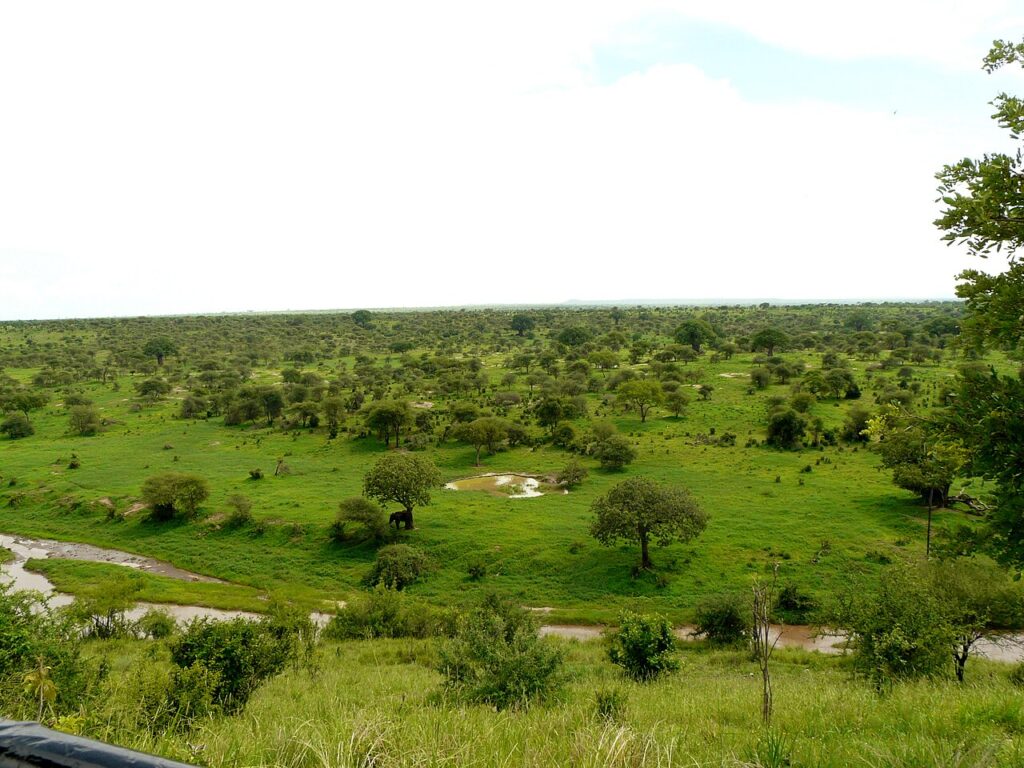
Tarangire National Park is the quiet giant of Tanzania’s northern safari circuit. Many travellers pass through on the way to the Serengeti and Ngorongoro, but in the dry season Tarangire holds some of the highest elephant densities in East Africa, gathered along a river framed by baobab trees that can be many centuries old.
The park covers about 2,850 km² south of Lake Manyara. Its heart is the Tarangire River, which keeps flowing when the surrounding plains dry out. From about July to October, elephants, zebras, wildebeest, buffalo and antelope walk in from a much larger area to drink, and predators follow them.
At a glance
| Best time | June to October (dry season) for big herds |
| Getting there | About 2 to 2.5 hours by road from Arusha; airstrips inside and near the park |
| Time needed | 1 to 3 nights |
| Big draws | Elephant herds, baobabs, lions, huge bird list |
| Good for | First safaris, photographers, combining with Ngorongoro and the Serengeti |
Wildlife highlights
- Elephants: herds of dozens, sometimes hundreds, dig for water in the dry riverbed and strip bark from baobabs. Tarangire is one of the best places in Tanzania to watch family groups up close. See our African elephant profile.
- Lions and leopards: prides patrol the river and the Silale Swamp. Lions here sometimes rest in trees, and leopards are seen in the riverine woodland.
- Pythons in trees: African rock pythons are regularly found coiled in the branches along the river, something few parks can match.
- Grazers and browsers: zebras, wildebeest, buffalo, giraffes, impala, eland, fringe-eared oryx and the small, shy lesser kudu and gerenuk in drier corners.
- Birds: more than 500 species have been recorded. Look for the yellow-collared lovebird and ashy starling (both found only in Tanzania), kori bustards, ground hornbills and flocks of red-billed queleas. See our lilac-breasted roller and secretary bird profiles.
When to go
- June to October: the best time for wildlife. The river becomes the only reliable water, animals concentrate and the grass is short. September and October bring the biggest elephant gatherings but also heat and dust.
- November to May: the rains. Many animals migrate out of the park onto the Simanjiro plains and neighbouring community lands, so densities drop. The park is green and quiet, migrant birds arrive, and prices fall. April and May are the wettest months, and some camps close.
How to explore
- Game drives follow the river loops in the north, which have the highest concentrations, and the Silale Swamp further south. The southern part of the park is much less visited.
- Walking safaris and night drives are not normally allowed inside the national park, but camps in the neighbouring wildlife management areas (such as Burunge and Randilen) and private concessions offer both.
- Balloon flights operate in some seasons and give a remarkable view of the river and baobabs.
Getting there
Tarangire is about 120 km from Arusha on a paved road, a drive of roughly two to two and a half hours. Most visitors come as part of a guided northern circuit safari, usually before or after Lake Manyara, Ngorongoro and the Serengeti. Scheduled light aircraft stop at Kuro airstrip inside the park and at airstrips near the camps outside it.
Where to stay
- Inside the park: a small number of lodges and tented camps overlook the river, including long-established options near the northern entrance.
- In the wildlife management areas: camps such as tree houses and small tented camps in Randilen and Burunge offer walking, night drives and fewer vehicles, while still being a short drive from the park gate.
- Budget: campsites and lodges in the towns of Mto wa Mbu and Karatu work for road-based safaris, though you will spend longer driving.
Costs and park fees
Tanzania’s national park fees are charged per person for each 24 hours in the park, plus vehicle and guide fees. At the time of writing, the adult conservation fee for foreign visitors to Tarangire is roughly US$50–60 plus VAT. Fees change, so check the Tanzania National Parks (TANAPA) website or ask your operator. See our safari cost guide for full budgets.
Sample itinerary: Tarangire in a 7-day northern circuit
| Day | Plan |
|---|---|
| 1 | Arusha to Tarangire; afternoon game drive along the river |
| 2 | Full day in Tarangire, including the Silale Swamp |
| 3 | Drive to Lake Manyara or the Ngorongoro highlands |
| 4 | Ngorongoro Crater |
| 5–6 | Central or seasonal Serengeti |
| 7 | Fly back to Arusha |
Tips
- Visit Tarangire at the start of a northern circuit. It eases you in before the busier Ngorongoro Crater.
- Tsetse flies can be common in the wooded areas. Wear light, neutral colours (avoid dark blue and black) and bring repellent.
- Spend at least one full day. The quieter south rewards the extra time.
- Ask your guide to stop at the baobabs at golden hour for the classic elephant-and-baobab photograph.
Conservation note
Tarangire’s animals depend on land outside the park for much of the year. The wet-season dispersal areas are shared with Maasai communities, and corridors to Lake Manyara and the Simanjiro plains are under pressure from farming and settlement. Staying in community-owned wildlife management areas helps make wildlife worth more than the alternatives.
Frequently asked questions
Is Tarangire worth visiting? Yes, especially from June to October. It has some of the best elephant viewing in East Africa, fewer vehicles than the Serengeti’s busiest areas, and a distinctive baobab landscape.
How many days do I need in Tarangire? One full day covers the northern river circuit. Two or three nights, ideally including a stay in a neighbouring concession for walks and night drives, give a fuller experience.
Can you see the Big Five in Tarangire? You can see elephants, buffalo, lions and leopards. Rhinos are not present, so combine Tarangire with the Ngorongoro Crater for a chance of black rhinos.
Is Tarangire good in the wet season? It is beautiful and quiet, with excellent birds, but many large mammals leave the park. For the big herds, go in the dry season.
Related guides
- Ngorongoro Crater safari guide
- Serengeti Great Migration month by month
- First African safari planning guide
- Animal profiles: African elephant, Lion, Giraffe
Cover photo: xorge, CC BY-SA 2.0, via Wikimedia Commons