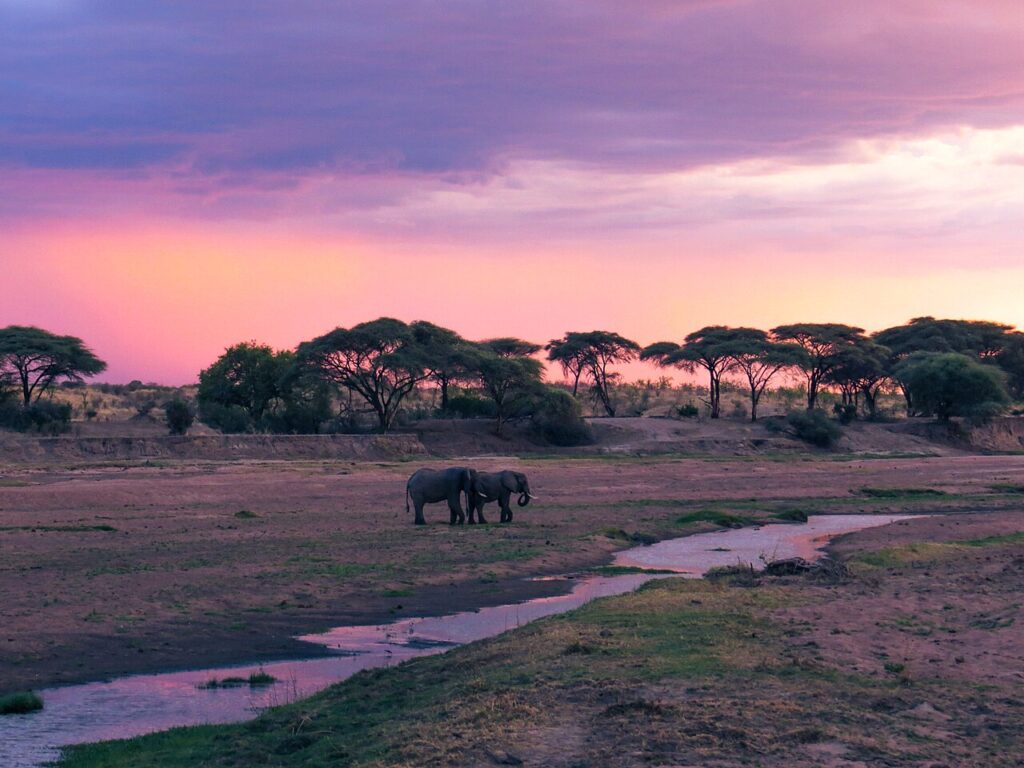
If the northern circuit is Tanzania’s classic safari, the south is its wilderness. Ruaha and Nyerere (the former Selous Game Reserve) together cover more than 50,000 km², yet they receive a small fraction of the visitors of the Serengeti. Game drives can pass for hours without another vehicle.
The two parks are different enough to combine well. Ruaha is dry, rugged and famous for predators. Nyerere is a water world of rivers and lakes where you can explore by boat and on foot.
At a glance
| Best time | June to October |
| Getting there | Light aircraft from Dar es Salaam, Zanzibar or Arusha |
| Time needed | 3 nights in each park |
| Big draws | Lions, wild dogs, elephants, greater and lesser kudu, boat safaris |
| Good for | Second safaris, walking, people who want to avoid crowds |
Ruaha National Park
Ruaha is one of the largest national parks in East Africa, about 20,000 km² of baobab-studded hills, sand rivers and miombo woodland. The Great Ruaha River is its lifeline.
- Lions: the wider Ruaha landscape is thought to hold around one in ten of Africa’s remaining lions, and prides can be large. See our lion profile.
- Wild dogs: Ruaha holds one of the continent’s most important African wild dog populations.
- Cheetahs and leopards: cheetahs hunt on the open plains in the east, and leopards are common along the rivers.
- Antelope: Ruaha sits where East and southern African species meet, so you can see both greater and lesser kudu, plus sable and roan antelope in the miombo woodland.
- Elephants: numbers fell sharply to poaching in the 2000s and early 2010s, but herds are still regularly seen at the river.
Nyerere National Park (Selous)
In 2019, the northern part of the Selous Game Reserve became Nyerere National Park, about 30,900 km² in size. Most camps sit along the Rufiji River and its chain of lakes.
- Boat safaris glide past hippos, crocodiles, elephants drinking and huge numbers of waterbirds, including African skimmers and fish eagles.
- Walking safaris with armed rangers and fly-camping trips are a highlight.
- Wild dogs: the Selous ecosystem has long been one of Africa’s strongholds for them.
- Other wildlife: lions, buffalo, giraffes, Nyasaland wildebeest and many hippos.
A large hydropower dam on the Rufiji River at Stiegler’s Gorge, completed in the early 2020s, was controversial because of its possible effects on the river and the downstream delta.
When to go
- June to October (dry season): best for game viewing, as animals gather at rivers and vegetation thins. October is very hot in Ruaha.
- November to March: short and then heavier rains, lush landscapes, excellent birds and lower rates. Some camps close.
- April and May: the long rains. Many camps close and roads can be impassable.
Getting there
Scheduled light aircraft connect Dar es Salaam, Zanzibar and Arusha with airstrips in both parks, and a flight between the two parks takes about an hour. Driving is possible: Ruaha is about 130 km from Iringa, and Nyerere can be reached by road from Dar es Salaam, but the flights save long days on rough roads.
Where to stay
Both parks have a range of tented camps and lodges, from simple bush camps to luxury lodges, mostly along the rivers. Ruaha also has public campsites and park bandas for self-sufficient travellers. Camps that offer walking and fly camping are worth seeking out.
Costs
Southern Tanzania is generally cheaper than the most famous northern camps, but flights add to the budget. Park fees are charged per person per 24 hours; check current TANAPA rates or ask your operator. See our safari cost guide.
Sample itinerary: 7 nights in the south
| Days | Plan |
|---|---|
| 1–3 | Fly from Dar es Salaam to Nyerere; boat safaris on the Rufiji lakes, a walking safari and game drives |
| 4–6 | Fly to Ruaha; game drives along the Great Ruaha River and to the eastern plains for cheetahs |
| 7 | Fly to Dar es Salaam or Zanzibar for the beach |
Tips
- Book camps that include boat trips and walks in Nyerere: they are the park’s best experiences.
- Allow three nights in Ruaha. Its predators are spread over a huge area.
- Pack light for light aircraft (usually 15 to 20 kg in soft bags).
- End with a few days on Zanzibar, which is a short flight away.
Frequently asked questions
Is Ruaha better than the Serengeti? They are different. The Serengeti has the Great Migration and more wildlife overall. Ruaha has fewer vehicles, a wilder feel, excellent predators and species such as greater kudu and sable that are rare in the north.
What is the difference between Selous and Nyerere? Nyerere National Park was created in 2019 from the northern part of the Selous Game Reserve, which includes nearly all the photographic tourism areas. The rest remains the Selous Game Reserve.
Can you do a walking safari in Ruaha or Nyerere? Yes. Walking with an armed ranger and guide is offered by many camps in both parks, and some offer overnight fly camping.
When is the best time for wild dogs? The dry season, especially June to August, when packs may be denning and are easier to locate.
Related guides
- Where to see African wild dogs
- Walking safaris: where to go and what to expect
- Chimpanzee trekking in Mahale and Gombe
- Animal profiles: African wild dog, Greater kudu, Hippopotamus
Cover photo: Brian Harries, CC BY 2.0, via Wikimedia Commons