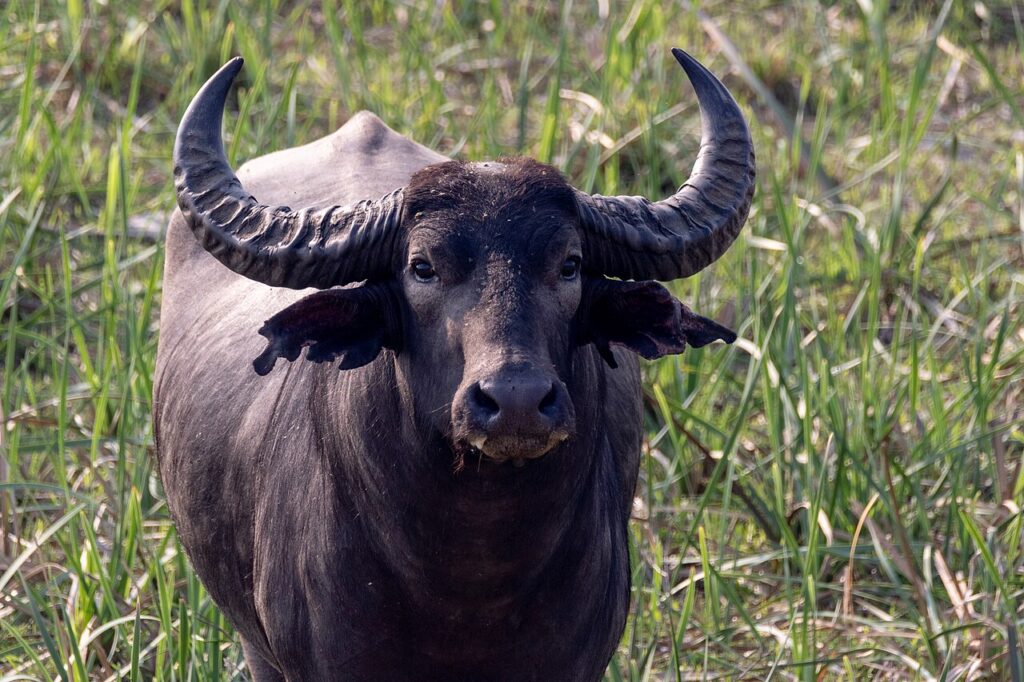
Koshi Tappu Wildlife Reserve protects about 175 km² of floodplain, grassland and wetland along the Koshi River in south-eastern Nepal. It is one of the most important wetlands in the country, a Ramsar site since 1987, and a magnet for birds: more than 500 species have been recorded here and in the surrounding area. It is also the last refuge in Nepal of the wild water buffalo, or arna.
At a glance
| Best time | November to March |
| Getting there | Fly Kathmandu to Biratnagar, then about 1.5 to 2 hours by road |
| Time needed | 2 to 3 nights |
| Big draws | Wintering waterbirds, raptors, grassland birds, wild water buffalo |
| Good for | Birders, photographers, combining with eastern Nepal |
Birds
- Winter waterbirds: huge flocks of ducks and geese, including bar-headed geese, ruddy shelducks, falcated ducks, ferruginous ducks and, rarely, the critically endangered Baer’s pochard. See our bar-headed goose profile.
- Storks and cranes: black-necked storks, lesser adjutants, Asian openbills, woolly-necked storks and sarus cranes. See our sarus crane profile.
- Raptors: Pallas’s fish eagle, greater spotted eagle, eastern imperial eagle, and harriers quartering the grassland.
- Grassland specialists: swamp francolin, Bengal florican, striated grassbird and several prinias and warblers.
- The Koshi Barrage: the barrage south of the reserve is a famous spot for gulls, terns, ducks, and sometimes Indian skimmers.
Wild water buffalo
About 400 to 500 wild water buffalo live in the reserve, the only population in Nepal. They are larger and more powerful than domestic buffalo, with huge swept-back horns, but they interbreed with domestic buffalo, which threatens their genetic integrity. See our wild water buffalo profile.
Other wildlife
Gangetic river dolphins in the Koshi River, mugger crocodiles, golden jackals, blue bull (nilgai), hog deer and smooth-coated otters.
When to go
- November to March: peak season for wintering waterbirds and raptors.
- March to April: spring migration; breeding plumages.
- June to September: the monsoon floods much of the reserve.
Getting there
Fly from Kathmandu to Biratnagar (about 40 minutes), then drive about 1.5 to 2 hours. The reserve lies just off the East–West Highway, so it can also be reached by road from Kathmandu or Chitwan.
Where to stay
A few eco-camps and lodges near the reserve boundary specialise in birding and provide guides, boats and jeeps. Simpler accommodation is available in nearby villages.
Birding tips
- Hire a local bird guide: they know the best sites and calls.
- Take a boat trip on the Koshi River for waterbirds, dolphins and crocodiles.
- Visit the barrage early in the morning.
- Bring a spotting scope for distant waterbirds.
Frequently asked questions
How many bird species are at Koshi Tappu? More than 500 species have been recorded in and around the reserve.
When is the best time for birding at Koshi Tappu? November to March, when wintering waterbirds and raptors are present.
Can I see wild water buffalo? Yes. The reserve holds Nepal’s only population of wild water buffalo, and they are regularly seen.
Can I combine Koshi Tappu with other destinations? Yes. It pairs well with Chitwan, Ilam’s tea gardens and red panda areas in eastern Nepal.
Related guides
- Birdwatching in Nepal
- Red panda trekking in Nepal
- Chitwan National Park safari guide
- Animal profiles: Wild water buffalo, Bar-headed goose, Bengal florican
Cover photo: Aditya Pal, CC BY-SA 4.0, via Wikimedia Commons