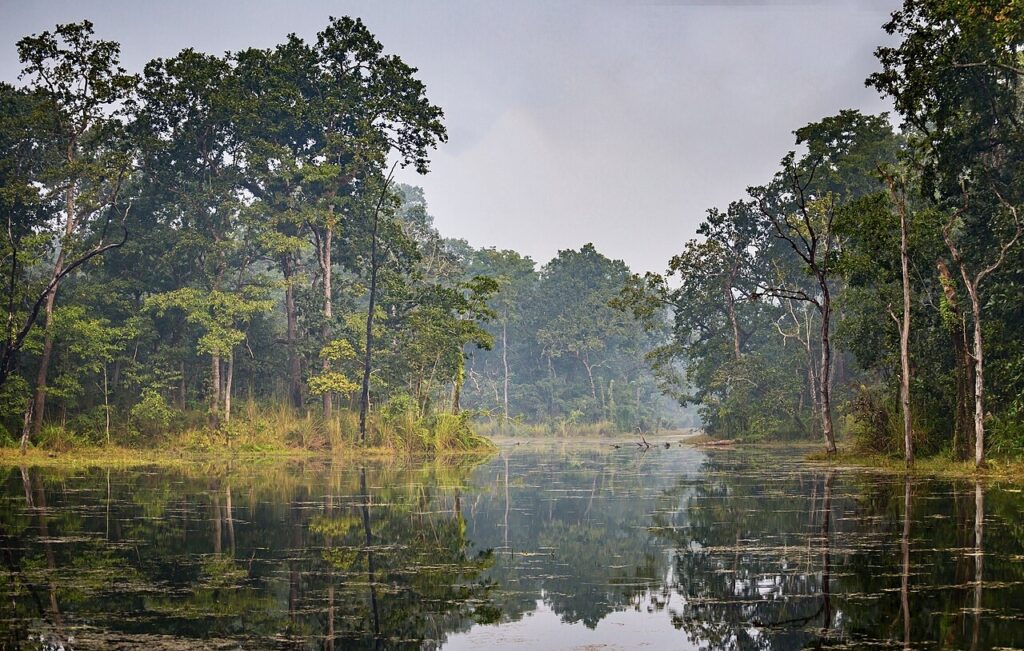
Chitwan National Park, in the lowland Terai of southern Nepal, is one of the best places in Asia to see the greater one-horned rhinoceros, and one of the few places where you can look for tigers, sloth bears, leopards, gharials and wild elephants on the same trip. It is also easy to reach from Kathmandu and Pokhara, affordable, and full of birds. This guide covers everything you need to plan a visit.
Chitwan at a glance
| Location | Chitwan, Nawalparasi and Makwanpur districts, southern Nepal |
| Established | 1973 as Nepal’s first national park; UNESCO World Heritage Site since 1984 |
| Area | About 950 km², with a buffer zone of about 730 km² |
| Habitats | Sal forest, riverine forest, tall grassland, rivers, oxbow lakes |
| Key wildlife | Greater one-horned rhino, Bengal tiger, leopard, sloth bear, wild elephant, gaur, gharial, mugger crocodile, four deer species |
| Birds | More than 500 species recorded |
| Best time | October to March (pleasant weather); February to May (best sightings) |
| Main gateway | Sauraha; luxury lodges near Meghauli and Barauli |
Wildlife you can see
Greater one-horned rhinoceros
Chitwan holds Nepal’s largest population of greater one-horned rhinos, 694 at the 2021 national count. They graze in the grasslands and wallow in pools and rivers, and are often seen from jeeps, canoes and even from the riverbank at Sauraha. Rhino numbers in Chitwan fell to only about 100 in the late 1960s before the park was created, and their recovery is one of Asia’s great conservation stories.
Bengal tiger
Nepal’s 2022 tiger survey estimated 355 tigers nationwide, with Chitwan holding the largest share. Seeing one is still a matter of luck, because tigers here are shy and the vegetation is dense. Your best chance is on full-day jeep safaris in the drier months from February to May, particularly in the western and central parts of the park.
Other mammals
- Leopards and sloth bears, most often seen early in the morning or at dusk.
- Asian elephants, including wild herds that move between Nepal and India.
- Gaur, the world’s largest wild cattle, in the Churia hills and sal forests.
- Spotted deer (chital), sambar, hog deer and barking deer.
- Rhesus macaques and grey langurs.
- Smooth-coated otters and, occasionally, striped hyenas and dholes (wild dogs).
Reptiles
The Rapti and Narayani rivers hold two species of crocodile. The mugger crocodile is common and easy to see from canoes. The gharial, with its long, thin snout, is Critically Endangered; Chitwan’s gharial breeding centre near Kasara has released hundreds of young gharials into the rivers.
Birds
Chitwan is one of the best birding destinations in Nepal. Highlights include the great hornbill, Bengal florican, lesser adjutant, kingfishers of several species, paradise flycatchers, peafowl, ospreys and ibisbills in winter. Winter brings migratory waterfowl and raptors; spring brings breeding displays and calls.
When to visit
| Season | Months | What to expect |
|---|---|---|
| Autumn | October to November | Clear skies, pleasant temperatures, tall grass after the monsoon limits visibility early in the season |
| Winter | December to February | Cool mornings with fog, warm days; excellent birding |
| Spring | March to May | Grass is cut and burned, improving visibility; best time for rhino and tiger sightings; hot by May |
| Monsoon | June to September | Heavy rain, leeches and high rivers; some activities and areas close |
Local communities are allowed to cut thatch grass in the park each January, and managed burning follows, so from February onwards visibility improves greatly. For wildlife photography, February to April is hard to beat.
Getting there
- From Kathmandu: tourist buses to Sauraha take about five to seven hours depending on traffic. Private cars are faster and more comfortable.
- By air: flights from Kathmandu to Bharatpur take about 25 minutes; Sauraha is about 30 to 40 minutes’ drive from the airport.
- From Pokhara: about five hours by bus or car.
- From the Indian border: Chitwan is a few hours’ drive from the Sunauli and Birgunj border crossings.
Where to stay
- Sauraha, on the northern edge of the park, is the main gateway. It has everything from budget guesthouses to comfortable resorts, and many activities start within walking distance.
- Meghauli, Barauli and Amaltari, in the west, have quieter, higher-end lodges and community-run homestays, often with better access to less-visited parts of the park.
- Community homestays run by Tharu families are a good way to support local people and experience local culture.
Activities
Jeep safaris
Half-day and full-day jeep safaris are the best way to cover ground and look for tigers, leopards and sloth bears. Full-day safaris, which go deeper into the park, give you the best chance of rare species. Morning departures are usually the most productive.
Canoe trips
Traditional dugout canoe trips on the Rapti River are a peaceful way to see crocodiles, birds, and sometimes rhinos and deer at the water’s edge. They are often combined with a jungle walk back.
Jungle walks
Walking safaris with licensed guides are one of the most memorable ways to experience Chitwan. They are also one of the riskiest: rhinos, sloth bears, elephants and tigers can all be dangerous on foot. Always go with at least two experienced, licensed guides, follow their instructions exactly, and choose a reputable operator. Longer walks and overnight treks in the community forests are also possible.
Birdwatching
Early morning birding walks along the river and in the community forests of the buffer zone, such as Bis Hajar Tal (a wetland north of the park), can produce dozens of species in a few hours.
Tharu culture
The Tharu people have lived in the Terai for centuries. Many visitors enjoy the Tharu cultural dance performances in Sauraha and visits to Tharu villages and museums.
A note on elephant experiences
Elephant-back safaris were once the main way to see rhinos in Chitwan, but they raise serious animal welfare concerns, and many lodges have stopped offering them. Several now offer ethical alternatives, such as observing elephants in more natural settings. If you want to see elephants, we recommend choosing experiences that do not involve riding.
Park fees and permits
Foreign visitors pay a park entry fee of about NPR 2,000 per person per day, and visitors from SAARC countries pay about NPR 1,000. Fees for activities such as jeep safaris, canoeing and guided walks are charged separately, and guides are required for most activities inside the park. Fees change from time to time, so confirm current rates with your lodge or operator.
Sample itineraries
Two nights: arrive in the afternoon for a sunset walk and Tharu cultural show; full day with a morning canoe trip, jungle walk and afternoon jeep safari; morning birdwalk before departure.
Three to four nights: add a full-day jeep safari deep into the park, a visit to the gharial breeding centre, and a morning at Bis Hajar Tal for birds.
Combining with other parks: Chitwan pairs well with Bardiya National Park in western Nepal for a better chance of tigers, and Koshi Tappu in the east for birds.
Responsible travel tips
- Stay in locally owned lodges and homestays and hire licensed local guides.
- Keep your distance from wildlife, especially rhinos, and never approach animals on foot.
- Avoid elephant rides and captive animal shows.
- Reduce plastic use; refill water bottles where possible.
- Respect local customs, and ask before photographing people.
Frequently asked questions
Can I see tigers in Chitwan? Yes, but sightings are not guaranteed. Full-day jeep safaris from February to May give you the best chance.
What is the best time to visit Chitwan? October to March has the most pleasant weather. February to May offers the best wildlife visibility after the grass is cut.
How many days should I spend in Chitwan? Two nights is a minimum; three or four nights gives you time for a full-day safari and a walk.
Is it safe to walk in the jungle? Walking safaris carry real risks. Go only with experienced, licensed guides and follow their instructions.
How do I get from Kathmandu to Chitwan? By tourist bus or private car (five to seven hours) or by a 25-minute flight to Bharatpur.
Related guides
- Wildlife of Asia
- Best places to see tigers in India
- On this site: Wild cats of Nepal, Venomous snakes of Nepal
- Animal profiles: Tiger, King Cobra
Cover photo: Vadim Tolbatov, CC BY-SA 4.0, via Wikimedia Commons