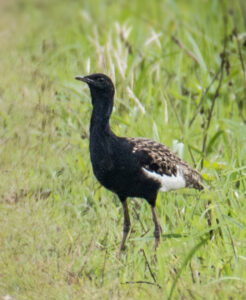
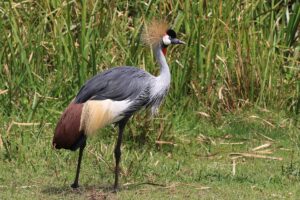
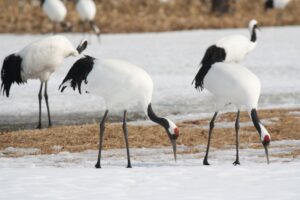
The sarus crane is a huge, grey crane with a red head, found in South Asia, Southeast Asia and northern Australia. In India, it is revered and protected by many rural communities.
Interesting facts
- Pairs mate for life and are a symbol of marital devotion in India.
- Couples perform loud ‘unison calls’ and elaborate dances.
- It is the state bird of Uttar Pradesh, India.
- In India, sarus cranes often live alongside people in farmland and village ponds.
- Its red head and upper neck are bare skin.
- Australian sarus cranes gather in winter roosts on the Atherton Tablelands.
Behaviour
Sarus cranes are usually seen in pairs or family groups, and gather in larger flocks in the dry season. They forage in shallow water and fields, and are not migratory, moving locally with the seasons.
Breeding and young
Pairs build large platform nests of reeds and grass in shallow wetlands. They lay one or two eggs, incubated for about 31 days. Chicks can walk soon after hatching.
Threats and conservation
Loss and drainage of wetlands, pesticide use, collisions with power lines, and egg and chick collection. Southeast Asian populations have declined steeply.
Where to see it
- Wetlands of Uttar Pradesh, such as Etawah and Mainpuri, India
- Keoladeo National Park, Bharatpur, India
- Lumbini, Nepal
- Atherton Tablelands, Queensland, Australia
Status source: IUCN Red List. Profile last reviewed September 2026.
Where to see the sarus crane
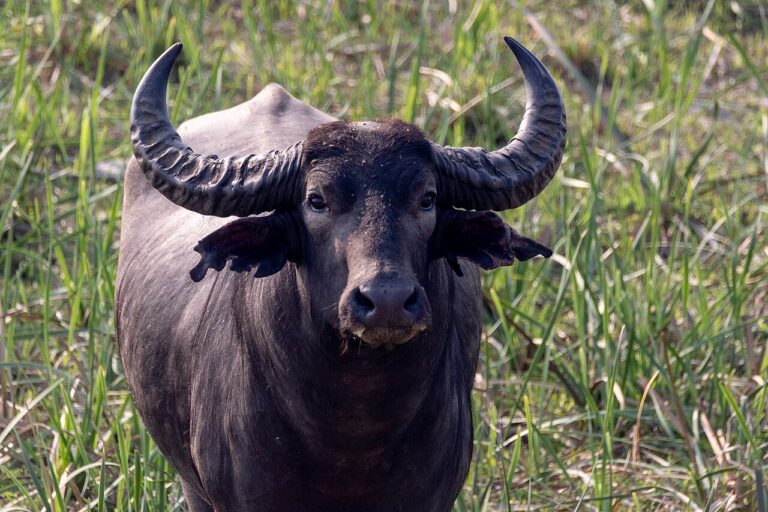 Koshi Tappu Birding GuideNepal's premier wetland reserve attracts huge numbers of wintering waterbirds and holds the country's last wild water buffalo.…
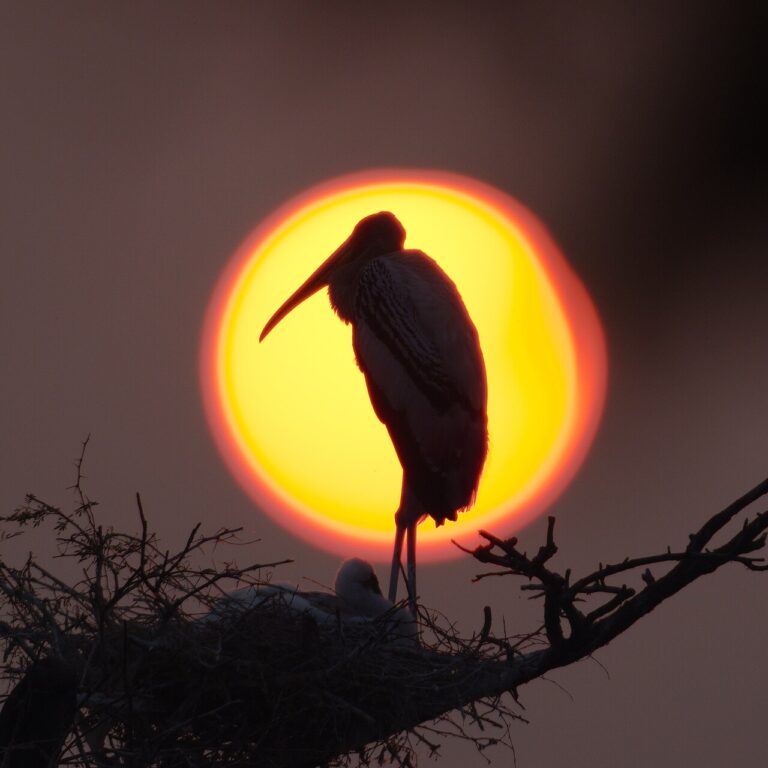 Keoladeo (Bharatpur) Bird Sanctuary GuideA former duck-hunting reserve turned World Heritage wetland, Bharatpur is one of Asia's great birding sites and just…
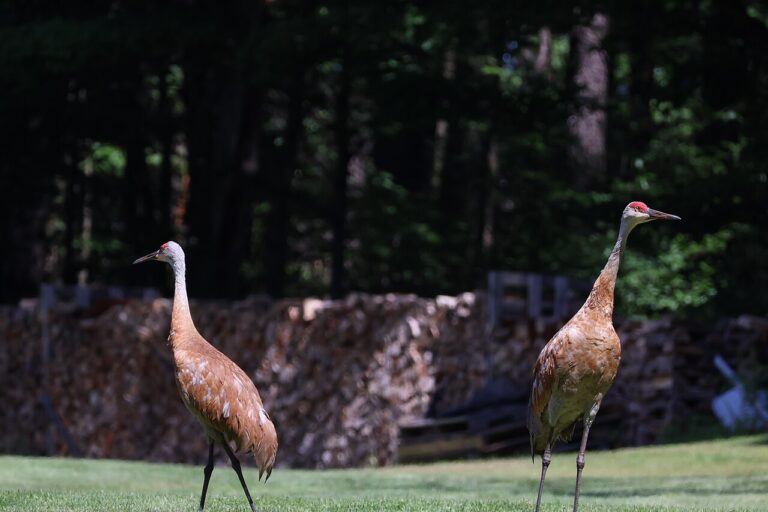 Sandhill Crane Migration on the Platte RiverEvery March, hundreds of thousands of sandhill cranes gather on Nebraska's Platte River in one of North America's…