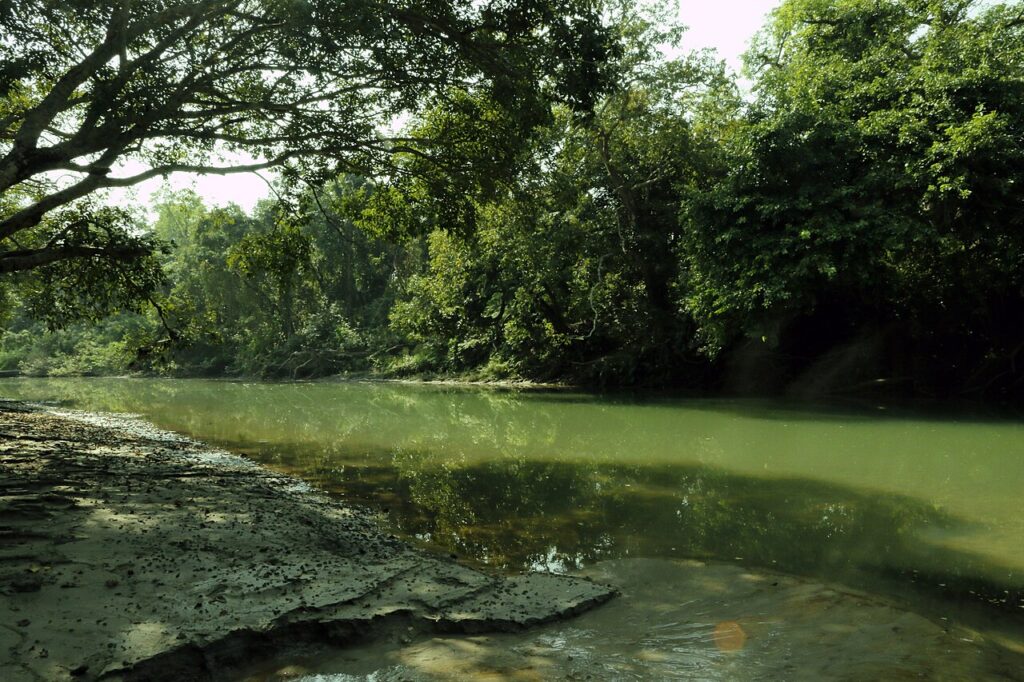
Bardiya National Park, in Nepal’s far western Terai, is the country’s largest lowland park at about 968 km². It is much less visited than Chitwan, and far wilder: sal forest, riverine grassland and braided channels of the Karnali River shelter Nepal’s largest tiger population, greater one-horned rhinos and wild elephants. For many wildlife enthusiasts, it is the best place in South Asia to try to see a tiger on foot.
At a glance
| Best time | October to May; March to May is best for tigers |
| Getting there | Fly Kathmandu to Nepalgunj (1 hour), then about 2.5 hours by road |
| Time needed | 3 to 5 nights |
| Big draws | Tigers, rhinos, elephants, walking safaris, river dolphins |
| Good for | Tiger enthusiasts, walkers, travellers avoiding crowds |
Tigers
Nepal’s 2022 tiger survey counted 355 tigers nationwide, almost three times the 2009 figure, and Bardiya held the largest share, around 125. See our tiger profile.
- Walking safaris: Bardiya is famous for tiger tracking on foot with experienced local guides. You walk through grassland and forest, then wait at viewpoints along the rivers where tigers come to drink and cross. It demands patience, sometimes a full day of waiting.
- Jeep safaris: full-day jeep safaris cover more ground and reach the Karnali River’s best viewpoints.
- Sightings are never guaranteed, but the hot months before the monsoon give the best chances.
Other wildlife
- Greater one-horned rhinos: reintroduced from Chitwan from the 1980s onwards; seen in the grasslands near the Karnali and Babai rivers. See our greater one-horned rhinoceros profile.
- Asian elephants: resident and migrating herds, including large bulls.
- Gangetic river dolphins in the Karnali River, one of the few places in Nepal to see them.
- Mugger crocodiles, gharials, leopards, sloth bears, swamp deer, chital, hog deer and sambar.
- Birds: more than 400 species, including Bengal florican in the grasslands, great hornbills and many raptors. See our Bengal florican profile.
Other experiences
- Rafting and boat trips on the Karnali and Geruwa rivers, with dolphin and crocodile watching.
- Tharu culture: homestays and community lodges in Thakurdwara, the village at the park’s edge, run by the indigenous Tharu people.
- Blackbuck Conservation Area at Khairapur, south-west of the park, protecting a small population of blackbuck. See our blackbuck profile.
When to go
- October to November: after the monsoon; green and pleasant, but grass is tall.
- December to February: cool and misty mornings; good birding.
- March to May: the best time for tigers and big mammals, as grass is cut and burnt and animals come to the rivers. It becomes very hot by May.
- June to September: monsoon; the park is effectively closed to visitors.
Getting there
Fly from Kathmandu to Nepalgunj (about 1 hour), then drive about 2.5 hours to Thakurdwara. Overland travel from Kathmandu takes 12 to 15 hours by bus or car. Bardiya combines well with Shuklaphanta National Park further west, famous for its swamp deer herds.
Where to stay
Lodges in Thakurdwara range from Tharu-style guesthouses and homestays to comfortable eco-lodges. Many include safaris and guides.
Park fees
Foreign visitors pay a daily park entry fee, with lower rates for SAARC nationals. Guide fees, jeep hire and activity costs are extra. Check current rates with the park office or your lodge.
Tips
- Allow at least three full days if tigers are your priority.
- Choose a guide with a strong reputation for safety on walking safaris.
- Bring binoculars, a hat, neutral clothing and plenty of water.
- Combine Bardiya with Chitwan for rhinos and birds, or with Shuklaphanta for swamp deer.
Frequently asked questions
Is Bardiya better than Chitwan for tigers? Bardiya has more tigers, fewer visitors and walking safaris, so many consider it better for tiger sightings. Chitwan is easier to reach and better for rhinos. See our Chitwan guide.
Are walking safaris safe? With experienced, licensed guides who follow strict rules, walking safaris are generally safe, but they carry some risk.
How many days do I need in Bardiya? Three to five nights, including at least two full days of tiger tracking.
When is the best time for tigers in Bardiya? March to May, before the monsoon.
Related guides
- Chitwan National Park safari guide
- Tiger safari in India vs Nepal
- Birdwatching in Nepal
- Animal profiles: Tiger, Greater one-horned rhinoceros, Asian elephant
Cover photo: Prabina Karki, CC BY-SA 4.0, via Wikimedia Commons