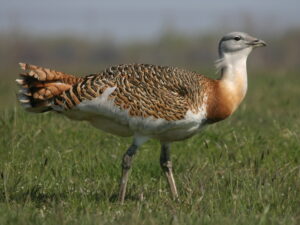
The Bengal florican is a rare bustard of tall grasslands in South Asia and Cambodia. It is one of the most threatened birds in the world and a flagship for grassland conservation.
Interesting facts
- Fewer than 1,000 adult Bengal floricans are thought to survive.
- Unusually for birds, females are larger than males.
- Males are black with white wings; females are buff-brown and well camouflaged.
- The Indian subcontinent and Cambodia hold two separate populations, often treated as subspecies.
- Displays take place mainly from March to May.
- The timing of grass cutting and burning can make or break breeding success.
Behaviour
Bengal floricans are shy and spend most of their time hidden in tall grass. They are easiest to see in spring, when males display over short grass.
Breeding and young
Females lay one or two eggs on the ground in grassland and raise the chicks alone.
Threats and conservation
Conversion of grasslands to farmland, poorly timed burning and cutting, overgrazing, hunting and, in Cambodia, dry-season rice farming.
Where to see it
- Shuklaphanta and Bardia national parks, Nepal
- Chitwan National Park and Koshi Tappu Wildlife Reserve, Nepal
- Manas, Kaziranga and Dudhwa national parks, India
- Learn more in the Nepal Bird Atlas by The Ornithology (theornithology.com)
Status source: IUCN Red List. Profile last reviewed September 2026.
Where to see the bengal florican
 Bardiya National Park: Nepal’s Wild West Tiger CountryRemote, quiet and wild, Bardiya has the most tigers of any park in Nepal. How to plan a…
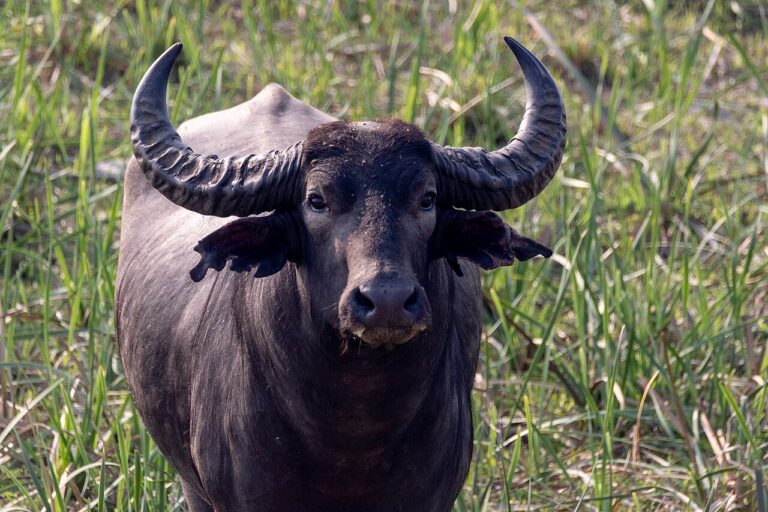 Koshi Tappu Birding GuideNepal's premier wetland reserve attracts huge numbers of wintering waterbirds and holds the country's last wild water buffalo.…
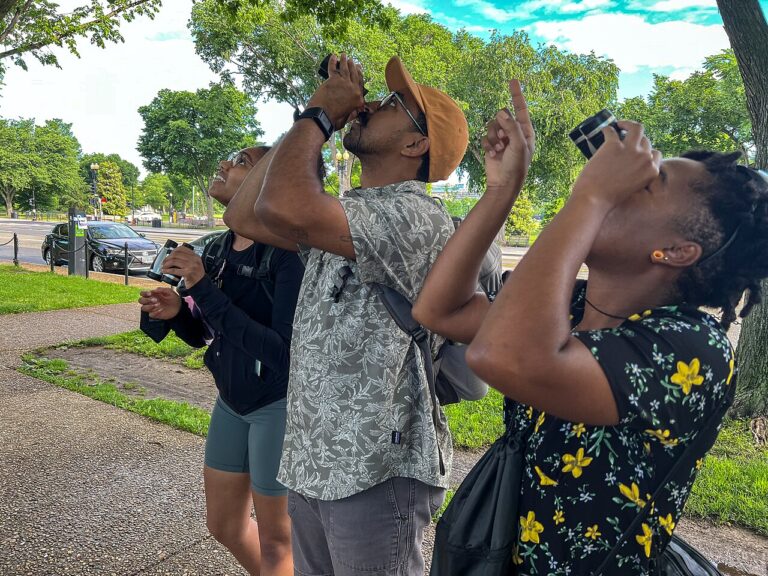 How to Record Your Sightings for Science (eBird, iNaturalist)Your holiday photos and bird lists can help scientists track wildlife. How to record sightings with eBird, iNaturalist…