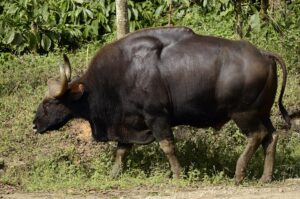
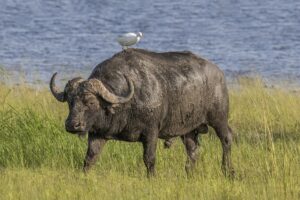
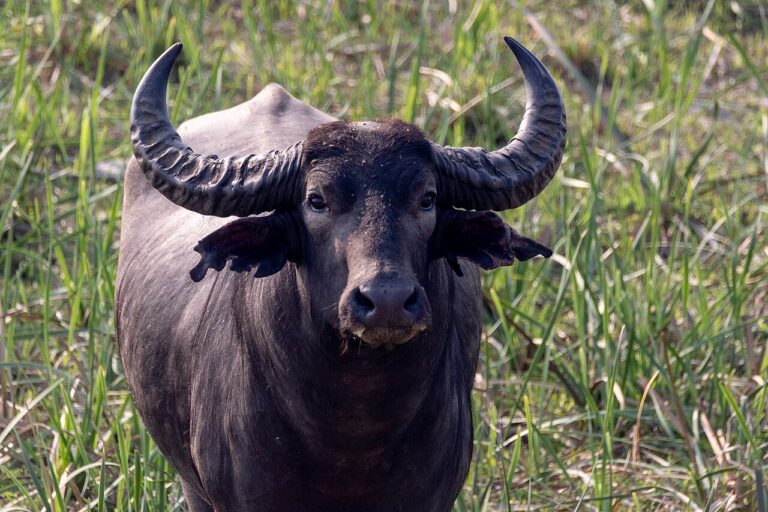
The wild water buffalo is a massive wild ox of South and Southeast Asia’s floodplains. It is the ancestor of the domestic water buffalo, but wild herds have become rare and fragmented.
Interesting facts
- Fewer than 4,000 are thought to remain in the wild.
- Kaziranga National Park in Assam holds most of the world’s wild water buffalo.
- The world’s roughly 200 million domestic water buffalo descend from this species.
- Wild buffalo spend hours wallowing in water and mud to keep cool.
- Interbreeding with domestic buffalo threatens the genetic purity of wild herds.
- Adult buffalo are strong enough to drive off tigers.
Behaviour
Wild buffalo live in herds of females and young, while adult males live alone or in bachelor groups. They graze in the early morning and evening and wallow during the heat of the day.
Breeding and young
After a gestation of about 10–11 months, a single calf is born. Calves stay with their mothers for about a year.
Threats and conservation
Interbreeding with domestic buffalo, diseases from livestock, hunting and the loss of wetlands and grasslands.
Where to see it
- Kaziranga National Park, Assam, India
- Manas National Park, Assam, India
- Koshi Tappu Wildlife Reserve, Nepal
- Huai Kha Khaeng Wildlife Sanctuary, Thailand
Status source: IUCN Red List. Profile last reviewed September 2026.
 Koshi Tappu Birding Guide