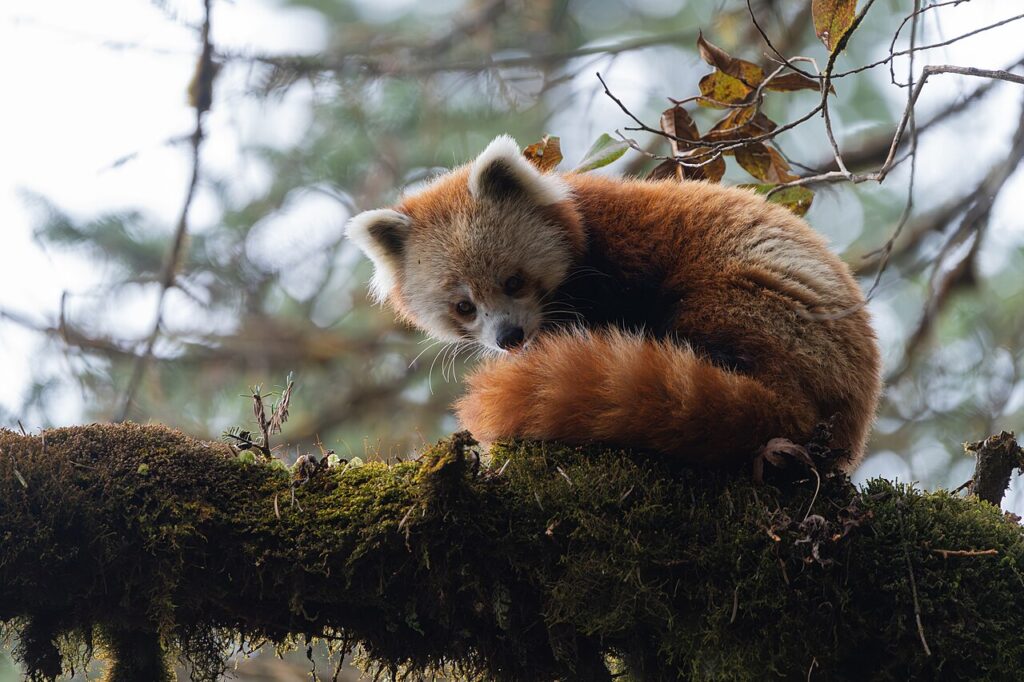
The red panda is one of the most beloved animals of the Himalayas: a cat-sized, russet-coated mammal with a ringed tail that spends much of its life in the trees of temperate forests, eating bamboo. It is listed as Endangered, and Nepal is one of its strongholds. Seeing one in the wild takes effort, local knowledge and luck, but community-led treks have made it more achievable than ever. See our red panda profile.
At a glance
| Best time | March to May and October to December |
| Where | Eastern Nepal (Taplejung, Panchthar, Ilam), Langtang, and other mid-hill forests |
| Time needed | 4 to 7 days |
| Big draws | Wild red pandas, rhododendron forests, Himalayan birds |
| Good for | Keen wildlife watchers, trekkers |
Where to see red pandas in Nepal
Eastern Nepal: Taplejung, Panchthar and Ilam
The forests of eastern Nepal, near the border with India’s Sikkim and Darjeeling, hold some of the country’s most important red panda populations, much of it in community forests outside protected areas. Local “forest guardians”, employed through community programmes such as those run by the Red Panda Network, monitor red pandas and guide small groups on ecotrips. Sightings are frequent on these trips because guardians know where individual animals feed.
Langtang National Park
North of Kathmandu, Langtang’s mixed forests of fir, oak, rhododendron and bamboo hold red pandas. They are sometimes seen on trekking routes, especially in quieter areas.
Other areas
Red pandas also live in Makalu-Barun, Rara, Dhorpatan Hunting Reserve and Kanchenjunga Conservation Area, among others, but sightings are less predictable.
What to expect
- Red pandas are most active at dawn and dusk and rest in trees during the day, often high up in the canopy.
- Treks involve walking on steep forest trails between about 2,200 and 4,000 m.
- Your guide may track fresh droppings and feeding signs, then wait quietly for a sighting.
- The forests are also rich in birds: satyr tragopans, Himalayan monals, fire-tailed sunbirds and many warblers. See our Himalayan monal profile.
When to go
- March to May: rhododendrons bloom, the weather is mild, and red pandas are active. A good time for birds.
- October to December: clear skies after the monsoon. As leaves fall, red pandas can be easier to see.
- June to September: monsoon; leeches and rain make trekking difficult.
- January to February: cold, with snow at higher altitudes.
Why red pandas are endangered
Habitat loss and fragmentation from logging, grazing and roads, as well as poaching for pelts and the pet trade, have reduced numbers across the Himalayas. Nepal’s red pandas number in the hundreds to around a thousand, depending on the estimate. Community-based monitoring and forest restoration have helped protect key areas.
Tips
- Book with a community-led programme or a specialist operator working with local guardians.
- Wear warm layers and waterproofs; mountain weather changes fast.
- Bring binoculars and a camera with a good zoom lens.
- Stay silent and follow your guide’s lead when a red panda is found.
Frequently asked questions
Where is the best place to see red pandas in Nepal? The community forests of eastern Nepal, particularly in Taplejung and Panchthar, offer the most reliable sightings on guided ecotrips.
When is the best time to see red pandas? Spring (March to May) and late autumn (October to December).
Are red pandas related to giant pandas? No. Despite the name, red pandas belong to their own family, Ailuridae. Both eat bamboo, which is why they share a name.
How fit do I need to be? Moderately fit. Treks involve steep trails at altitude, but days are usually not very long.
Related guides
- Birdwatching in Nepal
- Where to see giant pandas in China
- Wildlife of Bhutan
- Animal profiles: Red panda, Himalayan monal, Snow leopard
Cover photo: Sunuwargr, CC BY-SA 4.0, via Wikimedia Commons