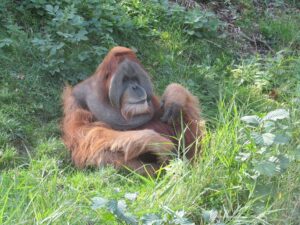
The Bornean orangutan is one of three orangutan species and the only great apes in Asia. Its population fell by more than half between 1999 and 2015, mainly because of forest loss and killing. Around 100,000 are thought to remain.
Interesting facts
- Orangutans are the largest tree-dwelling animals on Earth.
- Their name comes from Malay words meaning ‘person of the forest’.
- Adult males may develop large cheek pads called flanges.
- They build a new sleeping nest in the trees every night.
- Orangutans use leaves as umbrellas and sticks as tools.
- There are three orangutan species, and all are Critically Endangered.
Behaviour
Orangutans are the most solitary great apes. They travel through the canopy by climbing and swinging. Flanged males produce long calls that can be heard about 1 km away.
Breeding and young
Females give birth to a single infant about every six to eight years, the slowest reproduction of any mammal of their size, which makes populations slow to recover.
Threats and conservation
Deforestation for oil palm and pulp plantations, fires, logging, mining, hunting and the illegal pet trade.
Where to see it
- Tanjung Puting National Park, Indonesia
- Danum Valley, Malaysia
- Kinabatangan River, Malaysia
- Sepilok Orangutan Rehabilitation Centre, Malaysia
Status source: IUCN Red List. Profile last reviewed September 2026.
Where to see the bornean orangutan
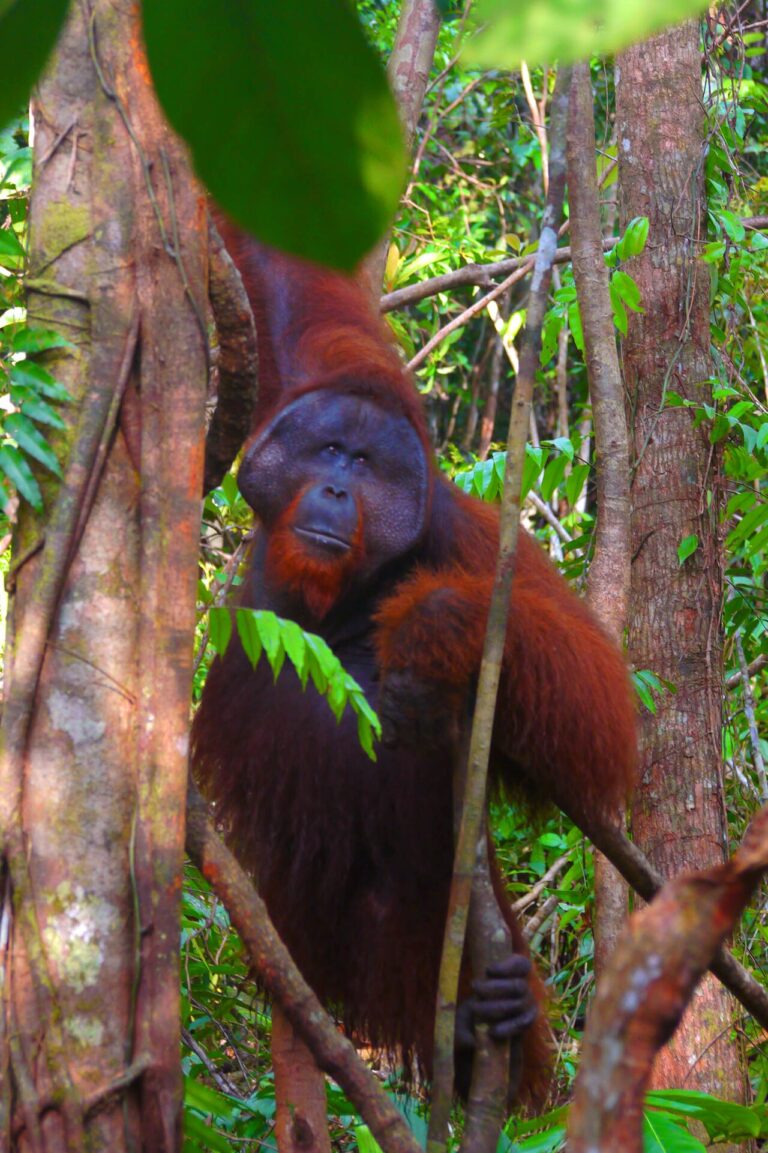 Where to See Orangutans in Borneo and SumatraFrom rehabilitation centres to river cruises and primary rainforest, the best places to see Asia's only great ape,…
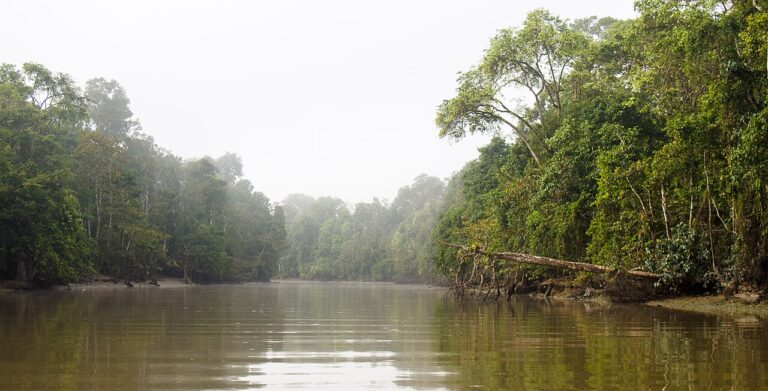 Kinabatangan River Cruise GuideSabah's longest river is one of the best places in Borneo to see wildlife from a boat. What…
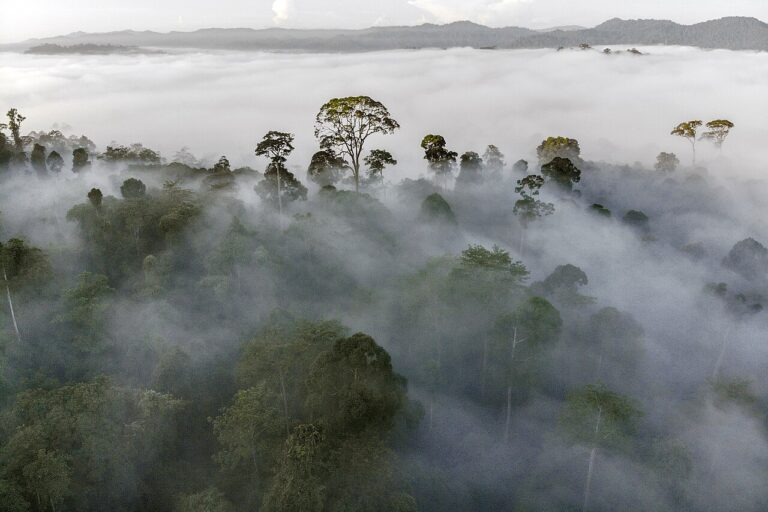 Danum Valley Rainforest GuideDanum Valley protects some of the tallest and oldest lowland rainforest on Earth. What to see, how to…