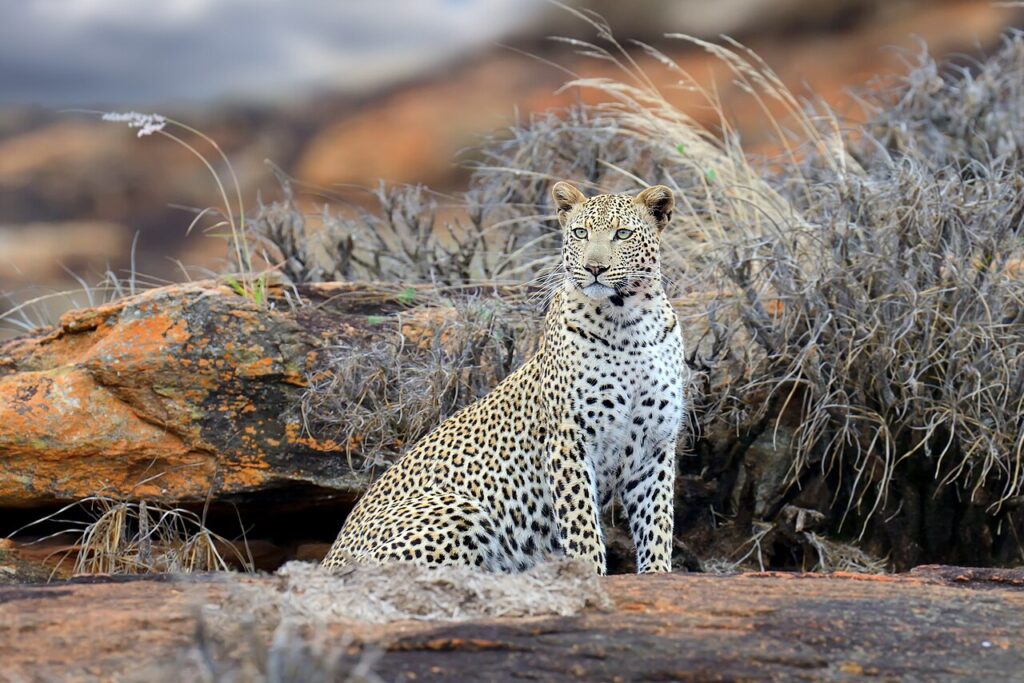
Tsavo is Kenya on a grand scale. Tsavo East and Tsavo West national parks together cover about 22,000 km², more than 3% of the country, split by the Nairobi–Mombasa highway and railway. This is where the famous “red elephants” live, dusted in the red soil, and where the man-eating lions of Tsavo halted railway construction in 1898.
At a glance
| Best time | June to October and January to February |
| Getting there | By road or by the Madaraka Express train from Nairobi or Mombasa |
| Time needed | 2 to 4 nights |
| Big draws | Elephants, wild landscapes, Mzima Springs, rhinos, few vehicles |
| Good for | Combining with the coast or Amboseli; adventurous travellers |
Tsavo East
The larger and flatter of the two parks is mostly open bush with long views.
- Elephants: the Tsavo ecosystem holds Kenya’s largest elephant population, and large herds gather at the Galana River and waterholes. See our African elephant profile.
- Lions: Tsavo’s males often have short manes or none at all.
- Other wildlife: buffalo, giraffes, lesser kudu, gerenuk, fringe-eared oryx, cheetahs and a great variety of dry-country birds.
- Sights: Lugard Falls on the Galana River, Aruba Dam and the Yatta Plateau, one of the longest lava flows in the world.
Tsavo West
Tsavo West is hillier, greener and more varied, with volcanic cones and lava flows.
- Mzima Springs: crystal-clear pools fed by underground water from the Chyulu Hills. An underwater viewing tank lets you watch hippos and fish.
- Ngulia Rhino Sanctuary: a fenced area protecting black rhinos. Sightings require patience.
- Shetani lava flow and caves: a young black lava field you can walk across.
- Wildlife: elephants, leopards, lions, klipspringers, lesser kudu and excellent birds, especially during the European migration season.
The man-eaters of Tsavo
In 1898, two maneless male lions killed many workers building the Uganda Railway bridge over the Tsavo River. The lions were shot by the engineer John Henry Patterson, and their bodies are now in the Field Museum in Chicago. Scientists have since studied their teeth and bones to understand why they turned to people.
When to go
- June to October and January to February: dry seasons, best for game viewing at waterholes and rivers.
- November and March to May: rains, green landscapes and lower prices, but animals disperse.
Getting there
- By road: both parks lie off the Nairobi–Mombasa highway. Tsavo West’s Mtito Andei gate is about 4 to 5 hours from Nairobi; Tsavo East’s Voi gate is about 2 hours from Mombasa.
- By train: the Madaraka Express standard gauge railway stops at Mtito Andei and Voi, where lodges and operators can meet you. It is a comfortable way to reach the parks.
- By air: scheduled and charter flights land at several airstrips.
Where to stay
Both parks have lodges and tented camps inside and outside the boundaries, from classic lodges overlooking waterholes to small luxury camps. The area around Taita Hills, between the two parks, has private sanctuaries and community conservancies.
Sample itinerary: Tsavo and the coast in 6 days
| Day | Plan |
|---|---|
| 1 | Train from Nairobi to Mtito Andei; afternoon game drive in Tsavo West |
| 2 | Mzima Springs, Shetani lava flow and Ngulia |
| 3 | Transfer to Tsavo East via the Taita Hills |
| 4 | Full day in Tsavo East: Aruba Dam and Lugard Falls |
| 5 | Drive to Diani or Watamu on the coast |
| 6 | Beach day |
Tips
- Tsavo is huge: stay in both parks, or choose one and explore it well.
- Combine Tsavo with Amboseli or a beach stay on Kenya’s south coast.
- Bring binoculars: Tsavo is one of Kenya’s best birding parks.
- Expect fewer vehicles and a more remote feel than in the Maasai Mara.
Frequently asked questions
Why are Tsavo’s elephants red? They cover themselves in the park’s red volcanic soil to protect their skin from the sun and insects.
Is Tsavo East or West better? Tsavo West has more varied scenery and attractions such as Mzima Springs. Tsavo East has bigger open spaces and large elephant herds. Many visitors see both.
Can I visit Tsavo from Mombasa? Yes. Day trips and overnight safaris from Mombasa and the south coast are popular, especially to Tsavo East.
Is Tsavo good for the Big Five? All five are present, but rhinos are mainly in the Ngulia sanctuary and leopards are elusive. It is better known for elephants and wilderness.
Related guides
- Amboseli National Park guide
- Nairobi National Park
- Where to see the Big Five
- Animal profiles: African elephant, Lion, Hippopotamus
Cover photo: Byrdyak, CC BY-SA 4.0, via Wikimedia Commons