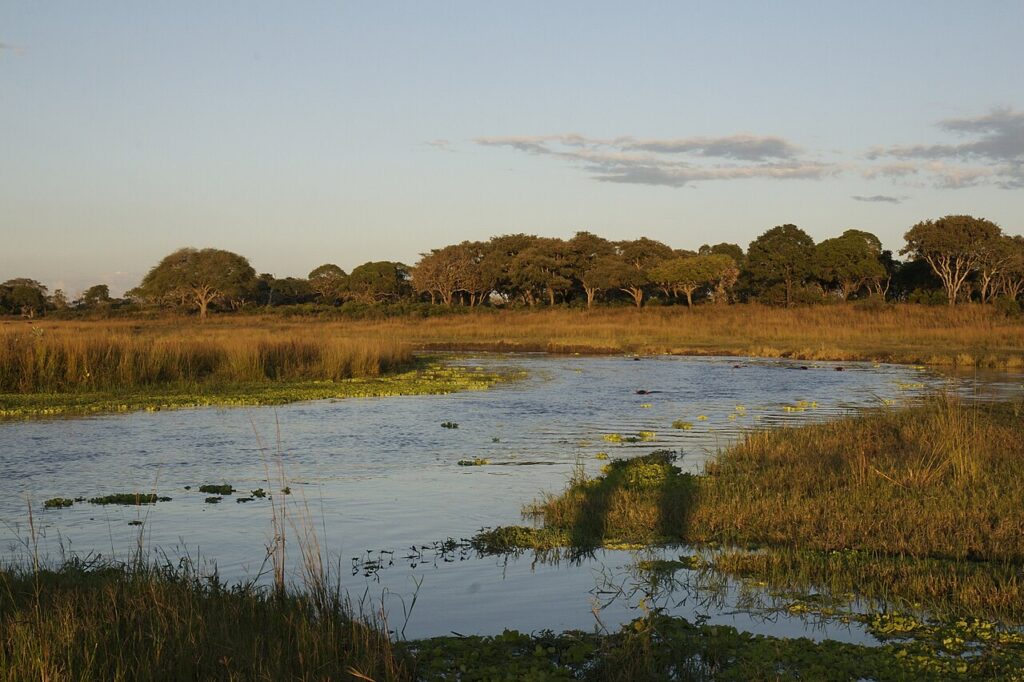
Most safari travellers aim for the dry season, when animals gather at water. But the green season, the months of the rains, has its own rewards: newborn animals, predators hunting them, lush scenery, spectacular skies, migrant birds and much lower prices. For many experienced safari-goers, it is their favourite time.
Why go in the green season
- Lower prices: many lodges cut rates significantly, and some waive single supplements.
- Fewer vehicles: popular parks are quieter.
- Baby animals: many antelope give birth with the rains, attracting predators.
- Birds: migrants from Europe and Asia arrive, and many resident birds breed in bright plumage.
- Landscapes and light: green grass, flowers, storms and clear air after rain.
- Photography: dramatic skies and clean backgrounds.
The downsides
- Animals disperse as water becomes available, so they can be harder to find.
- Taller grass hides animals.
- Some roads flood, and some camps close.
- Rain can interrupt activities, though it often falls in short afternoon storms.
- More insects, including mosquitoes.
The best green season destinations
| Destination | Months | Highlights |
|---|---|---|
| Serengeti (southern plains, Ndutu) | January to March | Wildebeest calving, predator action. See our migration guide |
| Botswana’s Makgadikgadi and Nxai Pan | December to April | Zebra migration. See our Makgadikgadi guide |
| Central Kalahari | December to April | Herds on the valleys and lions. See our CKGR guide |
| Okavango Delta and Linyanti | November to March | Baby animals, wild dogs, birds, value |
| South Luangwa (some camps) | December to March | Boat safaris, birds, green landscapes |
| Kruger and South Africa | November to March | Newborn impala, birds, lush scenery |
| Kasanka and Liuwa (Zambia) | November to December | Bat migration and wildebeest |
| Uganda and Rwanda | March to May, October to November | Gorilla trekking with fewer visitors |
Tips
- Pack a light rain jacket and quick-drying clothes.
- Choose camps that stay open and have good all-weather access.
- Book flights and camps with flexible schedules.
- Protect your camera from rain.
Frequently asked questions
Is it worth going on safari in the rainy season? Yes, for many travellers. You trade some ease of game viewing for lower prices, baby animals, birds and fewer crowds.
Does it rain all day? Usually not. Rain often falls in afternoon storms, with clear mornings.
When is the green season in Africa? Roughly November to April in southern Africa and parts of East Africa, with long rains in April and May in Kenya and Tanzania.
Will I still see the Big Five? Often yes, especially in parks with resident populations.
Related guides
- Best time for a safari: month by month
- How much does a safari cost?
- Kasanka bat migration
- Animal profiles: Blue wildebeest, Impala, Plains zebra
Cover photo: Calle v H, CC BY 2.0, via Wikimedia Commons