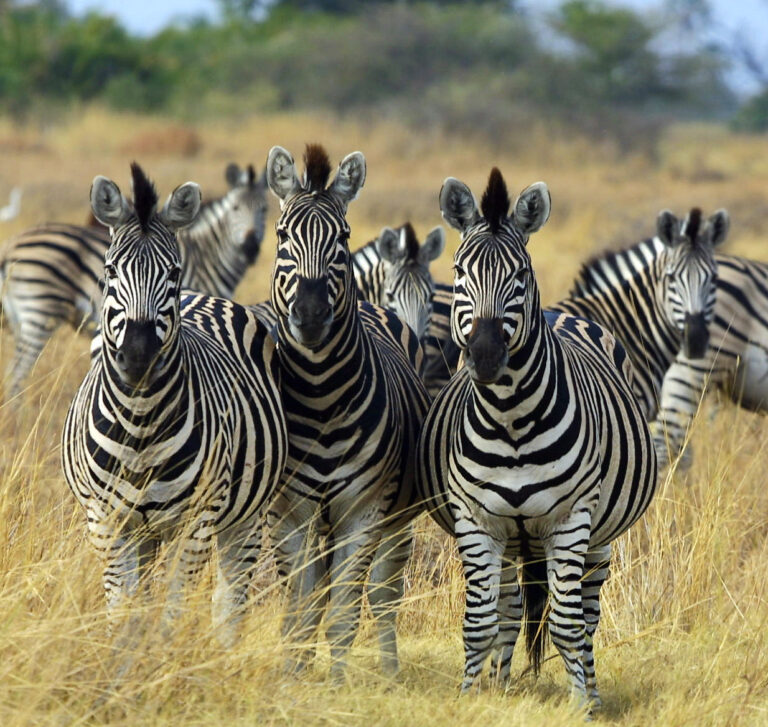
The plains zebra is the most common and widespread zebra. Its stripes have fascinated scientists for centuries; the leading explanation today is protection from biting flies, although stripes may also help with temperature control and social recognition.
Interesting facts
- Every zebra’s stripe pattern is unique.
- Underneath its fur, a zebra’s skin is dark.
- Zebras sleep standing up, often while others keep watch.
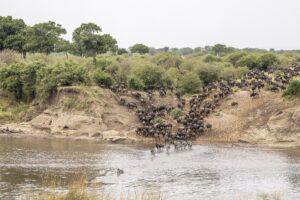
- They are a key part of the Great Migration alongside wildebeest.
- Zebras eat the tall, coarse tops of grasses, making fresh growth available to wildebeest and gazelles.
- The quagga, an extinct zebra of South Africa with stripes only on the front half, was a subspecies of the plains zebra.
Behaviour
Zebras live in family groups called harems, made up of one stallion, several mares and their foals. Harems join into large herds that can number thousands during migrations. When threatened, zebras bunch together, making it hard for predators to single one out.
Breeding and young
Foals are born after about 12 to 13 months and can run within an hour of birth. Mothers keep others away for the first days so the foal learns her stripe pattern and scent.
Threats and conservation
Hunting for meat and skins, competition with livestock for grazing and water, and fences that block movement.
Where to see it
- Serengeti, Tanzania
- Maasai Mara, Kenya
- Makgadikgadi Pans, Botswana (zebra migration)
- Etosha, Namibia
Status source: IUCN Red List. Profile last reviewed September 2026.
Where to see the plains zebra
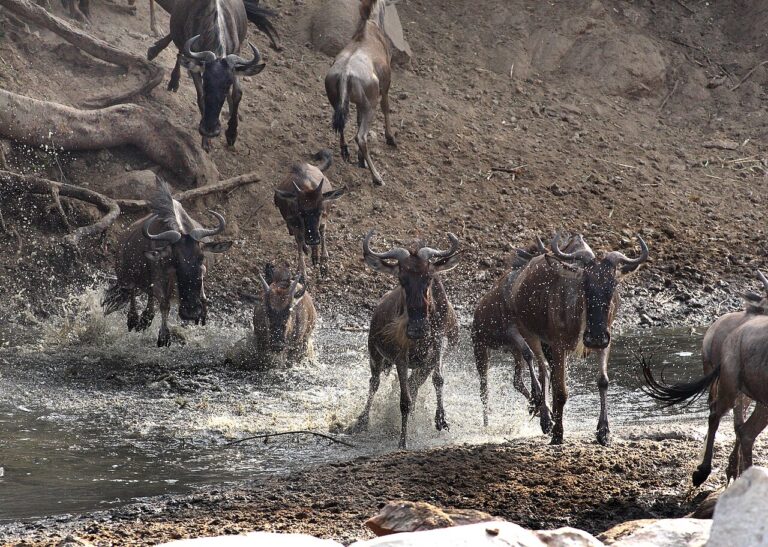 Serengeti Great Migration: A Month-by-Month GuideWhere the wildebeest are in every month of the year, when to see calving and river crossings, where…
 Makgadikgadi Pans and the Zebra MigrationBotswana's vast salt pans host one of Africa's great zebra migrations, habituated meerkats and nights under the stars.…
 Solo Travel on Safari: How to Save and Stay SafeTravelling alone on safari can be wonderful and affordable. How to avoid single supplements and stay safe.