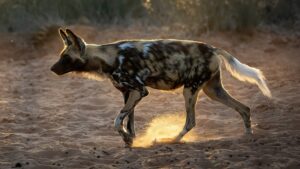
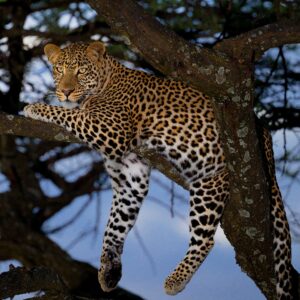
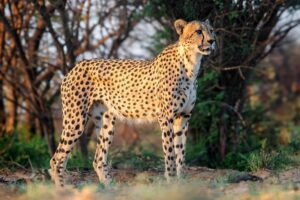
The impala is a graceful, medium-sized antelope with a glossy reddish-brown coat. It is one of the most abundant antelopes in eastern and southern Africa and an important prey species for lions, leopards, cheetahs, wild dogs and hyenas.
Interesting facts
- Only males have horns, which are long, ridged and lyre-shaped.
- The black M-shaped stripes on their rump have earned them the nickname ‘McDonald’s of the bush’.
- Impala both graze and browse, which helps them thrive in many habitats.
- The black-faced impala of Namibia and Angola is a threatened subspecies.
- Impala groom each other to remove ticks, taking turns.
- They are one of the most common antelopes in many southern African parks.
Behaviour
Impala live in herds of females and young, bachelor herds and territorial males. During the rut, males roar, snort and fight to hold territories and herds of females. When alarmed, impala scatter in spectacular leaps, confusing predators.
Breeding and young
After about six to seven months, females give birth to a single lamb, often in synchronised birth peaks at the start of the rains. Lambs join nursery groups within the herd.
Threats and conservation
Impala are abundant and secure overall. The black-faced impala is threatened by its small range, habitat change and hunting.
Where to see it
- Kruger National Park, South Africa
- Maasai Mara, Kenya, and Serengeti, Tanzania
- Chobe National Park, Botswana
- Etosha National Park, Namibia, for black-faced impala
Status source: IUCN Red List. Profile last reviewed September 2026.
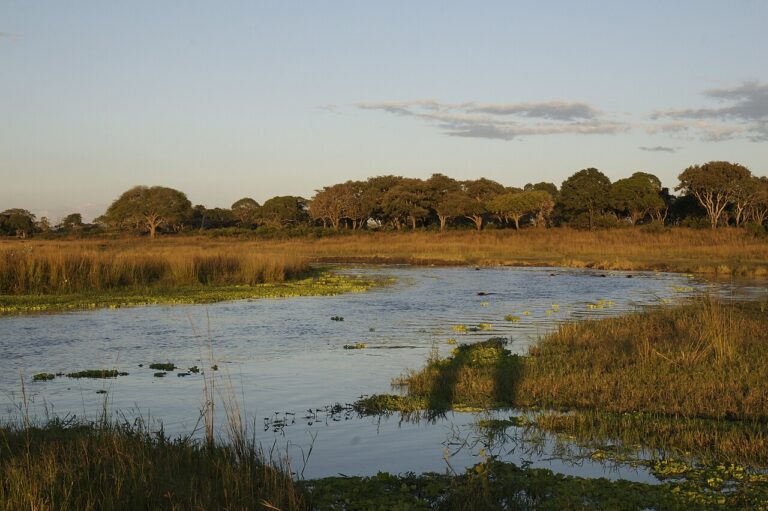 Green Season Safaris: Why Travelling in the Rains Can Be Better