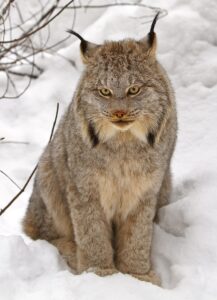
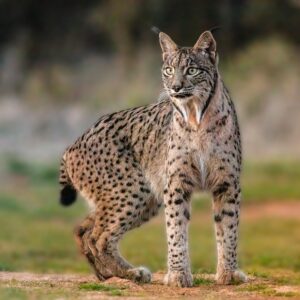
The Eurasian lynx is a powerful, long-legged forest cat with a vast range across northern Europe and Asia. Once exterminated from much of western and central Europe, it is slowly returning thanks to legal protection and reintroduction programmes.
Interesting facts
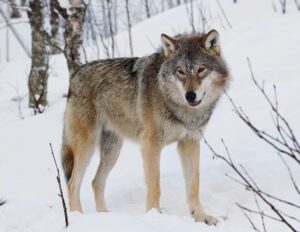
- It is the largest lynx species and the third-largest predator in Europe, after the brown bear and the grey wolf.
- Black ear tufts and a short, black-tipped tail are its trademarks.
- Large, furry paws act like snowshoes in deep snow.
- Lynx have been reintroduced to Switzerland, Germany, the Czech Republic, Slovenia and other countries since the 1970s.
- A lynx may return to a large kill for up to a week, hiding it under snow or leaves.
- Its keen hearing and eyesight help it locate prey in dense forest.
Behaviour
Lynx are solitary and territorial. They hunt mainly at dusk and night, stalking to within a short distance before a quick rush. Territories are large, from about 100 km² to over 1,000 km² in poor habitat, and are marked with urine and scratches.
Breeding and young
Mating takes place in late winter. After about 70 days, the female gives birth to one to four kittens in a sheltered den. Kittens stay with their mother until the next breeding season, about 10 months later.
Threats and conservation
Illegal killing, road traffic, habitat fragmentation, loss of prey and conflict with sheep farmers and hunters. Small reintroduced populations are vulnerable to inbreeding.
Where to see it
- Bavarian Forest National Park, Germany (enclosure and wild population)
- Slovakia’s Carpathian Mountains and Poland’s Białowieża Forest
- Swiss Jura and northwest Alps
- Hides in Finland and Estonia (organised wildlife photography trips)
Status source: IUCN Red List. Profile last reviewed September 2026.
Where to see the eurasian lynx
 Bear Watching in the Romanian CarpathiansRomania's Carpathian Mountains hold Europe's largest brown bear population outside Russia. How to watch them responsibly.
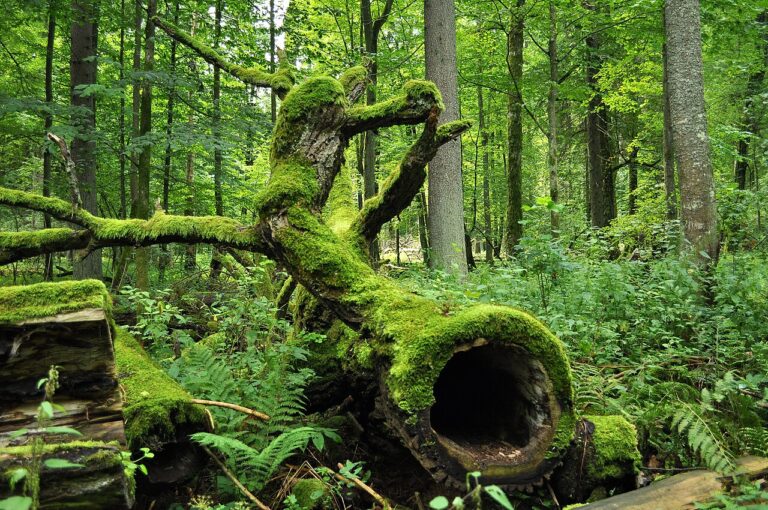 Białowieża Forest: Europe’s Last Primeval Forest and Its BisonThe European bison was saved from extinction in Białowieża, one of the last remnants of the forest that…