The Iberian lynx was the world’s most endangered cat at the start of the twenty-first century. A major recovery programme combining captive breeding, reintroduction, rabbit restoration, road crossings and work with landowners has made it one of Europe’s greatest conservation success stories.
Interesting facts
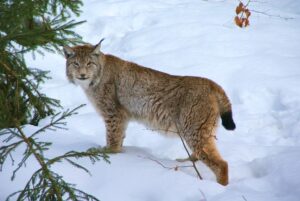
- It has tufted ears, a short black-tipped tail and a spotted coat.
- Facial ruffs grow larger with age.
- It depends almost entirely on rabbits, whose populations were hit by viral diseases.
- Road deaths are one of the main causes of mortality.
- Wildlife underpasses have been built to help lynx cross roads safely.
- Captive-bred lynx have been released in several regions of Spain and Portugal.
Behaviour
Iberian lynx are solitary and territorial, most active at dawn and dusk. They hunt by stalking and ambushing rabbits.
Breeding and young
Females give birth to 2 or 3 kittens in spring after about two months, often in a hollow tree or dense scrub.
Threats and conservation
Declines in rabbits, road traffic, habitat loss, poaching and poisoning, and low genetic diversity.
Where to see it
- Sierra de Andújar Natural Park, Spain
- Doñana National Park, Spain
- Guadiana Valley, Portugal
Status source: IUCN Red List. Profile last reviewed September 2026.
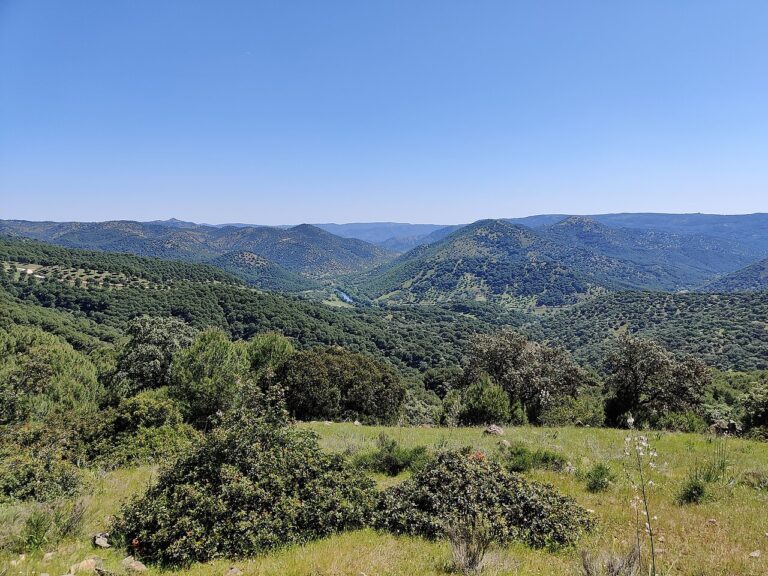 Iberian Lynx Watching in Sierra de Andújar