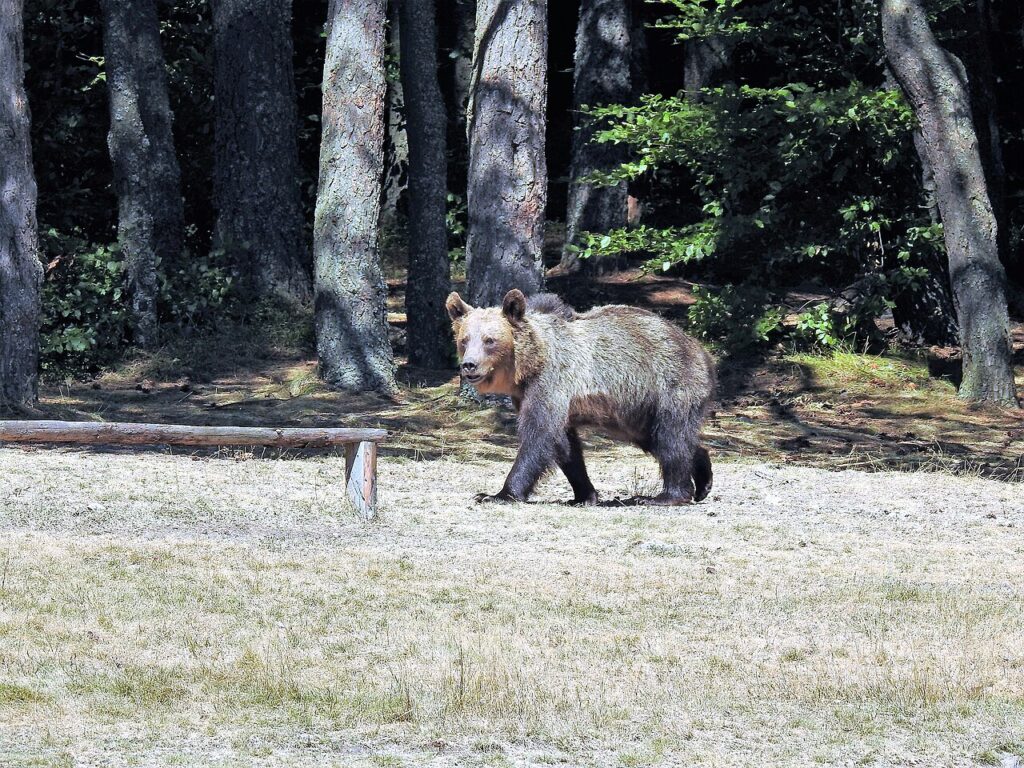
The Carpathian Mountains of Romania hold one of Europe’s largest areas of old-growth forest and its biggest brown bear population outside Russia, estimated at several thousand animals. Wolves, Eurasian lynx and even reintroduced European bison share the forests. Watching bears from a hide in Transylvania is one of the best wildlife experiences in Europe.
At a glance
| Best time | April to October (peak May to September) |
| Getting there | Fly to Bucharest or Brașov (Brașov airport opened in 2023) |
| Time needed | 3 to 5 days |
| Big draws | Brown bears, wolves, lynx, European bison, medieval villages |
| Good for | Wildlife lovers, photographers, culture and nature combined |
Bears
- Romania’s bears live mainly in the Carpathian arc, from Maramureș to the Southern Carpathians. See our brown bear profile.
- Hides in the forests around Brașov, Covasna and Harghita offer good chances of seeing bears, often several at once, in the evening.
- Human–bear conflict is a serious issue: bears raid crops and bins, and some come into towns. Romania has debated culls, and bear management remains controversial.
Other wildlife
- Wolves: Romania has one of Europe’s largest wolf populations. Tracking trips follow signs in the snow in winter. See our grey wolf profile.
- Eurasian lynx: very elusive, but tracks are often found. See our Eurasian lynx profile.
- European bison: reintroduced by Rewilding Europe and WWF in the Southern Carpathians (Țarcu Mountains) and Vânători-Neamț Natural Park. See our European bison profile.
- Chamois, red deer, wild boar and many birds of prey.
Rewilding the Southern Carpathians
The Southern Carpathians rewilding area, one of Rewilding Europe’s landscapes, aims to restore free-roaming bison and support nature-based tourism. The Foundation Conservation Carpathia is also buying land in the Făgăraș Mountains to create a large wilderness reserve.
Choosing a responsible operator
- Avoid tours that take you to see bears feeding from bins or by roadsides, which encourages dangerous habituation.
- Choose hides run by conservation organisations or operators that follow strict rules.
- Stay in the hide and keep quiet; never approach bears on foot.
When to go
- April to May: bears emerge; spring flowers.
- June to September: the best time for bears and cubs.
- October: bears feed intensively before hibernation; autumn colours.
- Winter: wolf and lynx tracking in snow.
Combining with culture
Transylvania’s medieval towns, fortified churches and villages such as Viscri, Sighișoara and Brașov are UNESCO sites and make a perfect complement.
Frequently asked questions
How many bears are in Romania? Estimates vary, but several thousand, the largest population in Europe outside Russia.
Are bear sightings guaranteed? Not guaranteed, but very likely from well-run hides in summer.
Is bear watching in Romania safe? Yes, from hides with experienced guides. Do not approach bears on foot or feed them.
Can I see wolves in Romania? Sightings are rare, but winter tracking trips find signs of wolves regularly.
Related guides
- Bear and wolverine watching in Finland
- Rewilding Europe: where to see returning wildlife
- Danube Delta birding guide
- Animal profiles: Brown bear, European bison, Eurasian lynx
Cover photo: Costin Costan, CC0, via Wikimedia Commons