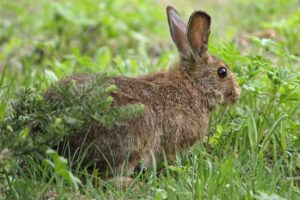
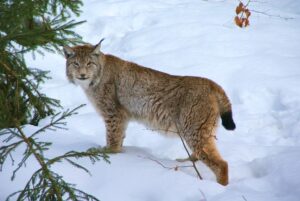
The Canada lynx is a medium-sized, thick-furred cat of North America’s boreal forests. It is a specialist hunter of snowshoe hares, and its life is closely tied to their population cycles. Its long legs and broad paws let it hunt in deep snow where other predators struggle.
Interesting facts
- Snowshoe hares can make up more than three-quarters of a lynx’s diet.
- Its huge, furry feet spread its weight like snowshoes.
- The lynx–hare cycle was first revealed by fur-trading records of the Hudson’s Bay Company going back to the 1800s.
- Long black ear tufts may help with hearing and communication.
- In the United States, the Canada lynx is listed as Threatened under the Endangered Species Act.
- Colorado reintroduced more than 200 lynx between 1999 and 2006.
Behaviour
Canada lynx are mostly solitary and hunt at night, stalking or waiting in ambush along hare trails. When hares are scarce, lynx travel further, take other prey and may hunt cooperatively in family groups.
Breeding and young
Mating takes place in late winter. After about two months, females give birth to one to eight kittens. In years with plenty of hares, litters are larger and more kittens survive; when hares crash, few kittens survive.
Threats and conservation
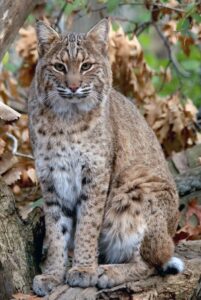
Loss and fragmentation of boreal forest, climate change reducing deep snow cover (which gives lynx an advantage over bobcats and coyotes), trapping and road deaths in the southern part of its range.
Where to see it
- Yukon, Canada, especially in years of high hare numbers
- Interior Alaska
- Cape Breton Highlands National Park, Nova Scotia
- Northern Maine and Minnesota (rare)
Status source: IUCN Red List. Profile last reviewed September 2026.