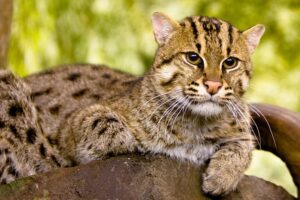
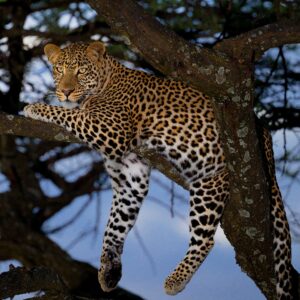
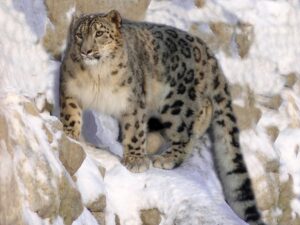
The clouded leopard is a medium-sized, secretive forest cat of South and Southeast Asia. With short legs, broad paws and a long tail, it is superbly adapted for life in the trees, although it also hunts on the ground. It links the big cats and the small cats in evolutionary terms.
Interesting facts
- Its large, cloud-shaped blotches give excellent camouflage in dappled forest light.
- It can climb down trees headfirst and hang upside down from branches by its hind feet, thanks to flexible ankles.
- Its tail is almost as long as its body and helps it balance in trees.
- The Sunda clouded leopard of Borneo and Sumatra was recognised as a separate species in 2006.
- It is one of the least-known cats in the world; most information comes from camera traps.
- Clouded leopards are neither true leopards nor closely related to them. They form their own genus.
Behaviour
Clouded leopards are solitary and mainly active at night and at dawn and dusk. They use trees for resting and travel, and ambush prey from branches or on the forest floor. Camera-trap studies suggest they avoid areas used by tigers and leopards.
Breeding and young
After a gestation of about 93 days, females give birth to one to five cubs. The cubs open their eyes after about 10 days, can climb at a few weeks old and become independent at about 10 months.
Threats and conservation
Deforestation for logging, plantations and agriculture is the main threat, along with poaching for skins, teeth and bones and capture for the illegal pet trade.
Where to see it
- Manas National Park and Dampa Tiger Reserve, India (very rare sightings)
- Khao Yai and Kaeng Krachan national parks, Thailand
- Himalayan foothill forests of Nepal and Bhutan
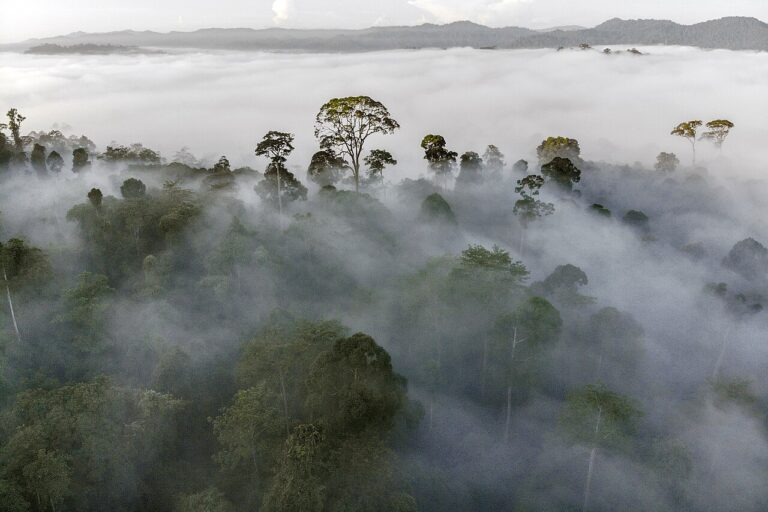
- Deramakot Forest Reserve, Sabah, for the related Sunda clouded leopard
Status source: IUCN Red List. Profile last reviewed September 2026.
 Danum Valley Rainforest Guide