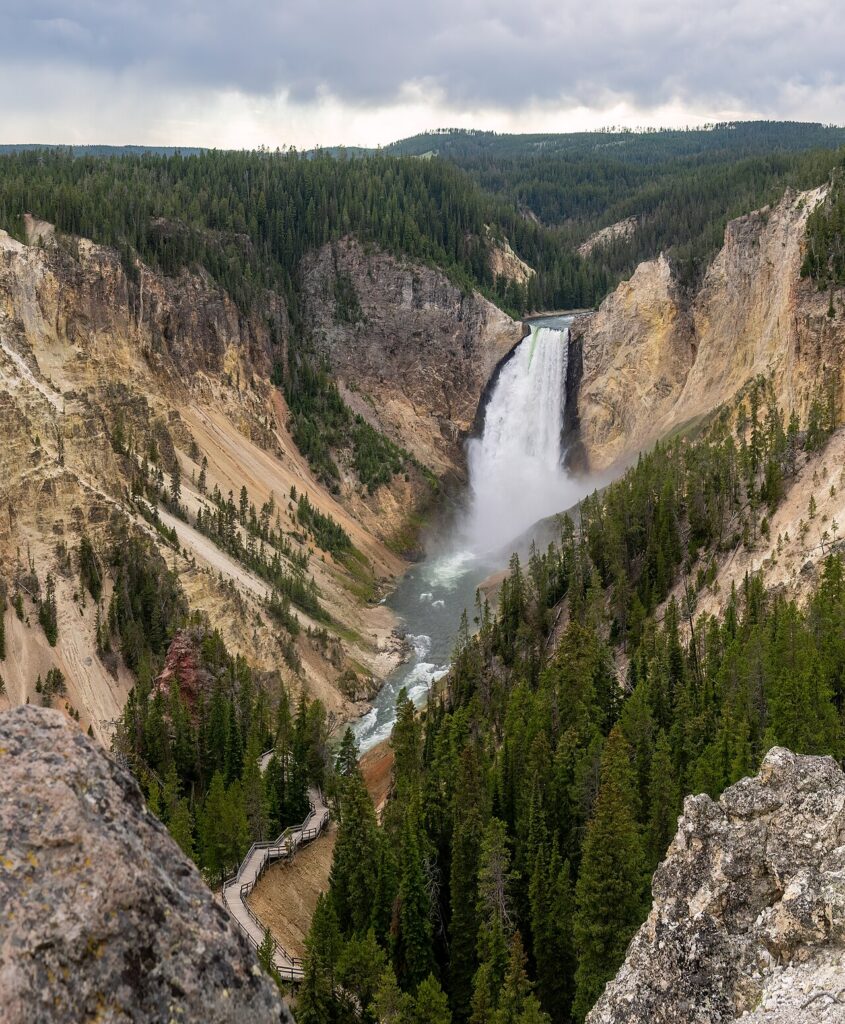
Yellowstone, established in 1872 as the world’s first national park, is best known for geysers and hot springs. But it is also one of the world’s great wildlife destinations. It is the only place in the United States where bison have lived continuously since prehistoric times, and it is famous for wolves reintroduced in the 1990s. Its grizzly bears, elk, pronghorn and moose roam across nearly 9,000 km² of mountains, valleys and forests, mostly in Wyoming.
Yellowstone at a glance
| Area | About 8,991 km² (3,472 sq mi) |
| Best wildlife areas | Lamar Valley, Hayden Valley, Mammoth to Tower, Madison and Firehole rivers |
| Best seasons | Spring (April to June), autumn (September to October) and winter for wolves |
| Gateways | Gardiner, West Yellowstone, Cody, Jackson; airports at Bozeman, Jackson Hole, Cody and West Yellowstone (summer) |
| Entry fee | US$35 per private vehicle for 7 days. Since 1 January 2026, non-US residents also pay a US$100 per-person non-resident fee (or can buy the US$250 non-resident America the Beautiful annual pass). Check age rules and current rates on nps.gov |
Where to see wildlife
Lamar Valley
Often called “America’s Serengeti”, the Lamar Valley in the northeast is the best place to see grey wolves, as well as bison herds, pronghorn, elk, grizzly and black bears, coyotes and bald eagles. Arrive at dawn and look for groups of wolf-watchers with spotting scopes along the road. It is also the only road open to private cars in winter, from the North Entrance at Gardiner to Cooke City.
Hayden Valley
Between Canyon and Lake Village, this broad valley along the Yellowstone River is excellent for bison, grizzly bears (especially in spring), wolves, elk, coyotes and waterbirds such as trumpeter swans and American white pelicans.
Mammoth Hot Springs and Blacktail Plateau
Elk often graze on the lawns at Mammoth. Blacktail Plateau is good for bears, wolves and mule deer.
Madison and Firehole rivers
Bison and elk, especially during the autumn rut, as well as bald eagles and trumpeter swans.
Dunraven Pass and Mount Washburn
Bighorn sheep, black bears and grizzlies feeding on whitebark pine seeds in late summer.
The return of the wolves
Wolves were eliminated from Yellowstone by the 1920s. In 1995 and 1996, 31 wolves from Canada were released into the park. Their return has become one of the most famous conservation stories in the world, though scientists still debate how strongly wolves have affected elk, vegetation and rivers. Today, Yellowstone typically holds around 100 wolves in about 8 to 10 packs.
Seasons
| Season | Highlights |
|---|---|
| Spring (April to June) | Bears emerge from hibernation; bison and elk calves; wolves hunting; many roads open in late April and May |
| Summer (July to August) | All roads open; busiest; wildlife moves to higher elevations; bison rut in August in Hayden and Lamar valleys |
| Autumn (September to October) | Elk rut with bugling bulls, especially at Mammoth and the Madison River; fewer crowds; bears feeding before hibernation |
| Winter (December to March) | Wolves highly visible against snow; bison and elk in thermal areas; most roads closed to cars, with snowcoach and snowmobile tours |
Safety distances
The US National Park Service requires visitors to stay:
- at least 100 yards (91 m) from bears and wolves; and
- at least 25 yards (23 m) from all other wildlife, including bison, elk and moose.
Bison injure more visitors than any other animal in Yellowstone. Never approach them for photos. Carry bear spray on trails and know how to use it, hike in groups and make noise.
Tips
- Get up early. Dawn and dusk are the best times for wolves and bears.
- Bring binoculars and a spotting scope or join a guided wildlife tour with scopes.
- Use pull-outs. Never stop on the road at a “bear jam”; follow ranger directions.
- Book accommodation early for summer, inside the park or in gateway towns.
- Check road status: many park roads are closed from November to April.
- Combine Yellowstone with Grand Teton National Park, just to the south, for moose and mountain scenery.
Frequently asked questions
Where is the best place to see wolves in Yellowstone? The Lamar Valley in the northeast, especially at dawn and dusk. Look for groups of wolf-watchers with spotting scopes.
When is the best time to see bears in Yellowstone? Spring, from late April to June, is best, when bears emerge from hibernation and feed in open valleys such as Hayden and Lamar.
How close can I get to wildlife in Yellowstone? Park rules require at least 100 yards (91 m) from bears and wolves, and 25 yards (23 m) from all other animals, including bison and elk.
How many days do I need in Yellowstone? Three to four days lets you explore the main geyser basins and spend dawns and dusks in the Lamar and Hayden valleys.
Related guides
- Churchill polar bears guide
- Wildlife of North America
- Wildlife photography for beginners
- Animal profiles: Grey Wolf, Brown Bear, American Bison, Moose, Bald Eagle
Cover photo: Rhododendrites, CC BY-SA 4.0, via Wikimedia Commons