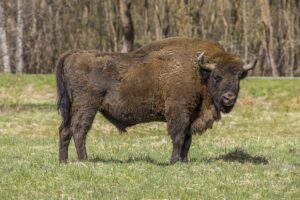
The bison shaped the Great Plains, and it was central to the lives and cultures of many Indigenous nations. Its near extinction in the nineteenth century, through commercial hunting and deliberate slaughter, is one of the most dramatic wildlife collapses in history. Today about 30,000 live in conservation herds.
Interesting facts
- The American bison is the heaviest land animal in North America.
- Bison can jump about 1.8 m high and run at over 55 km/h.
- Wallowing in dust helps them shed insects and mark territory.
- Yellowstone’s herd has lived in the same place since prehistoric times.
- The bison became the national mammal of the United States in 2016.
- There are two subspecies: the plains bison and the larger wood bison of Canada.
Behaviour
Bison live in herds of cows and calves, while bulls live alone or in small groups for most of the year. During the summer rut, bulls bellow, wallow and fight for mates.
Breeding and young
A single reddish calf, nicknamed a ‘red dog’, is born in spring after about nine months and can walk within hours.
Threats and conservation
Loss of grassland habitat, limited room to roam, genetic mixing with cattle, and disease management conflicts with ranchers.
Where to see it
- Yellowstone National Park, USA
- Custer State Park, South Dakota
- Theodore Roosevelt National Park, North Dakota
- Wood Buffalo National Park, Canada
Status source: IUCN Red List. Profile last reviewed September 2026.
Where to see the american bison
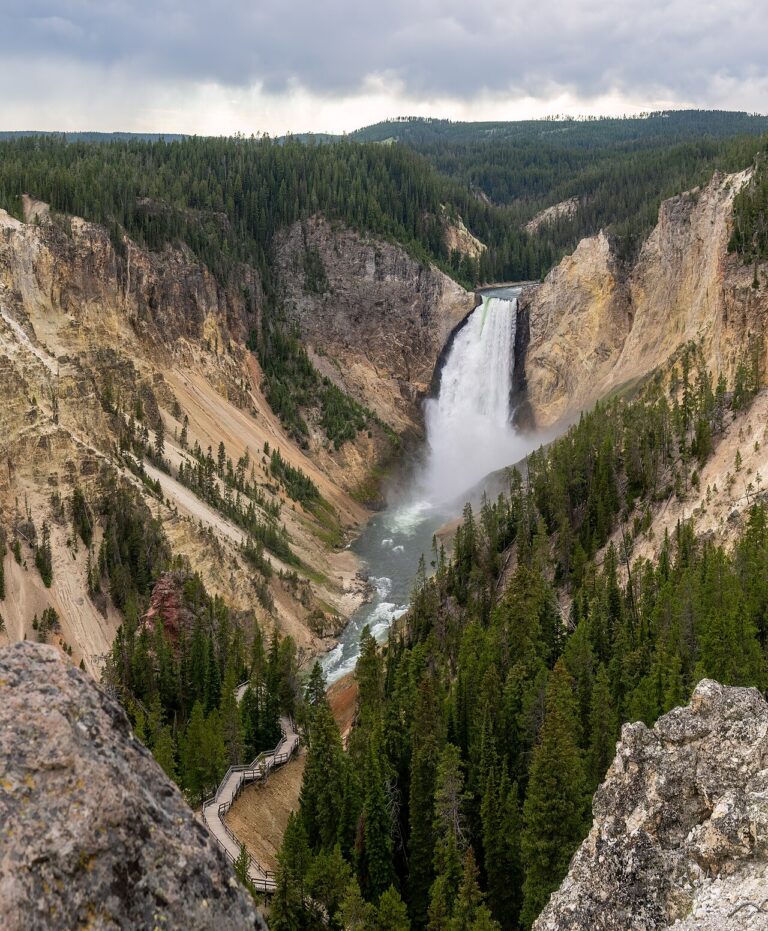 Yellowstone Wildlife Guide: Wolves, Bears and BisonThe world's first national park is also America's best place to watch wolves, grizzlies and bison. Where to…
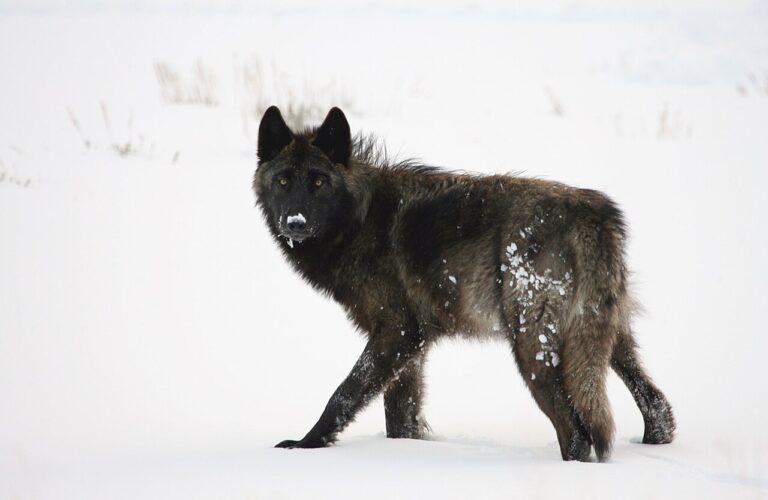 Wolf Watching in Yellowstone’s Lamar ValleyYellowstone's Lamar Valley is the best place in the world to watch wild wolves. How to find them,…
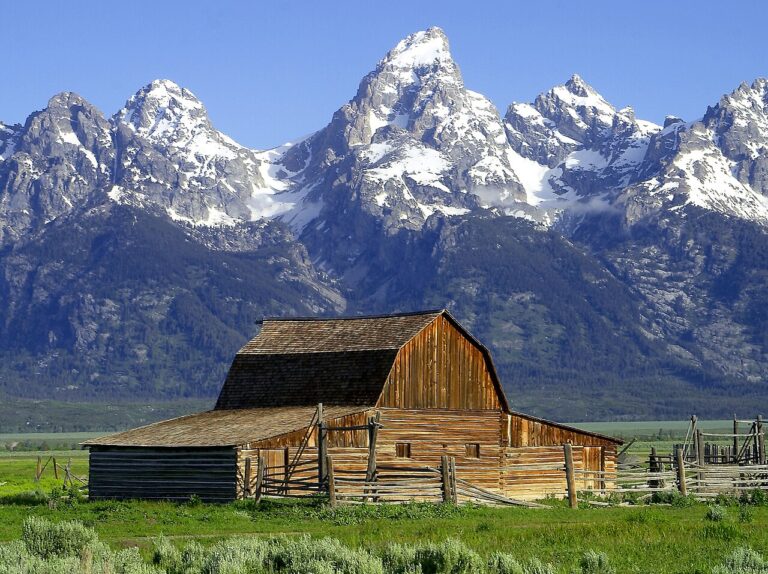 Grand Teton Wildlife GuideBeneath the jagged Tetons, moose, bears, bison and pronghorn share the valley of Jackson Hole. Where and when…