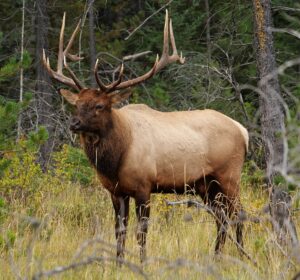
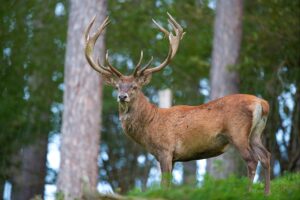
The moose is the giant of the northern forests. With long legs for wading through snow and bogs and a large muzzle for stripping leaves, it is superbly adapted to cold climates and suffers in hot weather.
Interesting facts
- The moose is the largest living member of the deer family.
- Moose are strong swimmers and can dive several metres to feed on water plants.
- In Europe, moose are called elk.
- The flap of skin under the throat is called a bell or dewlap.
- A moose can eat around 20–30 kg of vegetation a day in summer.
- Warmer winters have increased winter ticks, which can kill moose calves.
Behaviour
Moose are mostly solitary, except for mothers with calves. During the autumn rut, bulls fight with their antlers and call to attract cows. Moose can be dangerous if surprised, especially mothers with calves.
Breeding and young
Cows give birth to one calf, sometimes twins, in late spring after about eight months. Calves stay with their mothers for about a year.
Threats and conservation
Globally secure, but some populations are declining because of parasites, disease, climate change and collisions with vehicles.
Where to see it
- Denali, Alaska
- Grand Teton, USA
- Algonquin Park, Canada
- Maine and New Hampshire, USA
- Sweden and Norway
Status source: IUCN Red List. Profile last reviewed September 2026.
Where to see the moose
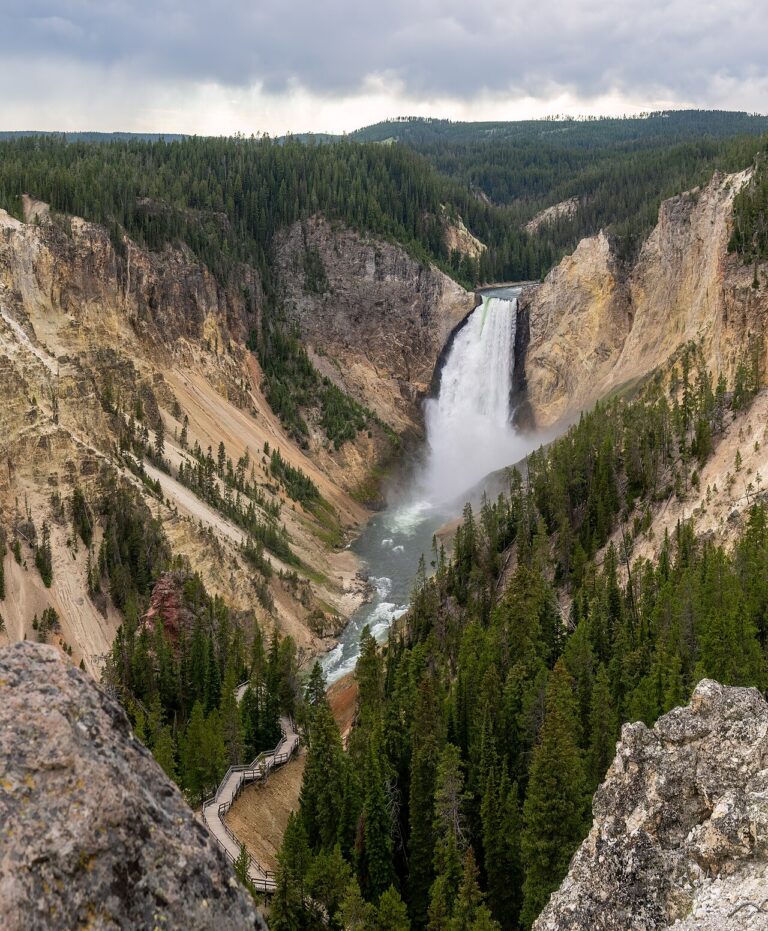 Yellowstone Wildlife Guide: Wolves, Bears and BisonThe world's first national park is also America's best place to watch wolves, grizzlies and bison. Where to…
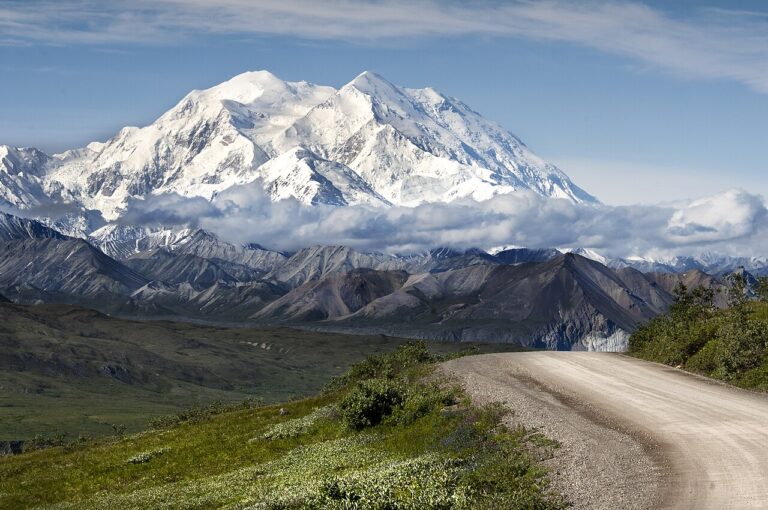 Denali National Park Wildlife GuideDenali's "Big Five" are grizzlies, moose, caribou, Dall sheep and wolves, set against North America's highest peak. How…
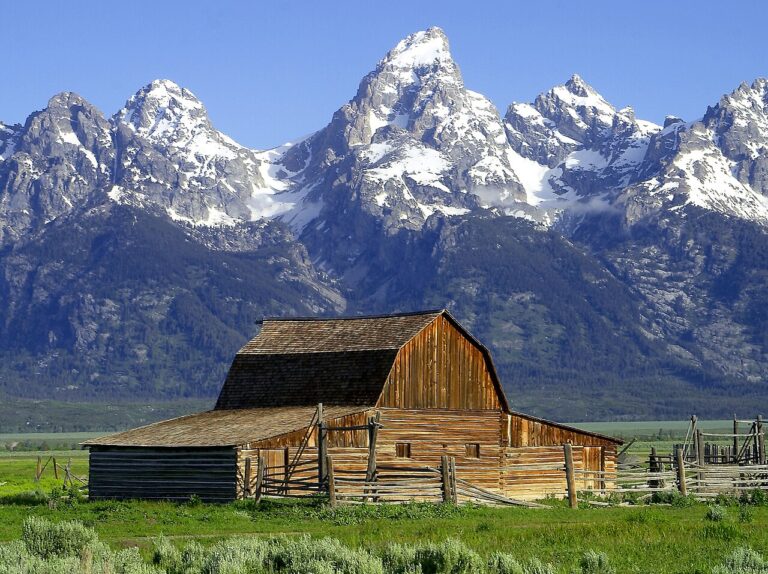 Grand Teton Wildlife GuideBeneath the jagged Tetons, moose, bears, bison and pronghorn share the valley of Jackson Hole. Where and when…