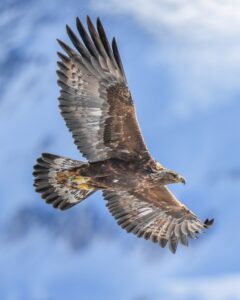
The bald eagle is a large sea eagle found only in North America. It was nearly wiped out in the lower 48 states by hunting, habitat loss and especially the pesticide DDT, which thinned eggshells. After DDT was banned in 1972 and the species was protected, it made one of the most celebrated comebacks in conservation history.
Interesting facts
- The bald eagle is the national bird and symbol of the United States.
- It is not bald; the name comes from an old word meaning white-headed.
- Young eagles do not get their white heads until they are about five years old.
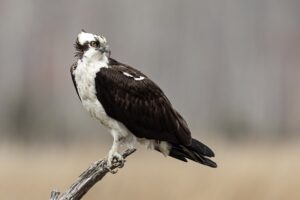
- Bald eagles often steal fish from ospreys.
- Pairs usually mate for life and reuse the same nest for years.
- They recovered from about 417 nesting pairs in the lower 48 states in 1963 to more than 70,000 pairs.
Behaviour
Bald eagles perch near water and swoop to grab fish from the surface with their talons. In winter, hundreds can gather where open water and fish are plentiful.
Breeding and young
Pairs lay 1 to 3 eggs, incubated by both parents for about 35 days. Chicks fledge at 10 to 12 weeks.
Threats and conservation
Lead poisoning from ammunition and fishing tackle, collisions, electrocution on power lines and habitat loss.
Where to see it
- Chilkat Bald Eagle Preserve, Alaska (November)
- Homer, Alaska
- Mississippi River lock and dams in winter
- Vancouver Island and British Columbia
Status source: IUCN Red List. Profile last reviewed September 2026.
Where to see the bald eagle
 Yellowstone Wildlife Guide: Wolves, Bears and BisonThe world's first national park is also America's best place to watch wolves, grizzlies and bison. Where to…
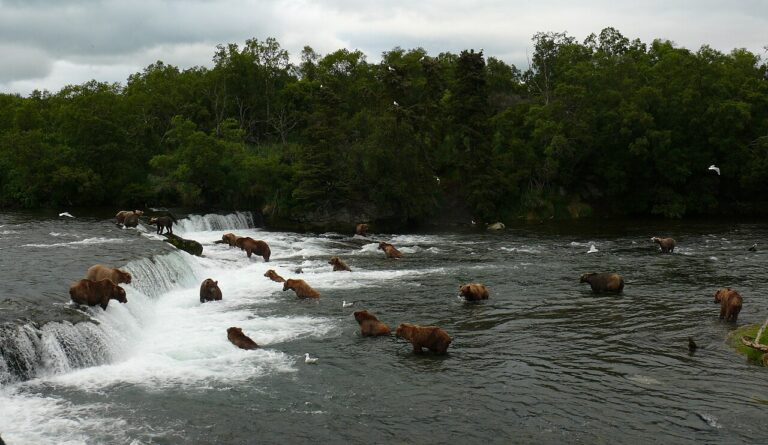 Brooks Falls, Katmai: Watching Bears Catch SalmonAt Brooks Falls, brown bears stand at the lip of a waterfall and catch leaping salmon in their…
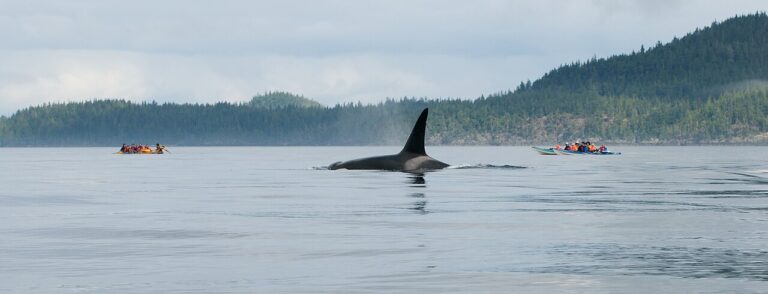 Orca Watching on Vancouver IslandThe waters around Vancouver Island are one of the best places in the world to watch wild orcas.…