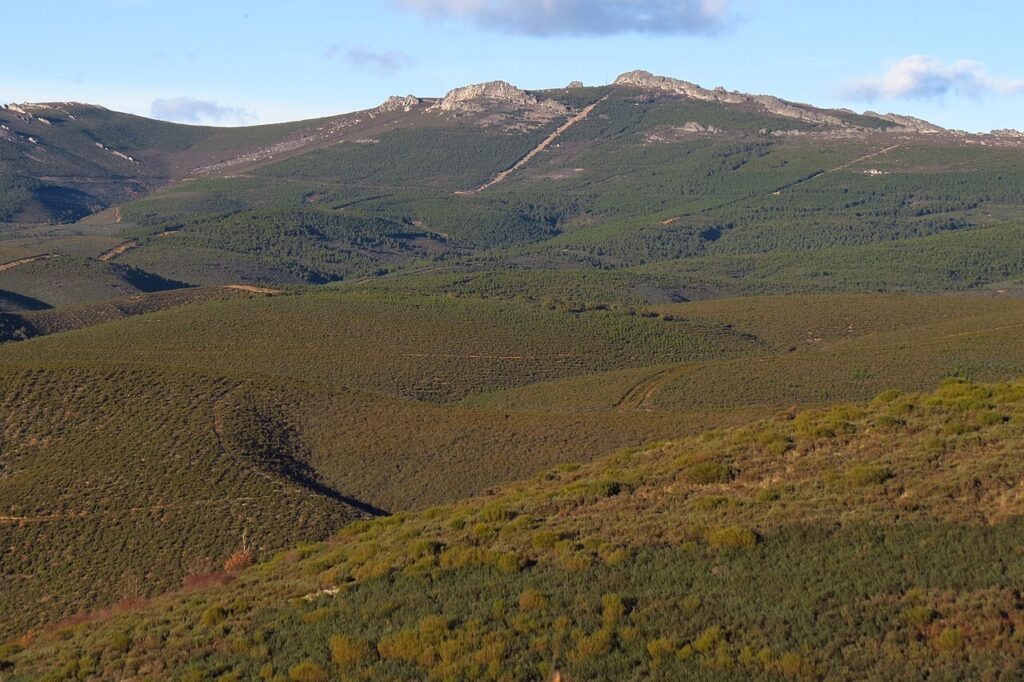
The Sierra de la Culebra, a range of low mountains in the province of Zamora in north-west Spain, has one of the highest densities of wolves in western Europe. Its open heather and pine landscapes allow patient watchers to see Iberian wolves from distant viewpoints, especially at dawn and dusk, making it Europe’s best-known wolf-watching destination.
At a glance
| Best time | September to March |
| Getting there | About 1 hour from Zamora; 3 hours from Madrid |
| Time needed | 2 to 4 days |
| Big draws | Iberian wolves, red deer, raptors |
| Good for | Patient wildlife watchers, photographers |
Iberian wolves
- The Iberian wolf is a subspecies of the grey wolf, slightly smaller, with dark marks on its front legs. See our grey wolf profile.
- Spain’s wolves, most of which live in the north-west, recovered from persecution in the 20th century. In 2021, Spain listed the wolf as a protected species nationwide, ending hunting north of the Duero River, although this protection has since been debated and partly reversed in some regions.
- Wolves in the Culebra hunt red deer, roe deer and wild boar.
How to watch wolves
- Watchers gather at dawn and dusk at viewpoints on hillsides, using binoculars and spotting scopes to scan distant slopes and valleys.
- Local guides know pack movements and recent sightings.
- Sightings are often at long range, so a scope is essential. Some days you will see nothing; others you may watch a pack crossing a valley.
The 2022 wildfire
In June 2022, a huge wildfire burned about a third of the Sierra de la Culebra. Wildlife, including wolves, has been recovering, and the landscape is regenerating, but some areas look very different. Ask local guides about current conditions.
Other wildlife
- Red deer: the rut in September and October is spectacular, with stags bellowing. See our red deer profile.
- Roe deer, wild boar, foxes and Iberian hares.
- Birds: golden eagles, short-toed eagles, hen harriers and many songbirds.
When to go
- September to October: the red deer rut, with wolves active.
- November to March: shorter days, and wolves are often more visible in the cold.
- Summer: wolves are harder to see, as they rest at den sites and vegetation is taller.
Where to stay
Rural guesthouses and hotels in villages such as Puebla de Sanabria, Villardeciervos and Riofrío de Aliste. The Wolf Centre (Centro del Lobo Ibérico) at Robledo has semi-captive wolves and exhibits.
Frequently asked questions
Can I see wild wolves in Spain? Yes. Sierra de la Culebra is one of the best places in Europe, though sightings require patience and a spotting scope.
What is the best time to see wolves? Autumn and winter, at dawn and dusk.
Do I need a guide? Not strictly, but a local guide greatly improves your chances.
Are Iberian wolves dangerous? No. Wild wolves avoid people.
Related guides
- Wolf watching in Yellowstone’s Lamar Valley
- Iberian lynx watching in Sierra de Andújar
- Abruzzo: Marsican bears and wolves
- Animal profiles: Grey wolf, Red deer, Wild boar
Cover photo: Victor Salvador Vilariño, CC BY-SA 4.0, via Wikimedia Commons