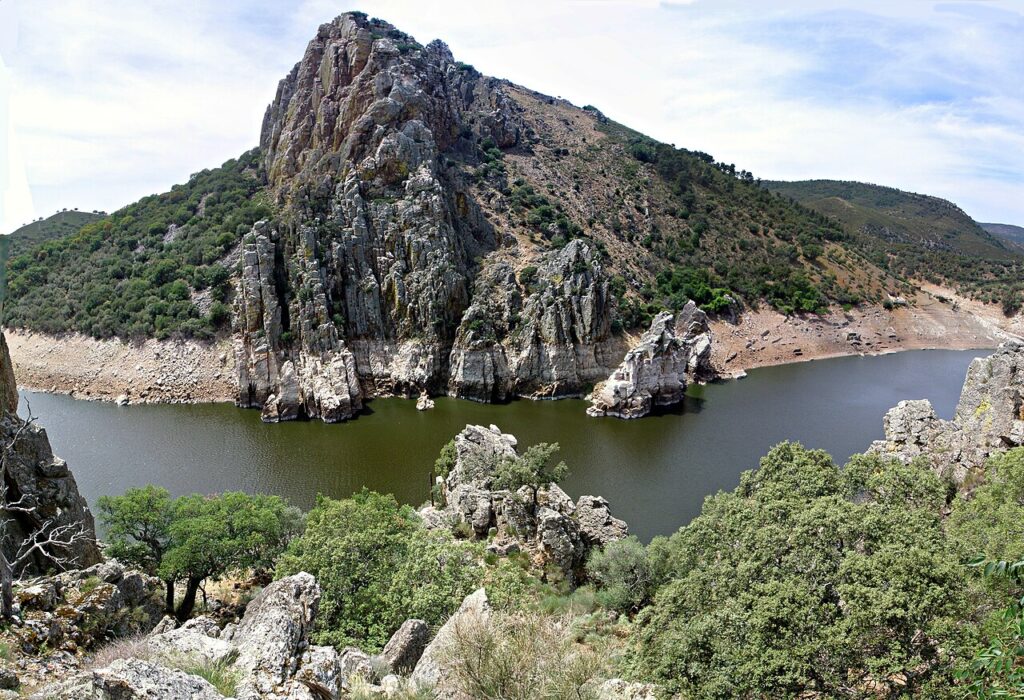
Extremadura, in western Spain on the Portuguese border, is one of Europe’s great birding regions. Monfragüe National Park has one of the largest colonies of cinereous vultures in the world, and the surrounding plains hold great bustards and other steppe birds. In winter, tens of thousands of common cranes arrive in the oak woodlands known as dehesas.
At a glance
| Best time | March to May (spring); November to February (cranes) |
| Getting there | About 2.5 to 3 hours by road from Madrid |
| Time needed | 3 to 6 days |
| Big draws | Vultures, Spanish imperial eagles, great bustards, cranes |
| Good for | Birders of all levels, photographers |
Monfragüe National Park
- Peña Falcón: a famous cliff where griffon vultures nest, with black storks and Eurasian eagle-owls nearby. See our griffon vulture profile.
- Cinereous (black) vultures: one of the largest breeding colonies in the world.
- Spanish imperial eagles: an endangered species, seen from viewpoints such as Portilla del Tiétar, where eagle-owls also nest.
- Castillo de Monfragüe: a hilltop castle with panoramic views and raptors passing close.
- Mammals: red deer, wild boar, otters and, occasionally, the reintroduced Iberian lynx.
The plains
- Great bustards: the heaviest flying birds in the world. The plains around Cáceres, Trujillo and Belén hold good numbers, and males display in spring, puffing up into white balls of feathers. See our great bustard profile.
- Little bustards, pin-tailed and black-bellied sandgrouse, stone curlews and Montagu’s harriers.
- Lesser kestrels nest in old buildings in Trujillo and Cáceres.
Common cranes
In winter, around 100,000 common cranes, one of the largest wintering concentrations in Europe, feed on acorns in the dehesas and roost in reservoirs such as those near Navalvillar de Pela.
When to go
- March to May: spring migration, breeding birds and displaying bustards; wildflowers. The best time overall.
- June to August: very hot; birding in early mornings.
- September to October: autumn migration.
- November to February: cranes, wintering raptors, fewer visitors.
Where to stay
Rural houses (casas rurales) and small hotels around Monfragüe (Villarreal de San Carlos, Torrejón el Rubio), Trujillo and Cáceres, many run by or catering to birders.
Frequently asked questions
When is the best time for birding in Extremadura? Spring (March to May), when bustards display and summer migrants arrive.
Where can I see great bustards? On the plains around Cáceres and Trujillo, especially at dawn in spring.
Can I see Iberian lynx in Extremadura? Occasionally, following reintroductions, but Andújar in Andalusia is far more reliable.
Is Extremadura good for beginners? Yes. Vultures, storks and eagles are easy to see at Monfragüe’s viewpoints.
Related guides
- Iberian lynx watching in Sierra de Andújar
- Raptor migration at the Strait of Gibraltar
- Crane migration at Hortobágy
- Animal profiles: Great bustard, Griffon vulture, White stork
Cover photo: Alonso de Mendoza, CC BY-SA 3.0, via Wikimedia Commons