The Ethiopian wolf is a slender, red wolf of the Ethiopian highlands and Africa’s most endangered carnivore. It is a rodent specialist of the Afro-alpine grasslands.
Interesting facts
- About half of all Ethiopian wolves live in Bale Mountains National Park.
- Packs cooperate to defend territory, but wolves usually hunt rodents alone.
- Scientists have filmed Ethiopian wolves licking nectar from red-hot poker flowers, possibly helping to pollinate them.
- Rabies and distemper spread by domestic dogs are major threats.
- Conservationists vaccinate wolves against rabies to protect packs.
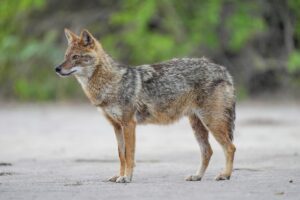
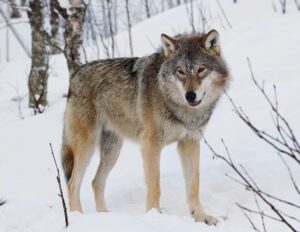
- Its closest relatives are grey wolves and golden jackals.
Behaviour
Ethiopian wolves live in family packs that share territory, patrol boundaries and greet each other with elaborate displays. They hunt by day, stalking rodents or digging them out of burrows.
Breeding and young
Usually only the dominant female breeds, giving birth to two to six pups in a den. The whole pack helps feed them.
Threats and conservation
Diseases from domestic dogs, habitat loss to farming and grazing, and climate change pushing suitable habitat higher.
Where to see it
- Sanetti Plateau, Bale Mountains National Park, Ethiopia
- Simien Mountains National Park, Ethiopia
- Guassa Community Conservation Area, Ethiopia
- Guided tours with local wolf monitors
Status source: IUCN Red List. Profile last reviewed September 2026.
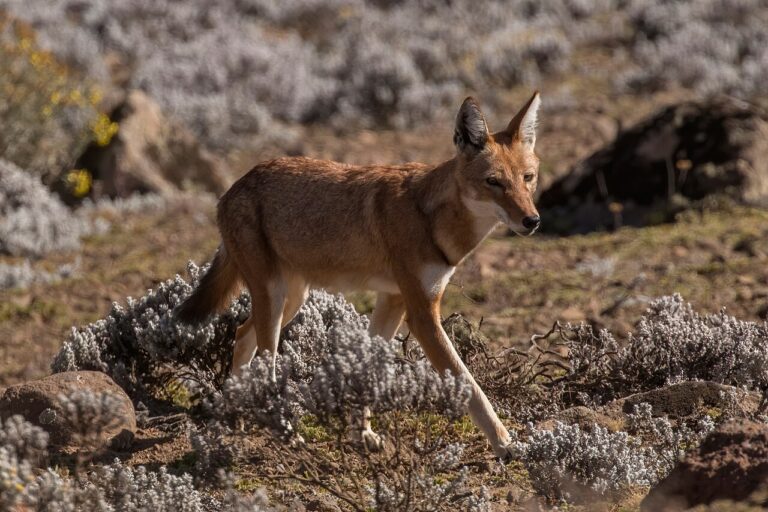 Simien and Bale Mountains: Geladas and Ethiopian Wolves