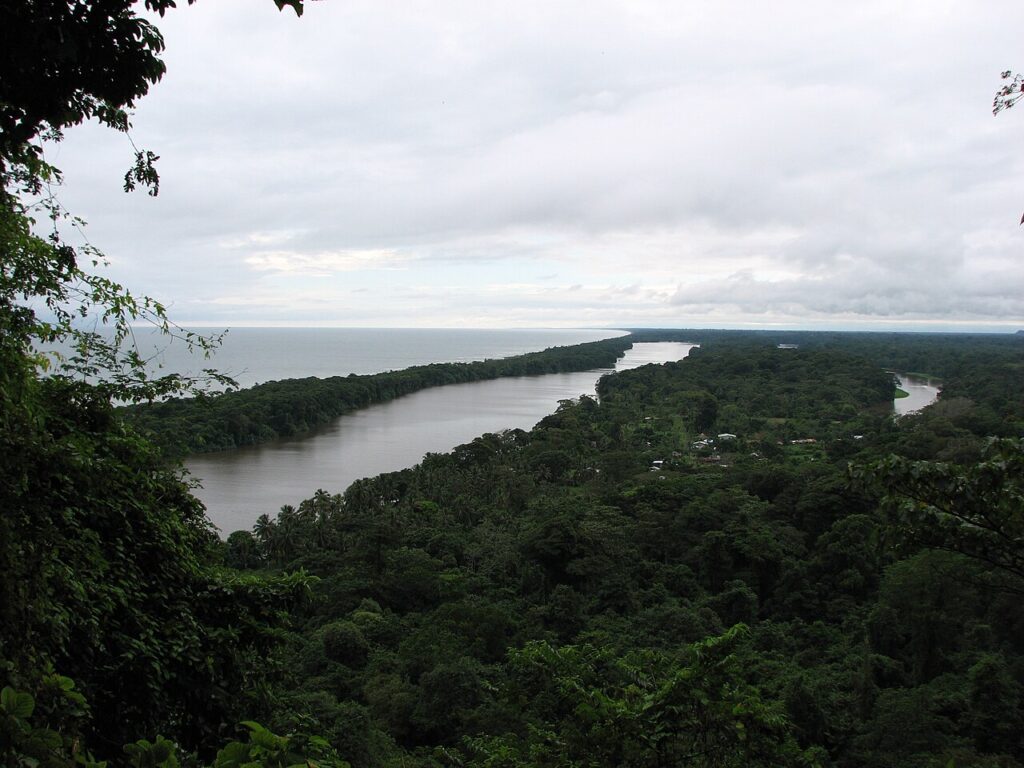
Tortuguero, on Costa Rica’s northern Caribbean coast, means “place of turtles”. Its long black-sand beach is the most important nesting site for green turtles in the Western Hemisphere, and it also hosts leatherbacks, hawksbills and loggerheads. The village and national park can only be reached by boat or small plane, through a network of canals lined with rainforest.
At a glance
| Best time | July to October for green turtles; March to May for leatherbacks |
| Getting there | Road and boat from San José (about 4 to 5 hours), or a short flight |
| Time needed | 2 to 3 nights |
| Big draws | Nesting turtles, hatchlings, canal wildlife |
| Good for | Families, nature lovers, combining with the rest of Costa Rica |
The turtles
| Species | Nesting season | Notes |
|---|---|---|
| Green turtle | July to October (peak August) | Tens of thousands of nests each season. See our green sea turtle profile |
| Leatherback | March to May | The largest turtle; fewer nests now than in the past. See our leatherback profile |
| Hawksbill | Occasional, mainly in summer | Critically endangered |
The Sea Turtle Conservancy has monitored turtles at Tortuguero since 1959, founded by Archie Carr, making it one of the longest-running sea turtle research programmes in the world. Green turtle numbers have increased dramatically since protection began.
Guided night tours
- Night turtle watching is only allowed with certified local guides, on tours of about two hours between 8 pm and midnight or later.
- Spotters search the beach and call guides to turtles that have started laying, so groups can watch without disturbing them.
- Cameras, phones and flashlights are not allowed on the beach at night; guides use dim red light.
- Tours are limited, so book through your lodge.
Hatchlings
From about August to November, hatchlings emerge from nests and scramble to the sea, mostly at night or early morning. Seeing them is a matter of luck.
Canal wildlife
Boat trips and kayak tours along the canals reveal howler, spider and capuchin monkeys, three-toed and two-toed sloths, caimans, river otters, basilisk lizards, toucans, herons and kingfishers. See our brown-throated sloth and common basilisk profiles.
Getting there
- By road and boat: drive or take a shuttle from San José to La Pavona or Caño Blanco (about 3 hours), then a boat through the canals (about 1 to 1.5 hours).
- By air: short flights from San José to Tortuguero’s airstrip.
Where to stay
Lodges along the canals and in the village, from budget cabins to all-inclusive lodges with tours.
Responsible tips
- Only watch turtles with a certified guide.
- Keep quiet, stay behind the turtle and never touch it.
- Do not use flash or lights on the beach.
- Choose lodges that support turtle conservation.
Frequently asked questions
When is the best time to see turtles in Tortuguero? July to October for green turtles, with the peak in August. March to May for leatherbacks.
Can I see hatchlings? Yes, from about August to November, though timing is unpredictable.
How do I get to Tortuguero? By boat through the canals after a road transfer, or by small plane from San José.
How many nights do I need? Two nights: one for a night turtle tour, plus canal trips.
Related guides
- Costa Rica wildlife guide
- Oman: turtle nesting at Ras al Jinz
- Where to see sloths
- Animal profiles: Green sea turtle, Leatherback sea turtle, Howler monkey
Cover photo: Leyo, CC BY-SA 2.5 ch, via Wikimedia Commons