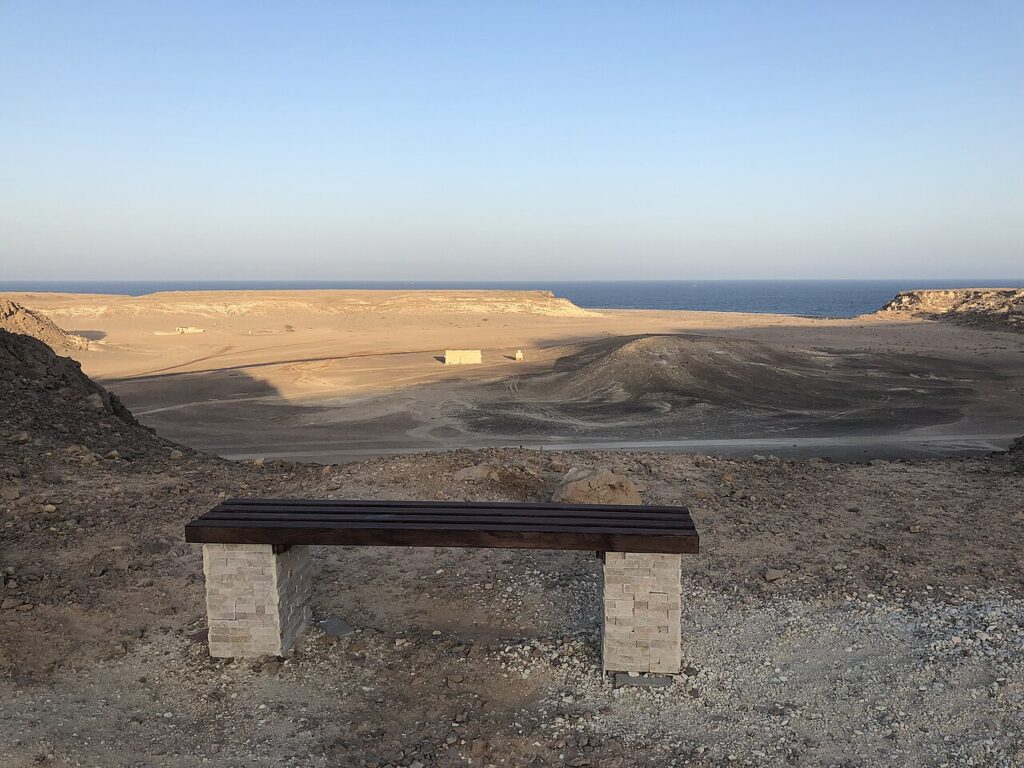
Ras al Jinz, on the easternmost tip of the Arabian Peninsula, is one of the most important nesting beaches in the Indian Ocean for green turtles. Every night of the year, female turtles come ashore to dig nests and lay eggs, and a protected reserve lets visitors watch under the guidance of rangers. Oman also offers dolphins, desert wildlife, and a green monsoon season in the south.
At a glance
| Best time | Turtles year-round; peak nesting June to September; hatchlings July to October |
| Getting there | About 4 hours by road from Muscat |
| Time needed | 1 night at Ras al Jinz; 7 to 10 days for Oman |
| Big draws | Nesting green turtles, dolphins, desert landscapes |
| Good for | Families, combining culture and nature |
Turtles at Ras al Jinz
- Thousands of green turtles nest here each year. See our green sea turtle profile.
- Guided night visits are the only way onto the beach. Rangers lead small groups to a turtle that has finished digging, so visitors can watch her lay eggs without disturbing her.
- Dawn visits offer a chance to see late turtles returning to the sea and hatchlings making their way to the water in season.
- Photography with flash or torches is not allowed; red light is used instead.
Other wildlife in Oman
- Dolphins: boat trips from Muscat regularly find spinner and common dolphins, and sometimes whales.
- Daymaniyat Islands: a marine nature reserve with coral reefs, turtles and seabirds, good for snorkelling and diving (some areas close seasonally for nesting birds).
- Arabian oryx: this antelope was extinct in the wild by 1972 and was reintroduced in Oman in 1982. The Arabian Oryx Sanctuary protects the population, though poaching has reduced it. See our Arabian oryx profile.
- Dhofar: in the south, the khareef (monsoon) from June to September turns the hills green, attracting birds and visitors; Arabian leopards survive in the remote mountains but are almost never seen.
- Birds: Oman is on a major migration route, and the Barr Al Hikman wetland hosts huge numbers of waders in winter.
When to go
- Turtles: nesting happens year-round, peaking from June to September, with hatchlings most common from about July to October.
- Travel: October to April is the most comfortable season for most of Oman; summer is very hot except in Dhofar.
Getting there
Ras al Jinz is about 4 hours by road from Muscat, near the town of Sur. Stay at the reserve’s own accommodation or in Sur. Combine with Wahiba Sands and Wadi Bani Khalid.
Tips
- Book turtle-watching tours in advance, especially at weekends and in peak season.
- Follow rangers’ instructions strictly and never touch turtles or hatchlings.
- Wear dark clothing and avoid using lights on the beach.
- Combine with a night in the Wahiba desert.
Frequently asked questions
When is the best time to see turtles at Ras al Jinz? Turtles nest every night of the year, but June to September has the most nesting turtles.
Can I see hatchlings? Yes, most often from about July to October, on dawn or night visits.
Is Oman good for wildlife? Yes, especially for turtles, dolphins, birds and desert landscapes.
How long do I need at Ras al Jinz? One night, including the evening and dawn visits.
Related guides
- Tortuguero turtle nesting guide
- Swimming with whale sharks in the Philippines
- Animal profiles: Green sea turtle, Arabian oryx, Loggerhead sea turtle
Cover photo: Albinfo, CC BY 4.0, via Wikimedia Commons