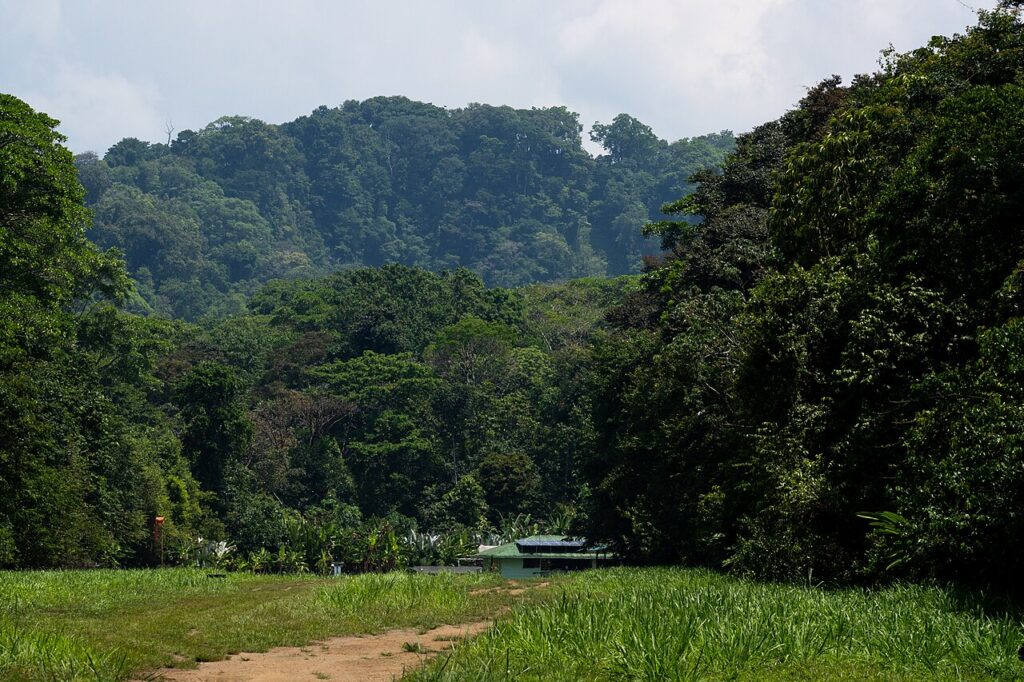
Corcovado National Park, on Costa Rica’s remote Osa Peninsula, protects about 424 km² of lowland rainforest, mangroves and beaches on the Pacific coast. It is often described, following a famous National Geographic article, as “the most biologically intense place on Earth”. Corcovado shelters about 2.5% of the world’s biodiversity, including Baird’s tapirs, all four of Costa Rica’s monkey species, scarlet macaws and even jaguars.
At a glance
| Best time | December to April (dry season) |
| Getting there | Fly to Puerto Jiménez or Drake Bay, or drive from San José |
| Time needed | 2 to 4 days |
| Big draws | Tapirs, monkeys, scarlet macaws, rainforest hiking |
| Good for | Active travellers, wildlife enthusiasts |
Wildlife
- Baird’s tapirs: often seen near Sirena ranger station, resting in mud or walking the beach. See our Malayan tapir profile and South American tapir profile for related species.
- Monkeys: squirrel monkeys (the Central American species), spider monkeys, howler monkeys and white-faced capuchins. See our spider monkey profile.
- Scarlet macaws: large, noisy flocks feed on almond trees near the coast. See our scarlet macaw profile.
- Sloths, anteaters, coatis, peccaries and agoutis.
- Big cats: jaguars, pumas and ocelots are present but rarely seen.
- Birds: over 400 species, including toucans and trogons.
- Marine life: humpback whales and dolphins off the coast, and bull sharks at river mouths.
Visiting rules
- Since 2014, all visitors must be accompanied by a certified guide inside the park.
- Entry is by permit, with limited daily numbers.
- Main ranger stations are Sirena (the heart of the park, with the best wildlife), La Leona, San Pedrillo and Los Patos.
- Day trips by boat from Drake Bay to Sirena are popular; overnight stays at Sirena are sometimes possible, depending on current arrangements.
When to go
- December to April: dry season; easier hiking and river crossings.
- May to November: rainy season; heavy rain, especially from September to November, when some areas may close.
Getting there
- By air: flights from San José to Puerto Jiménez or Drake Bay (about 1 hour).
- By road: about 7 to 8 hours from San José to Puerto Jiménez, or to Sierpe followed by a boat to Drake Bay.
Where to stay
Drake Bay and Puerto Jiménez have eco-lodges, guesthouses and luxury rainforest lodges, many with their own private reserves.
Tips
- Book your guide and permits in advance.
- Bring lightweight clothing, rain gear and sturdy shoes that can get wet.
- Carry plenty of water; it is hot and humid.
- Consider a snorkelling trip to Caño Island from Drake Bay.
Frequently asked questions
Do I need a guide for Corcovado? Yes. Certified guides are compulsory for all visitors.
Can I see tapirs in Corcovado? Yes. Sirena ranger station is one of the best places in Central America to see Baird’s tapirs.
Is Corcovado difficult to visit? It is remote, but day trips from Drake Bay make it accessible. Longer hikes require fitness.
When is Corcovado closed? Some sectors may close in the wettest months; check current information before travelling.
Related guides
- Costa Rica wildlife guide
- Where to see sloths
- Monteverde cloud forest and the resplendent quetzal
- Animal profiles: Scarlet macaw, Spider monkey, South American tapir
Cover photo: Julio-César Chávez, CC BY 4.0, via Wikimedia Commons