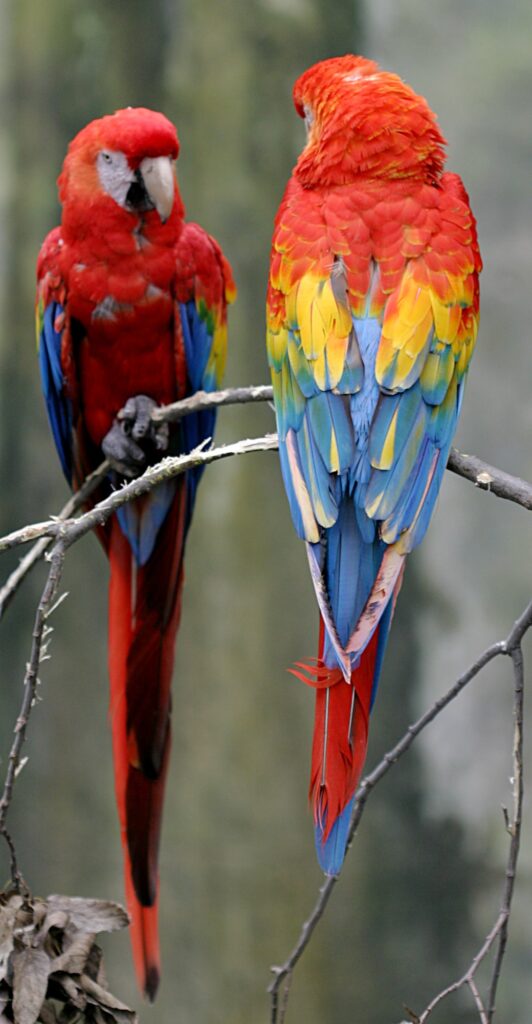
Costa Rica covers just 0.03 percent of the Earth’s surface but holds around 5 percent of its known species. Rainforests, cloud forests, dry forests, mangroves and two coastlines are packed into a country you can cross in a day. About a quarter of its land is protected in national parks and reserves. It is one of the safest, easiest and most rewarding wildlife destinations in the world, especially for families and first-time nature travellers.
Costa Rica at a glance
| Best time | December to April (dry season on the Pacific side); the Caribbean coast is drier in September and October |
| Green season | May to November: afternoon rains, lush forests, fewer visitors and turtle nesting |
| Trip length | 10 to 14 days to cover three or four regions |
| Gateways | San José (SJO) and Liberia (LIR) |
| Famous for | Sloths, monkeys, poison frogs, toucans, quetzals, sea turtles, whales |
Best places to see wildlife
Corcovado National Park (Osa Peninsula)
Wild, remote and extraordinarily rich, Corcovado protects the largest remaining lowland rainforest on the Pacific coast of Central America. All four of Costa Rica’s monkey species live here, alongside Baird’s tapirs, scarlet macaws, white-lipped peccaries and, rarely, jaguars and pumas. A licensed guide is required. Visitors usually stay in Drake Bay or Puerto Jiménez and hike to ranger stations such as Sirena.
Tortuguero National Park (Caribbean coast)
A network of canals reachable only by boat or small plane. It is one of the most important nesting sites for green sea turtles in the Western Hemisphere, with nesting mainly from July to October. Leatherbacks nest from about March to May. Guided night tours to watch nesting turtles are strictly controlled. By day, canoe trips reveal sloths, caimans, howler monkeys and kingfishers.
Monteverde and Santa Elena cloud forests
Misty cloud forests famous for the resplendent quetzal (best seen from about February to June, particularly during nesting in March to May), hummingbirds, the three-wattled bellbird, orchids and night walks for tarantulas, frogs and sleeping birds. Hanging bridges offer a view of the canopy.
Arenal Volcano and La Fortuna
Rainforest trails, hanging bridges, hot springs and night tours. Nearby Caño Negro Wildlife Refuge is excellent for waterbirds, caimans and river wildlife.
Manuel Antonio National Park (central Pacific)
Small, popular and easy to explore, with beaches and trails where sloths, white-faced capuchins, squirrel monkeys and coatis are commonly seen. It is closed one day each week and daily visitor numbers are capped, so book tickets in advance and check the current schedule.
Sarapiquí and La Selva Biological Station
Lowland Caribbean rainforest with excellent birding, great green macaws, poison dart frogs and research-led guided walks.
Carara National Park and the Tárcoles River
A transition zone between dry and wet forests, known for scarlet macaws and a boat trip on the Tárcoles River to see large American crocodiles.
Guanacaste dry forest: Santa Rosa and Rincón de la Vieja
Dry forest, volcanoes, beaches and nesting olive ridley turtles at Ostional, where mass nesting events called arribadas happen, mostly from July to December.
Wildlife highlights
- Sloths: brown-throated three-toed and Hoffmann’s two-toed sloths.
- Monkeys: mantled howler, white-faced capuchin, Central American squirrel monkey and Geoffroy’s spider monkey.
- Frogs: red-eyed tree frogs, glass frogs and strawberry poison dart frogs.
- Birds: over 900 species, including toucans, quetzals, scarlet macaws and dozens of hummingbirds.
- Sea turtles: green, leatherback, hawksbill and olive ridley.
- Whales: humpback whales visit Marino Ballena National Park from both hemispheres, from roughly July to October and December to March.
A 12-day wildlife route
- Days 1–3: Tortuguero (fly or bus and boat from San José).
- Days 4–5: Sarapiquí or Arenal.
- Days 6–7: Monteverde cloud forest.
- Days 8–9: Carara and Manuel Antonio.
- Days 10–12: Osa Peninsula and Corcovado.
Tips
- Take night walks. Many of Costa Rica’s most exciting animals, such as frogs, snakes, tarantulas and kinkajous, are nocturnal.
- Hire local naturalist guides. They carry spotting scopes and find far more wildlife than you would alone.
- Pack rain gear and quick-drying clothes, even in the dry season.
- Do not feed wildlife or hold sloths for photos. Legitimate rescue centres do not allow handling.
- Drive carefully: a 4×4 is useful for rural roads, and wildlife crossings are common.
Frequently asked questions
Where is the best place to see sloths in Costa Rica? Sloths are common in Manuel Antonio, Tortuguero, Cahuita, the Sarapiquí area and around La Fortuna. A guide with a spotting scope helps you find them.
When can I see sea turtles nesting? Green turtles nest at Tortuguero mainly from July to October, and leatherbacks from about March to May. Olive ridley arribadas at Ostional happen mostly from July to December.
Is Costa Rica good in the rainy season? Yes. The green season from May to November brings afternoon showers, lush forests, turtle nesting and lower prices. Some remote roads become difficult in September and October.
Do I need a guide in national parks? Guides are required in Corcovado and recommended everywhere. They find far more wildlife and share expert knowledge.
Related guides
- Pantanal jaguar safari
- Responsible wildlife tourism
- Wildlife of North America
- Animal profiles: Brown-throated Sloth, Red-eyed Tree Frog, Scarlet Macaw, Green Sea Turtle
Cover photo: en:User:Cburnett, CC BY-SA 3.0, via Wikimedia Commons