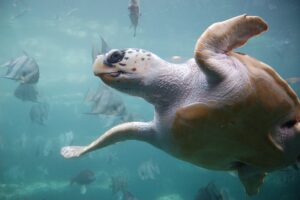
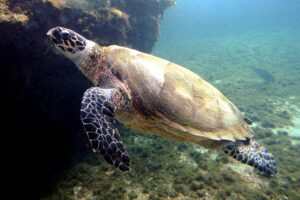
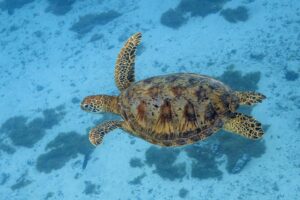
The leatherback is the largest living turtle and one of the most widely travelled animals on Earth. Its streamlined, leathery shell and huge front flippers let it cross entire oceans in search of jellyfish.
Interesting facts
- Instead of a hard shell, it has a leathery skin over a layer of small bones.
- Backward-pointing spines in its throat help it swallow slippery jellyfish.
- It can keep its body much warmer than the surrounding water, so it can feed in cold seas.
- One tracked leatherback swam about 20,000 km from Indonesia to the US West Coast.
- Leatherbacks often mistake floating plastic bags for jellyfish.
- The heaviest leatherback on record weighed about 916 kg.
Behaviour
Leatherbacks spend almost their entire lives at sea, migrating thousands of kilometres between feeding grounds in cold waters and nesting beaches in the tropics. They follow concentrations of jellyfish, sometimes diving to great depths.
Breeding and young
Every two to three years, females return to nesting beaches and lay several clutches of about 80–100 eggs each. The hatchlings emerge after about two months and head straight for the sea.
Threats and conservation
Accidental capture in fishing gear, egg collection, loss of nesting beaches, plastic pollution and climate change, which affects sand temperatures and the sex of hatchlings.
Where to see it
- Grande Riviere and Matura, Trinidad, where nesting is very dense
- Pacuare and Tortuguero, Costa Rica
- French Guiana and Suriname
- Gabon’s Atlantic beaches
Status source: IUCN Red List. Profile last reviewed September 2026.
Where to see the leatherback sea turtle
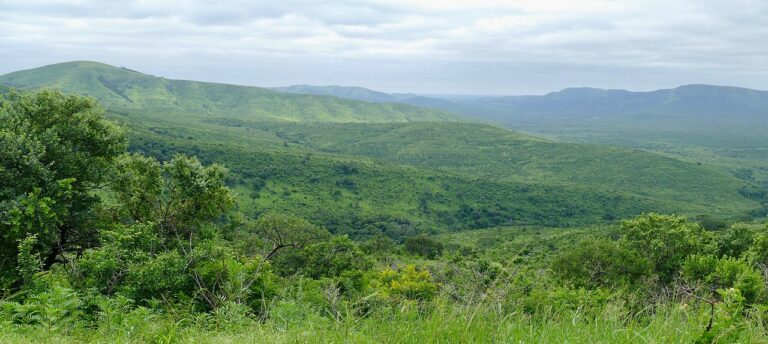 Hluhluwe-iMfolozi and iSimangaliso: Rhinos and WetlandsAfrica's oldest proclaimed reserve saved the white rhino from extinction, and next door lies a World Heritage wetland…
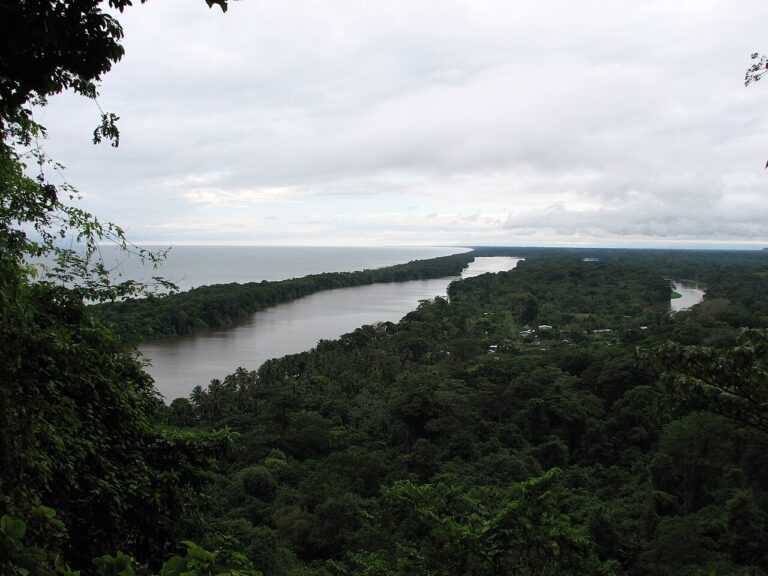 Tortuguero Turtle Nesting GuideTortuguero is the most important nesting beach for green turtles in the Western Hemisphere. When to go and…