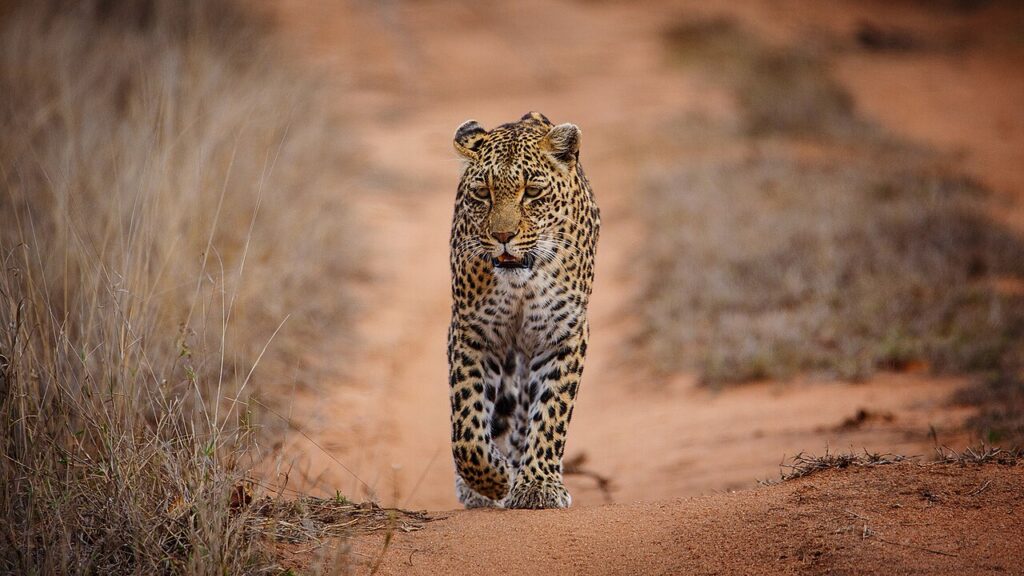
Kruger National Park and the Sabi Sand Game Reserve sit side by side in north-eastern South Africa, with no fence between them. Animals move freely across the boundary, so the wildlife is the same. What differs is how you experience it: Kruger is a huge public park where you can drive yourself on a budget, while Sabi Sand is a private reserve of luxury lodges where expert guides and trackers take you off-road to sightings.
At a glance
| Kruger National Park | Sabi Sand Game Reserve | |
|---|---|---|
| Size | About 19,500 km² | About 650 km² |
| Style | Self-drive or guided, public roads | Guided only, lodge vehicles |
| Off-road driving | Not allowed | Allowed for sightings |
| Night drives | Only with official park drives | Every evening |
| Walking safaris | Guided walks and trails | Guided walks from lodges |
| Accommodation | Rest camps, campsites, some lodges | Private lodges, mostly luxury |
| Typical cost | From budget to mid-range | High to very high, all-inclusive |
Why choose Kruger
- Freedom and value: drive yourself on excellent tar and gravel roads, stop where you like, and stay in affordable SANParks rest camps with cottages, huts and campsites.
- Scale and variety: Kruger’s size means huge variety, from the lush south to the mopane woodland of the north.
- Wildlife: all of the Big Five, wild dogs, cheetahs and more than 500 bird species.
- Guided options: SANParks sunrise, sunset and night drives, guided bush walks and multi-day wilderness trails.
The drawbacks: in the popular south, sightings of lions or leopards near the road can attract queues of cars, you must stay on roads, and gates close at night. See our Kruger self-drive guide.
Why choose Sabi Sand
- Leopards: Sabi Sand is widely considered the best place in Africa to see leopards. Generations of cats have grown up around vehicles and behave naturally at close range. See our leopard profile.
- Off-road tracking: rangers and trackers can follow animals through the bush, positioning you for photography.
- Limited vehicles: lodges usually allow only two or three vehicles at a sighting and share information by radio.
- Night drives: evening drives with spotlights reveal hyenas, genets, civets and hunting lions.
- All-inclusive luxury: meals, drinks and two game drives a day are usually included.
The drawbacks: it is expensive, you are driven rather than driving, and the lodge schedule sets the pace.
Other private reserves in Greater Kruger
Timbavati, Klaserie, Balule, Manyeleti and Thornybush are other private reserves open to Kruger. They offer the same off-road and night-drive advantages, sometimes at lower prices than Sabi Sand, though leopard viewing is usually less intense.
Which is right for you?
- Choose Kruger if you are on a budget, love the freedom of self-driving, have time to explore, or travel with a family that wants flexibility.
- Choose Sabi Sand or another private reserve if you want the best possible leopard and big cat sightings, expert guiding and photography, and can afford it.
- Combine both: many visitors self-drive Kruger for a few days and then spend two or three nights in a private reserve. This is often the best of both worlds.
Costs
Kruger charges a daily conservation fee (with lower rates for South Africans and SADC residents) and accommodation from simple campsites to comfortable cottages. Private lodges charge all-inclusive rates per person per night, from mid-range in some reserves to several thousand US dollars at the most exclusive Sabi Sand lodges. Private reserves also charge a conservation levy. See our safari cost guide.
Frequently asked questions
Are there fences between Kruger and Sabi Sand? No. The fence was removed in the 1990s, so animals move freely between them.
Is Sabi Sand worth the money? For leopards, photography and exclusive sightings, yes. If you enjoy driving yourself and exploring, Kruger gives excellent value.
Can you drive yourself in Sabi Sand? Generally no. You drive to your lodge, but game drives are with the lodge’s guides.
Is malaria a risk in Kruger and Sabi Sand? Yes, the area is a low to moderate malaria risk region, especially in the wet summer months. Seek medical advice, or consider a malaria-free reserve.
Related guides
- Kruger National Park self-drive guide
- Where to see leopards in Africa
- Self-drive vs guided safari
- Animal profiles: Leopard, Lion, White rhinoceros
Cover photo: Fir0002, CC BY-SA 3.0, via Wikimedia Commons