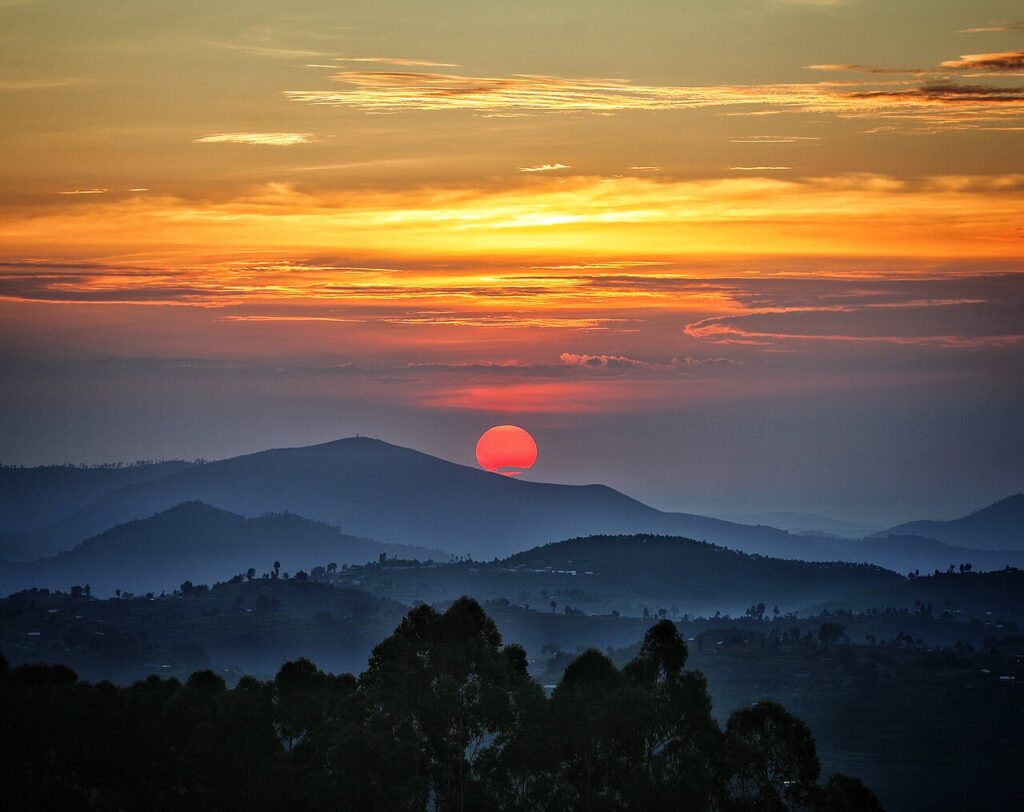
Nyungwe Forest National Park, in south-western Rwanda, protects about 1,019 km² of one of the oldest and best-preserved montane rainforests in Africa. It is a UNESCO World Heritage Site (since 2023) and home to 13 primate species, including chimpanzees and some of the largest troops of colobus monkeys found anywhere. A canopy walkway suspended above a forested ravine gives a bird’s-eye view of it all.
At a glance
| Best time | June to September and December to February |
| Getting there | About 5 to 6 hours by road from Kigali, or fly to Kamembe |
| Time needed | 2 to 3 nights |
| Big draws | Chimpanzees, colobus troops, canopy walk, birding, hiking |
| Good for | Adding primates and forest to a Rwanda gorilla trip |
Chimpanzee trekking
Two chimpanzee communities are habituated for visitors: one in the main forest and one in the small, separate Cyamudongo forest. Treks start very early (often before 5 am) because the chimps move quickly once they leave their nests. Terrain is steep, and sightings, while likely, are less predictable than in Kibale. You spend an hour with the chimpanzees once found. See our chimpanzee profile.
Colobus and other primates
- Rwenzori (Angolan) colobus: troops of several hundred have been recorded here, among the largest of any primate troops in Africa. Watching them leap through the canopy is a highlight.
- L’Hoest’s monkeys, grey-cheeked mangabeys, silver monkeys, red-tailed monkeys and olive baboons are also regularly seen.
Canopy walkway
The walkway near the Uwinka visitor centre is about 160 metres long and hangs roughly 50 to 70 metres above the forest floor at its highest point. It is reached on a short hike and is suitable for most visitors who are comfortable with heights.
Birding and hiking
Nyungwe has around 300 bird species, including more than two dozen Albertine Rift endemics such as the Rwenzori turaco and red-collared babbler. A network of trails, from short walks to the Isumo waterfall to multi-day hikes on the Congo Nile Divide trail, crosses the park.
When to go
- June to September and December to February: the drier months, though rain is possible at any time in this rainforest.
- March to May and October to November: wetter, with slippery trails.
Getting there
The drive from Kigali takes 5 to 6 hours through tea plantations and hills, or you can fly to Kamembe airport near Lake Kivu. Many travellers combine Nyungwe with a few days on the shores of Lake Kivu.
Where to stay
Options range from a luxury lodge in a tea estate on the forest edge to mid-range lodges and guesthouses near Gisakura and Uwinka.
Tips
- Pack waterproofs and warm layers: Nyungwe is high (1,600 to 2,950 m) and often cool and wet.
- Book chimpanzee permits in advance and be ready for a very early start.
- Combine the canopy walk with the colobus trek on the same day.
- Wear boots with good grip for the steep trails.
Frequently asked questions
Is Nyungwe good for chimpanzees? Yes, though the chimps can be harder to follow than in Kibale because of the steep terrain. The forest, colobus troops and canopy walk make a visit worthwhile in any case.
Is the canopy walk scary? It is sturdy and safe, with high side nets, but it moves a little. Most people enjoy it even if they are nervous about heights.
How many days do I need in Nyungwe? Two nights are enough for a chimpanzee trek, the canopy walk and a colobus trek.
Can I combine Nyungwe with gorilla trekking? Yes. A classic Rwanda trip combines Volcanoes National Park for gorillas, Nyungwe for chimpanzees and Akagera for a savanna safari.
Related guides
- Volcanoes National Park, Rwanda
- Akagera National Park
- Kibale chimpanzee trekking
- Animal profile: Chimpanzee
Cover photo: Jonkmania, CC BY-SA 4.0, via Wikimedia Commons