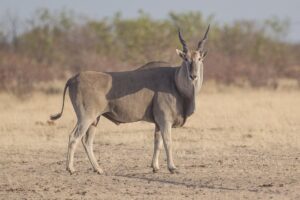
The greater kudu is a large, elegant antelope of African woodland, famous for the males’ magnificent spiral horns. Its grey-brown coat with white stripes provides excellent camouflage in thick bush.
Interesting facts
- Kudu can clear fences about 2.5 metres high from a standing start.
- Six to ten thin white stripes run down each side of the body.
- Kudu horns have long been made into musical instruments and signal horns.
- The kudu is the emblem of South African National Parks.
- Only males have horns; females are smaller and hornless.
- Kudu often freeze and then crash away into thick bush when disturbed.
Behaviour
Females and young live in small herds, while males live alone or in bachelor groups outside the breeding season. Kudu are browsers, feeding mostly at dawn and dusk.
Breeding and young
After a gestation of about eight months, a single calf is born and kept hidden for several weeks before joining the herd.
Threats and conservation
Kudu are widespread and common in protected areas and on game farms. They are hunted for meat and trophies and are vulnerable to diseases such as rabies and anthrax.
Where to see it
- Kruger National Park, South Africa
- Etosha National Park, Namibia
- Chobe National Park, Botswana
- Ruaha National Park, Tanzania
Status source: IUCN Red List. Profile last reviewed September 2026.
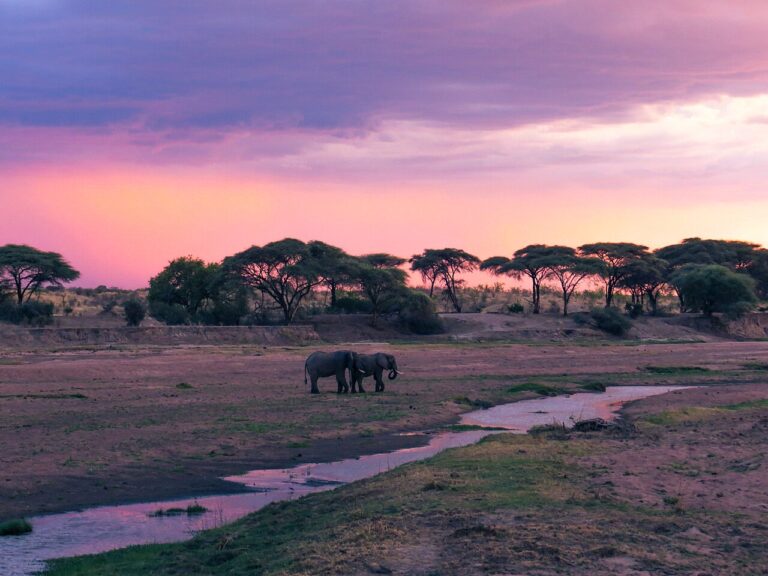 Ruaha and Nyerere (Selous): Tanzania’s Wild South