The monarch butterfly is famous for the longest insect migration in North America. The number of monarchs overwintering in Mexico has declined dramatically since the 1990s, and the western population that winters in California has also crashed, although it has fluctuated in recent years.
Interesting facts
- It takes several generations to complete the annual round trip.
- Monarchs navigate using the position of the sun and an internal clock, and possibly Earth’s magnetic field.
- Toxins from milkweed make caterpillars and adults poisonous to many predators.
- Their bright orange colour warns predators of their toxicity.
- Millions cluster on oyamel fir trees in Mexico from November to March.
- The migratory monarch was listed as Vulnerable on the IUCN Red List in 2023.
Behaviour
In late summer, a special ‘super generation’ of monarchs delays breeding and flies south. In spring, they fly north and lay eggs, and successive generations continue the journey to Canada.
Breeding and young
Females lay single eggs on milkweed leaves. Caterpillars feed for about two weeks, then form a jade-green chrysalis, from which the adult emerges about 10 to 14 days later.
Threats and conservation
Loss of milkweed from herbicide use and land conversion, pesticides, logging and climate change affecting overwintering forests, and extreme weather.
Where to see it
- Monarch Butterfly Biosphere Reserve (El Rosario, Sierra Chincua), Michoacán, Mexico
- Pacific Grove and Pismo Beach, California
- Point Pelee, Ontario (autumn migration)
Status source: IUCN Red List. Profile last reviewed September 2026.
Where to see the monarch butterfly
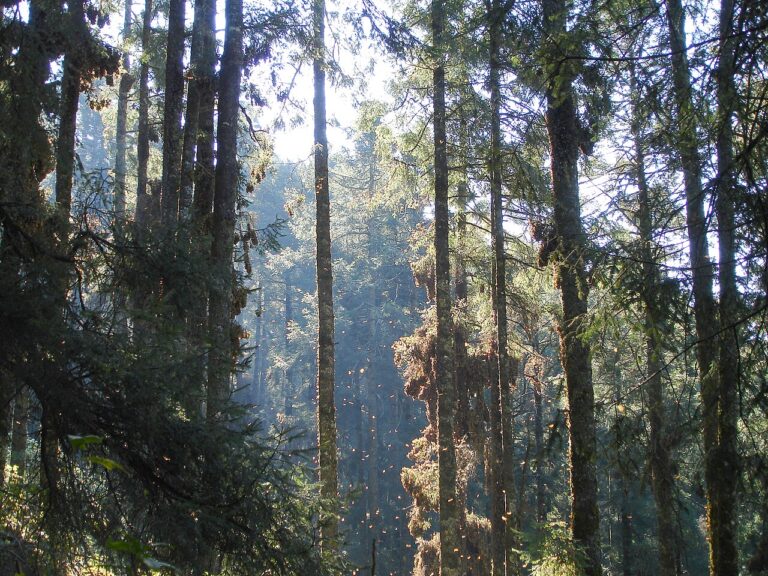 Monarch Butterfly Reserves in Mexico: How to VisitEvery winter, millions of monarch butterflies cover the fir trees of central Mexico's mountains. How to witness this…
 How to Record Your Sightings for Science (eBird, iNaturalist)Your holiday photos and bird lists can help scientists track wildlife. How to record sightings with eBird, iNaturalist…