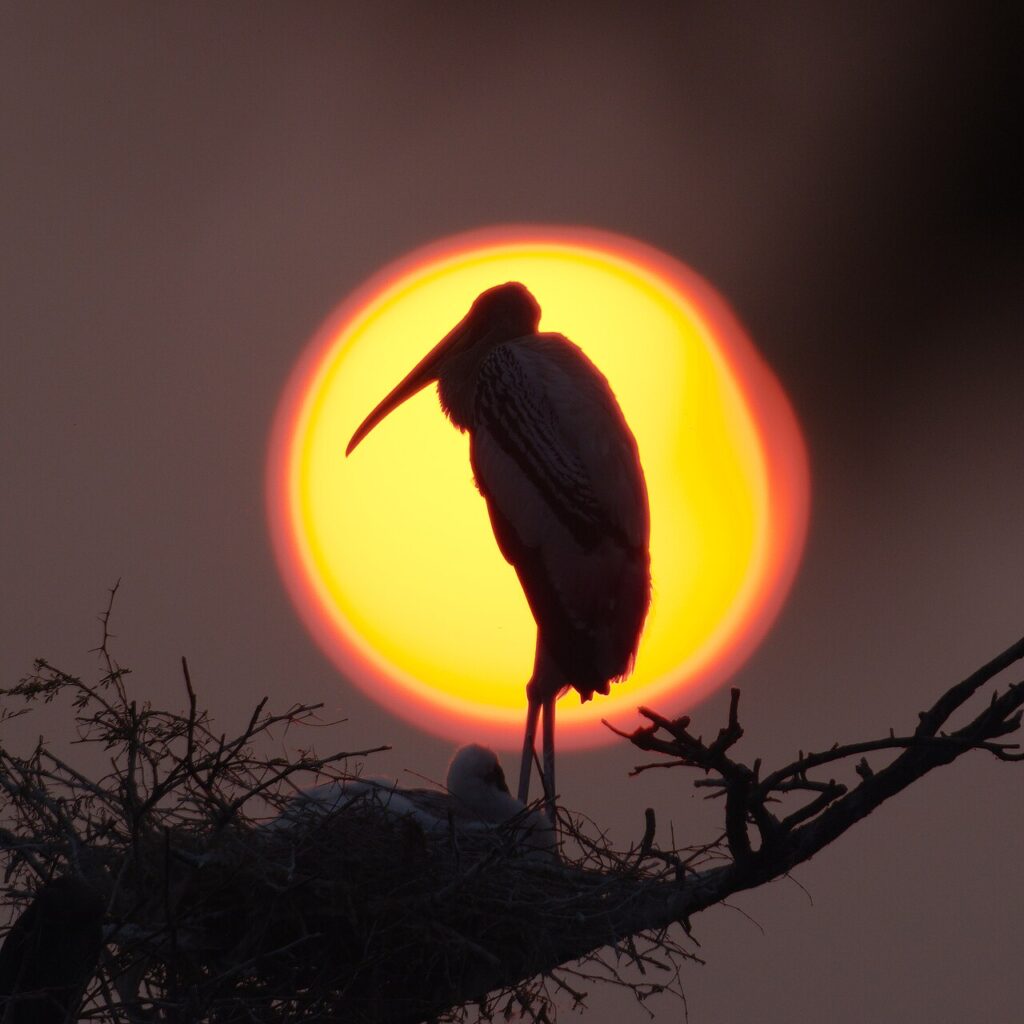
Keoladeo National Park, better known as Bharatpur Bird Sanctuary, is a small (about 29 km²) man-made wetland in eastern Rajasthan that ranks among the finest birding sites in Asia. Created in the 19th century as a duck-shooting reserve for the Maharajas of Bharatpur, it became a sanctuary and later a UNESCO World Heritage Site. More than 370 bird species have been recorded, and in winter its marshes fill with ducks, geese, storks, pelicans and raptors from Central Asia and Siberia.
At a glance
| Best time | October to March |
| Getting there | About 1 hour from Agra, 3.5 to 4 hours from Delhi or Jaipur |
| Time needed | 1 to 2 days |
| Big draws | Wintering waterbirds, breeding storks, owls, raptors |
| Good for | Birders, photographers, Golden Triangle travellers |
Birds
- Breeding colonies (August to October): painted storks, Asian openbills, spoonbills, herons, egrets, cormorants and darters nest in the acacia trees on islands.
- Wintering waterbirds (November to February): bar-headed and greylag geese, many duck species, great white and Dalmatian pelicans, and common cranes. See our bar-headed goose profile.
- Sarus cranes, the world’s tallest flying birds, are resident. See our sarus crane profile.
- Raptors: greater spotted, imperial and steppe eagles, and many harriers.
- Owls and nightjars: dusky eagle owls, spotted owlets and several nightjars, often shown by guides at roosts.
- The Siberian crane: Bharatpur was once the wintering ground of the western population of this critically endangered crane, but none has been seen here since the early 2000s.
Other wildlife
Nilgai, sambar, chital, wild boar, golden jackals, jungle cats, fishing cats, smooth-coated otters, rock pythons and turtles.
How to explore
- On foot or by bicycle along the park’s raised roads and dykes.
- Cycle rickshaws: licensed rickshaw drivers are also trained bird guides, and many are excellent spotters. Hiring one is part of the Bharatpur experience.
- Boat rides are sometimes available when water levels are high.
- Motor vehicles are not allowed beyond the entrance area.
Water matters
Keoladeo depends on water from the Ajan Bund reservoir and, in recent years, from pipelines and canals, because monsoon inflows have become unreliable. In dry years, bird numbers fall sharply. Check conditions before planning a trip around waterbirds.
When to go
- August to October: breeding colonies.
- November to February: the peak for wintering waterbirds and raptors.
- March: late migrants; warming up.
- April to June: hot and dry; few waterbirds.
Getting there
Bharatpur has a railway station on the Delhi–Mumbai line and lies on the road between Agra and Jaipur, so it fits easily into a Golden Triangle trip. It also combines well with Ranthambore.
Where to stay
Hotels, heritage properties and guesthouses near the park gate, many catering to birders.
Tips
- Enter at opening time for the best light and bird activity.
- Hire a licensed rickshaw guide for at least a half-day.
- Bring binoculars and, ideally, a spotting scope.
- Allow two mornings if you are a keen birder.
Frequently asked questions
When is the best time to visit Bharatpur Bird Sanctuary? November to February for wintering waterbirds; August to October for breeding colonies.
Can I visit Bharatpur as a day trip from Agra? Yes. It is about an hour away, making a morning visit easy.
Are there still Siberian cranes at Bharatpur? No. The western population that wintered here has not been seen since the early 2000s.
Is Keoladeo good for beginners? Yes. Birds are easy to see, and rickshaw guides help identify them.
Related guides
- Ranthambore National Park guide
- Birdwatching in Nepal
- Koshi Tappu birding guide
- Animal profiles: Sarus crane, Bar-headed goose, Great white pelican
Cover photo: Rohit Sharma, CC BY-SA 4.0, via Wikimedia Commons