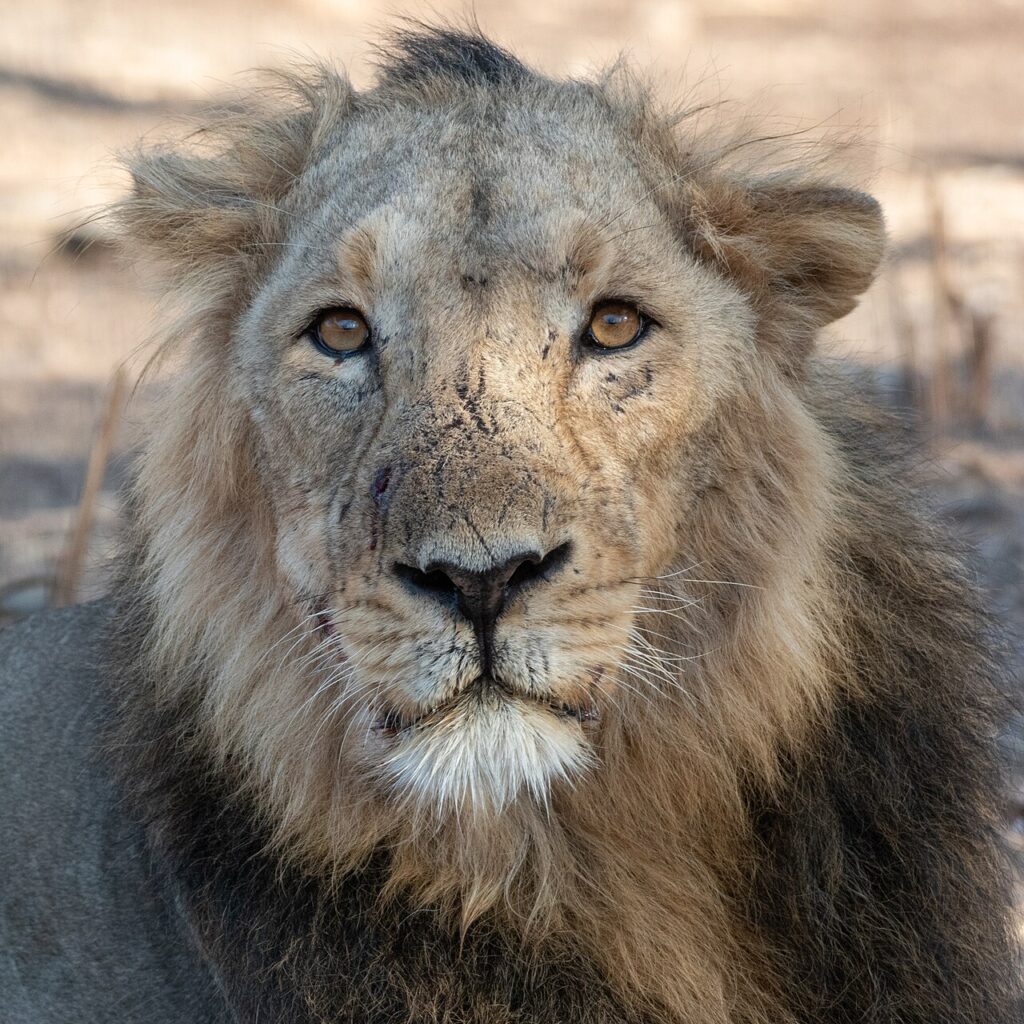
The Asiatic lion once roamed from the Mediterranean through the Middle East to India. By the early 1900s, hunting had reduced it to perhaps a few dozen animals in the Gir forest of Gujarat. Protection by the Nawab of Junagadh and, later, the Indian government brought it back. Gujarat’s 2025 lion census counted 891 Asiatic lions, and today they live in Gir and across wider Saurashtra. Gir remains the only place in the world to see them in the wild.
At a glance
| Best time | December to April; March to May for the most sightings |
| Getting there | Sasan Gir is about 1 hour from Junagadh, 3 hours from Rajkot, 2.5 hours from Diu |
| Time needed | 2 to 3 nights |
| Big draws | Asiatic lions, leopards, deer, birds |
| Good for | Lion lovers, combining with Gujarat’s other wildlife |
The lions
- Asiatic lions are slightly smaller than African lions, and males often have shorter manes and a distinctive fold of skin along the belly. See our lion profile.
- Lions live in small prides, and males often form coalitions.
- Maldhari pastoralists live in and around the forest with their livestock, and people and lions have coexisted here for generations.
- Concentrating an entire subspecies in one area makes it vulnerable to disease and disasters. In 2018, more than 20 lions died from canine distemper virus and infections. Plans to establish a second population elsewhere in India have been discussed for decades.
Safaris
- Gir Jungle Trail: jeep safaris into the sanctuary, booked online through the Gujarat Forest Department’s official permit website. Permits are limited, so book early.
- Devalia Safari Park (Gir Interpretation Zone): a fenced area of the forest with lions and other animals, visited by bus or jeep. Sightings are almost certain, but it is less wild.
- Ambardi Safari Park: another interpretation zone on the eastern side.
Other wildlife
Leopards (Gir has a high density), sambar, chital, nilgai, chinkara, four-horned antelope, wild boar, striped hyenas, jungle cats, mugger crocodiles at Kamleshwar Dam, and around 300 bird species.
When to go
- December to February: cool and pleasant.
- March to May: hot and dry; lions gather near water, making sightings easier.
- 16 June to 15 October: the sanctuary is closed for the monsoon, though Devalia may remain open. Check current dates.
Getting there
Sasan Gir is the gateway village. The nearest railway station is Junagadh (about 60 km). Airports at Rajkot, Diu and Keshod are within a few hours by road.
Where to stay
Sasan Gir has resorts and lodges for all budgets, many offering safari bookings.
Combining with Gujarat
- Little Rann of Kutch: Indian wild ass on salt flats.
- Velavadar Blackbuck National Park: large herds of blackbuck and harriers in winter. See our blackbuck profile.
- Marine National Park (Gulf of Kutch) for coral reefs and seabirds.
Frequently asked questions
Is Gir the only place to see Asiatic lions? Yes. All wild Asiatic lions live in and around Gir and the wider Saurashtra region of Gujarat.
How many Asiatic lions are there? The 2025 Gujarat census counted 891, up from 674 in 2020.
Are lion sightings guaranteed on the Gir Jungle Trail? Not guaranteed, but likely, especially in the hot season. Devalia Safari Park offers almost certain sightings in a fenced area.
When is Gir closed? From 16 June to 15 October, during the monsoon.
Related guides
- Best places to see tigers in India
- Keoladeo (Bharatpur) Bird Sanctuary
- Where to see the Big Five in Africa
- Animal profiles: Lion, Leopard, Blackbuck
Cover photo: Rohit Sharma, CC BY-SA 4.0, via Wikimedia Commons