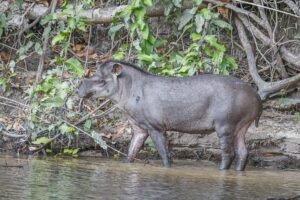
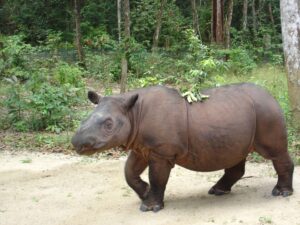
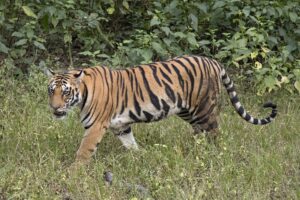
The Malayan tapir is a large, black-and-white forest mammal of Southeast Asia. Shy and nocturnal, it plays an important role in spreading seeds through the rainforest.
Interesting facts
- It is the largest of the world’s four tapir species.
- Babies are dark brown with white stripes and spots, like a watermelon, until they are about six months old.
- Its short, flexible trunk is used to grab leaves and shoots.
- Tapirs are excellent swimmers and can walk along riverbeds.
- Their closest living relatives are horses and rhinos.
- It is the only tapir found in Asia; the other species live in the Americas.
Behaviour
Malayan tapirs are solitary and mostly nocturnal. They follow regular trails to feeding areas and water, and escape danger by plunging into rivers.
Breeding and young
After a gestation of about 13 months, a single calf is born. It stays with its mother for about a year.
Threats and conservation
Deforestation for oil palm and other plantations, road deaths, and hunting and snaring.
Where to see it
- Taman Negara National Park, Malaysia, from night hides
- Krau Wildlife Reserve, Malaysia
- Kaeng Krachan and Khao Sok national parks, Thailand
- Zoos with breeding programmes
Status source: IUCN Red List. Profile last reviewed September 2026.
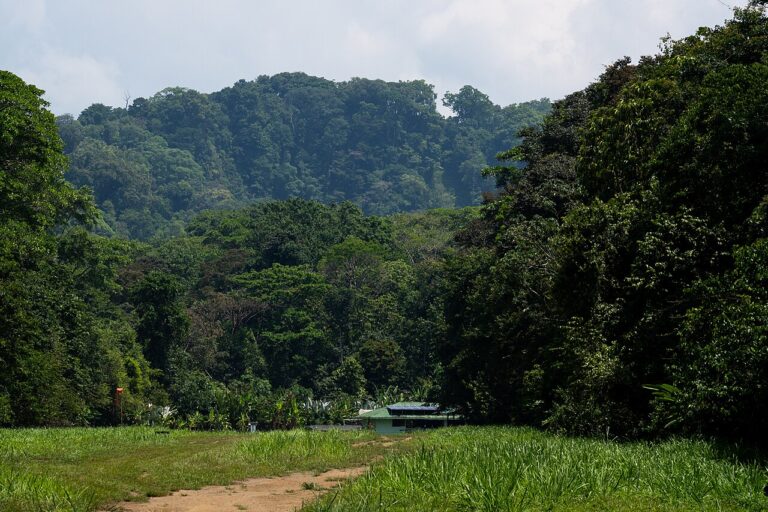 Corcovado National Park: The Most Biologically Intense Place on Earth?