Often dismissed as scavengers, spotted hyenas are highly intelligent, social and successful predators. They are the most abundant large carnivore in Africa and play an important role in cleaning up carcasses and regulating prey.
Interesting facts
- Spotted hyena clans are led by females, and even the lowest-ranking female outranks every male.
- Clans can contain up to about 80 members.
- Their ‘laughing’ call is a sign of excitement or frustration, often at a kill.
- Hyenas are more closely related to cats and mongooses than to dogs.
- They can eat about a third of their body weight in one meal.
- Their whooping calls can be heard over several kilometres.
Behaviour
Clans defend territories and live in communal dens. Hyenas recognise individual clan members by voice and scent, and social rank is inherited from the mother. They often hunt in groups and compete fiercely with lions over kills.
Breeding and young
Females usually give birth to twins after about 110 days. Cubs are born with open eyes and teeth, and siblings often fight for dominance. Young are nursed for more than a year, longer than most carnivores.
Threats and conservation
Persecution and poisoning, snaring and habitat loss, although the species remains widespread.
Where to see it
- Ngorongoro Crater, Tanzania
- Serengeti, Tanzania
- Maasai Mara, Kenya
- Kruger, South Africa
- Harar, Ethiopia (hyena feeding tradition)
Status source: IUCN Red List. Profile last reviewed September 2026.
Where to see the spotted hyena
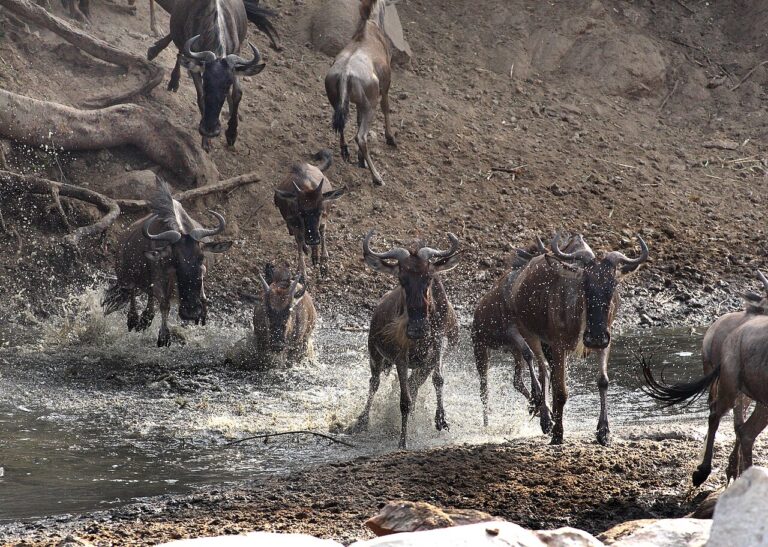 Serengeti Great Migration: A Month-by-Month GuideWhere the wildebeest are in every month of the year, when to see calving and river crossings, where…
 Maasai Mara Safari Guide: Conservancies, Crossings and CostsKenya's most famous reserve offers big cats all year and the Great Migration from July to October. How…
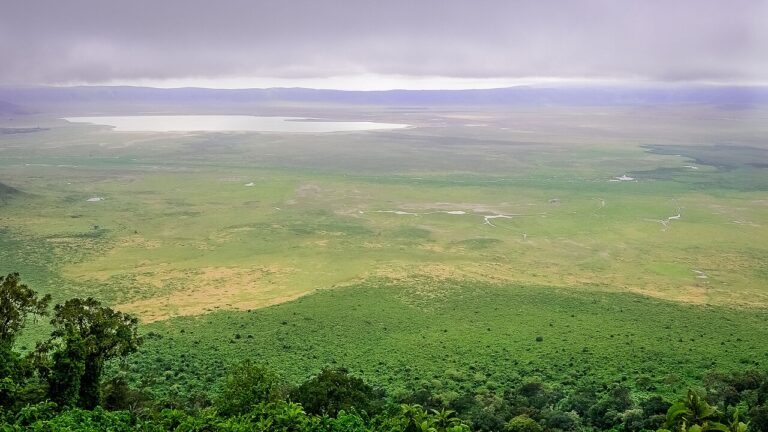 Ngorongoro Crater Guide: Africa’s Garden of EdenA collapsed volcano packed with lions, rhinos, elephants and flamingos. How to plan the perfect crater day and…