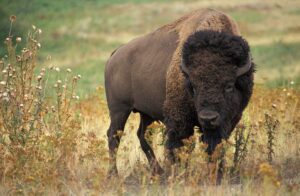
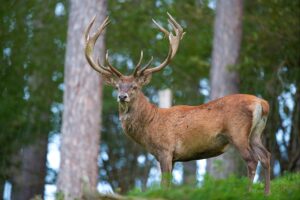
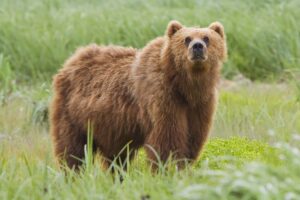
The European bison once roamed forests from France to Russia. Hunting and forest clearance wiped it out in the wild, and it was saved only by a few zoo animals. Today several thousand free-ranging bison live in dozens of herds across Central and Eastern Europe.
Interesting facts
- It is Europe’s heaviest land animal.
- The species is also called the wisent.
- Reintroductions began in Białowieża Forest in 1952.
- European bison browse more than American bison, eating leaves and bark as well as grass.
- It was moved from Vulnerable to Near Threatened in 2020.
- Low genetic diversity from its tiny founder population remains a concern.
Behaviour
Bison live in herds of females and young, while adult males live alone or in small groups for most of the year. They wallow in dust to deter insects.
Breeding and young
A single calf is born in spring or early summer after about nine months.
Threats and conservation
Low genetic diversity, disease, habitat fragmentation and small, isolated herds.
Where to see it
- Białowieża Forest, Poland
- Bieszczady Mountains, Poland
- Southern Carpathians (Tarcu Mountains), Romania
- Kraansvlak, Netherlands
Status source: IUCN Red List. Profile last reviewed September 2026.
Where to see the european bison
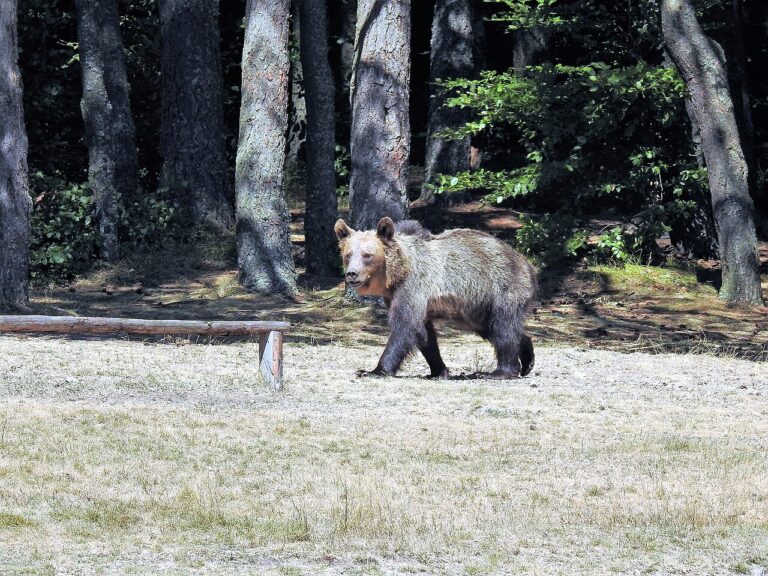 Bear Watching in the Romanian CarpathiansRomania's Carpathian Mountains hold Europe's largest brown bear population outside Russia. How to watch them responsibly.
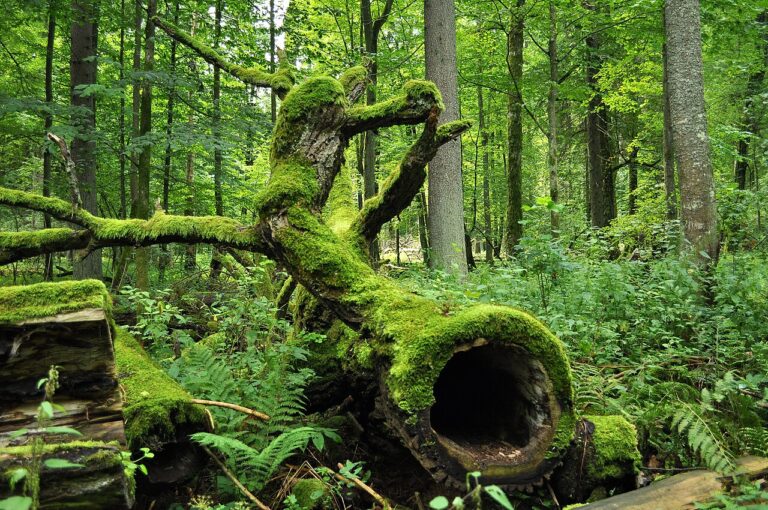 Białowieża Forest: Europe’s Last Primeval Forest and Its BisonThe European bison was saved from extinction in Białowieża, one of the last remnants of the forest that…
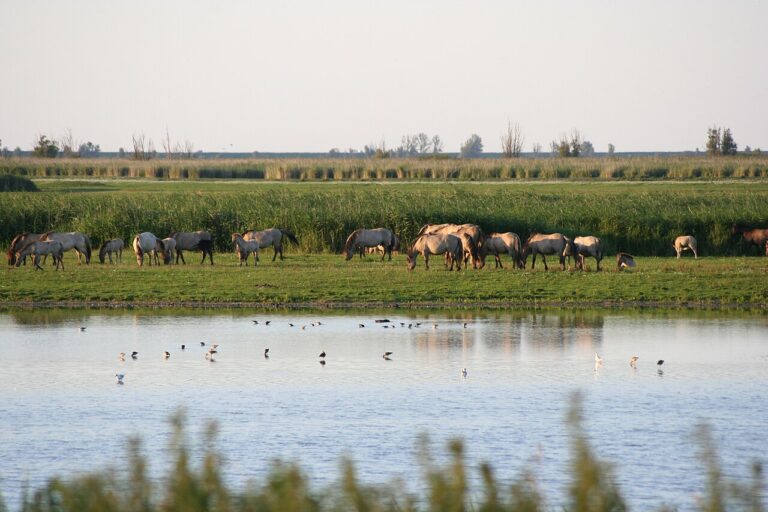 Rewilding Europe: Where to See Returning WildlifeAfter centuries of decline, many of Europe's large animals are returning. Where to see the comeback for yourself.